
Most people see improved vision within hours and resume light activity the next day, but a LASIK trip to Seoul still needs about 3–5 days and a next-day check-up before the flight home.
Wondering how long to recover from LASIK when you are booking flights to Seoul and cannot afford a surprise?
Read on before you book anything.
After this you will know the recovery timeline, how many days to plan, how the methods (LASIK and LASEK) change it, what affects cost, and how to read online reviews, so you can choose your travel dates.
Hello, I'm Dr. Baek Dong-won, Representative Director of EYEONCE.
We are a Seoul-government-registered clinic for international patients, with in-house interpreters in English, Chinese, Mongolian and Thai. Our lifetime aftercare means you can contact us at any time if something seems wrong after you are home.
Many people write to me because they read that LASIK means "back to normal the next day" and assume the eye is fully healed by then.
Vision usually improves within hours and many people resume light activity the next day, but the cornea keeps settling for weeks. For a trip, plan about 3-5 days in Seoul, ending with a next-day check-up before you fly home.
Improved vision within hours and light activity the next day is the typical LASIK pattern at EYEONCE, followed by a month of protective habits. The table below maps each stage to what it means for a traveler.
| Time after surgery | What to expect | What it means for your trip |
|---|---|---|
| First hours | Vision usually improves within hours | Go straight to your hotel; arrange a ride or a companion |
| Day 1 | Light activity resumes for most people; next-day check-up | Do not book a flight before this visit |
| First few nights | Wear the protective shields while sleeping; do not rub | Pack them in your carry-on |
| About 2 weeks | Eye makeup stays off | Plan any events around it |
| About 1 month | No swimming pools, saunas or steam rooms | Skip the hotel spa and the beach |
| 1–3 months | Temporary blurriness can come and go while the cornea heals | Keep using the prescribed drops and artificial tears |
The first two rows are the ones that set your trip length. Everything after day one happens at home, which is why the aftercare plan matters as much as the laser.
The U.S. Food and Drug Administration's LASIK patient pages describe a similar arc: a short procedure, instructions to protect the eye in the early days, and follow-up visits. Your own healing pace varies, so treat the table as a typical path rather than a promise.
For laser vision correction, a stay of about 3–5 days is typical. Exam and surgery can often happen on the same day, and a next-day check-up comes before you fly home. Lens procedures such as ICL usually need 5–7 days, so do not borrow that number for LASIK.
A realistic itinerary looks like this:
Two scheduling details catch people out. The clinic runs Monday, Tuesday, Thursday and Friday 09:00–18:00 and Saturday 09:00–16:00, with a lunch break from 13:00 to 14:00, and it is closed Wednesdays and Sundays. Ask which weekday your check-up lands on before you buy the return ticket. Contact lenses also need a break so the cornea can return to its natural shape: stop soft lenses 5–7 days before the exam, and hard or RGP lenses 2–3 weeks before.
If you are comparing options, the guide to LASIK in Korea covers what to check before you commit, and the overview of eye surgery in South Korea puts the procedures side by side.
Say you are 29, wear contact lenses, and can only be away from work for one week. You read a review saying someone saw clearly the next morning and went to a meeting two days later. I would explain that reviews like this describe the first days, while the cornea keeps healing for weeks, so mild blur or dryness later does not by itself mean something went wrong.
I would ask you to stop soft lenses at least 5-7 days before the exam, then check your corneal thickness to see whether LASIK or LASEK fits. If LASIK fits, you would plan about 3-5 days in Seoul, with the next-day check-up before your flight. If LASEK fits, I would suggest a longer buffer because the surface needs more time to heal.
LASEK recovery is slower than LASIK. Mild discomfort and light sensitivity show up in the first days, improvement builds through week one, and full stabilization typically arrives between month one and month three. A protective bandage contact lens supports the early healing, and sunglasses outdoors matter more with this procedure.
That longer curve rarely changes how many days you spend in Seoul, but it changes how you feel back home. Surface procedures such as LASEK are often chosen for thinner corneas, sensitive eyes or severe myopia, where a flap is not the most comfortable fit. If you suspect that describes you, the article on who LASEK is actually for explains the trade-off, and high myopia combined with astigmatism shows how the numbers steer the choice.
If a flapless keyhole approach interests you, SMILE LASIK has its own recovery timeline and a separate explanation of how it differs. Do not apply the LASIK table above to it.
Temporary blurriness while the cornea heals is normal. A foreign-body sensation or pain is not something to wait out: visit the clinic right away, or see a local ophthalmologist first and then contact EYEONCE. Contact is welcome at any time after surgery, and a detailed re-examination decides whether further treatment is appropriate.
Between visits, the habits are simple. Do not rub your eyes, use every prescribed drop and artificial tear as directed, avoid dust and smoke, and keep to the shield and swimming rules in the table. The FDA's patient information lists dry eyes and visual symptoms such as glare or halos among the possible effects of LASIK, and most people find these ease as the eye heals. Some do not, which is why the follow-up plan deserves as much of your attention as the surgery.
The moment I most want a patient to understand is that recovery has a visible part and a quiet part. The visible part is the next morning, when the world looks sharper and people feel done. The quiet part is the following weeks, when the surface of the eye is still healing and drops, shields and patience do the work. Medically, people who treat the first week casually tend to have the most avoidable trouble, so I would rather you plan one extra day in Seoul than rush the flight.
Send your latest glasses prescription or eye exam result, plus the dates you are considering, on WhatsApp.
The cost depends on the method, because LASIK and LASEK are different procedures with different healing. It also depends on your eyes: your prescription and corneal thickness decide which method is safe for you. The number of days you stay in Seoul matters too, since a 3-5 day trip is typical for laser vision correction and a longer stay changes your plans. Follow-up care, including the next-day check-up and what happens if you need a re-check later, is part of the picture as well.
To get the figure for your own case, send your prescription or a photo of your current glasses on WhatsApp and ask.
Bring your glasses and any prescription records, skip eye makeup on exam day, and arrange transport or a companion for surgery day, since your vision will be blurry afterward. Stop contact lenses on the schedule above, and ask the team if you are unsure about your lens type.
Pack sunglasses for the walk out of the clinic and the days after, and keep the shields and drops where you can reach them on the flight. If you are in the early planning stage, work out how many days you can be away from work, then count back from your return flight to the check-up day, leaving a little slack on either side.
The clinic's route guidance from Incheon Airport (taxi, AREX plus subway, or limousine bus) is worth asking about before you arrive, because a calm first day makes the exam easier. Check your own airline's and employer's rules for travel after surgery as well.
When you come to Seoul, I will examine your eyes and recommend the method that fits them.
Results and suitability vary by individual. Your procedure recommendation is confirmed only through an in-person diagnostic exam.
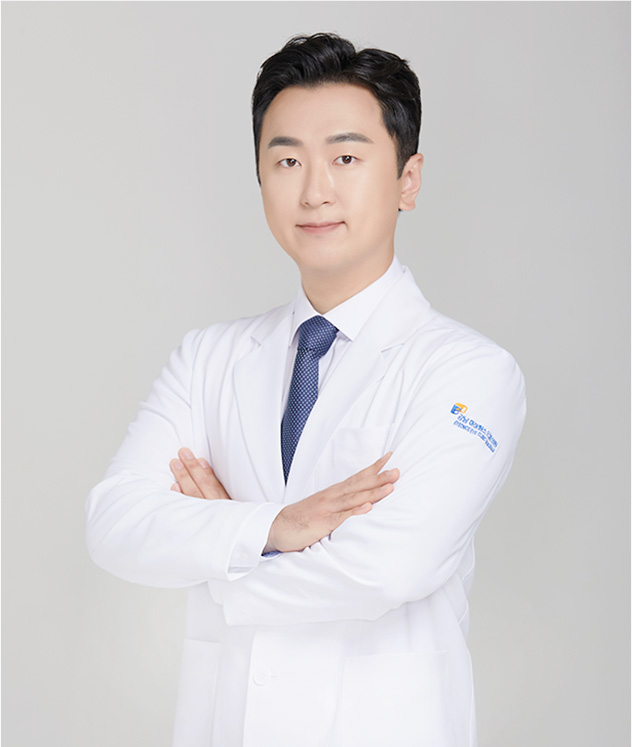
Representative Director · Former Clinical Instructor, Dept. of Ophthalmology, Samsung Seoul Hospital · Member, Korean Society of Cataract and Refractive Surgery · Member, American Society of Cataract and Refractive Surgery
International patients share what actually happened — from their first fears to waking up the next morning without glasses.
Our patients share their stories on Google — verified, public and unfiltered. Open the map to read every review straight from the source.
Tell us your prescription and travel dates. Our English-speaking team will design your personalized plan — free of charge, no pressure.
An English-speaking eye clinic in the heart of Gangnam, Seoul — moments from Sinnonhyeon Station and easily reached from Incheon International Airport.
5–6F, Duo Sinnonhyeon, 368 Sapyeong-daero, Seocho-gu, Seoul, South Korea
+82-10-6308-0984 — English, Chinese, Mongolian & Thai
Mon, Tue, Thu, Fri 09:00–18:00 · Sat 09:00–16:00 · Lunch break 13:00–14:00 · Closed Wed & Sun
By appointment only · Registration may close early depending on the day’s schedule.
Sinnonhyeon Station (Line 9 / Sinbundang Line) — 3 min walk. Gangnam Station (Line 2) nearby.