
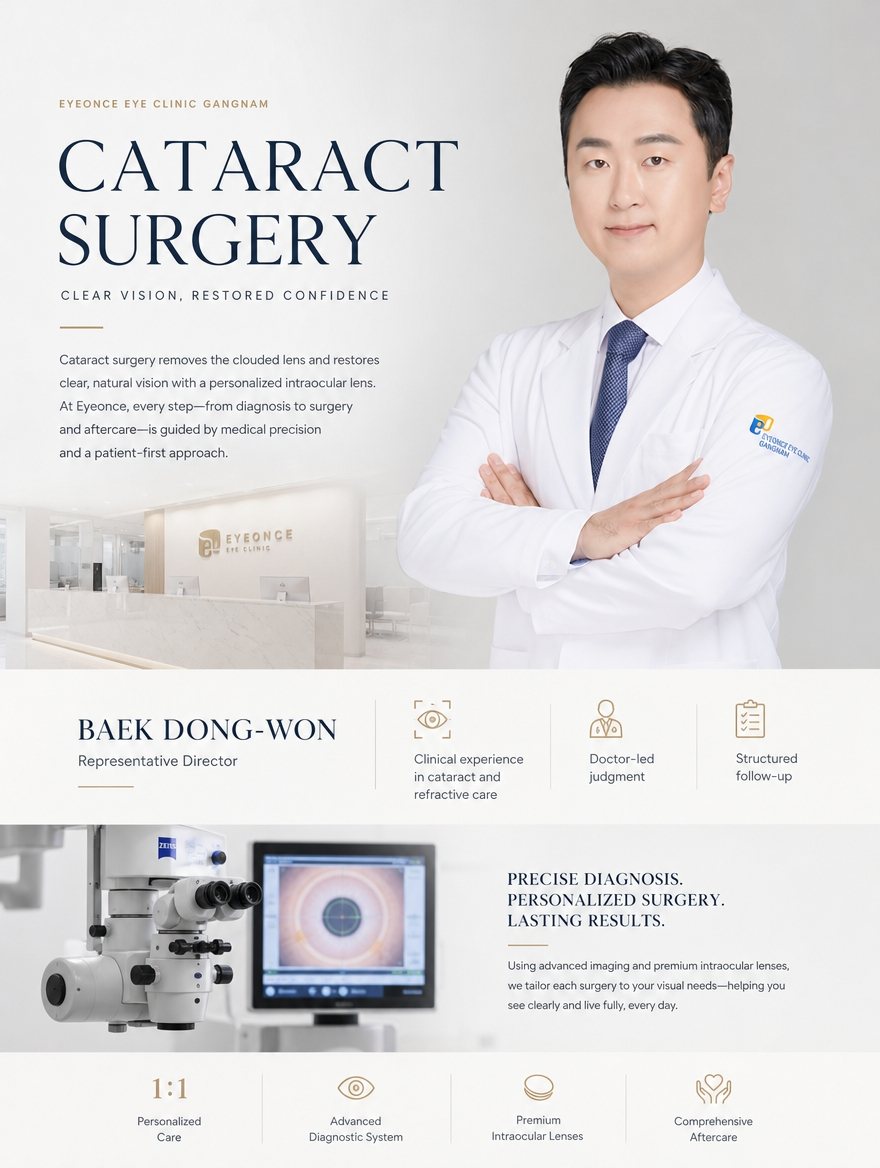
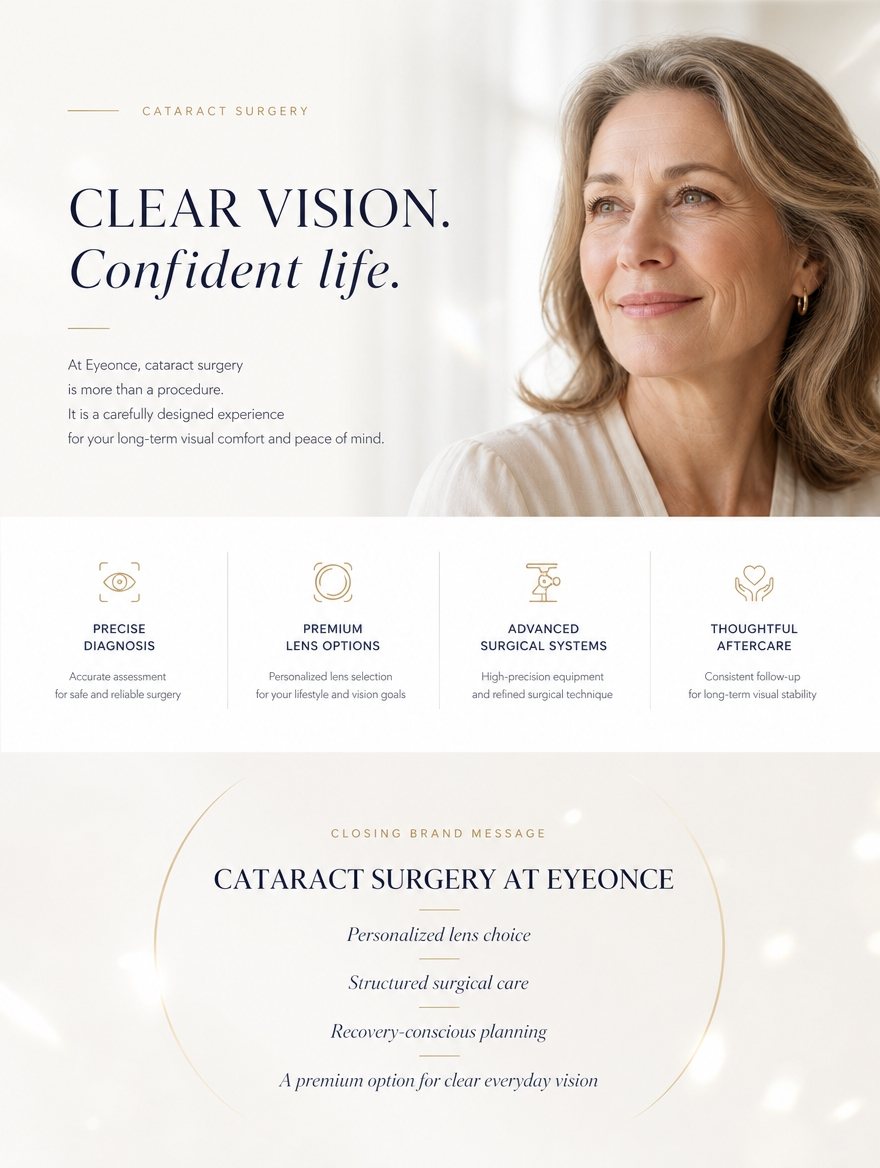
Cataract surgery removes the clouded natural lens and restores clear, natural vision with a personalized intraocular lens. At EYEONCE, the same doctor sees you from diagnosis through surgery and aftercare.
Blurry vision, glare at night, struggling to read? Cataracts don't only affect older people — and the solution is often better than most people expect. The cloudy lens is removed and a clear IOL restores your sight, frequently sharper than before.
See near and far without glasses.
Crisp, clear vision at one focal distance.
Your surgeon recommends the ideal lens after your diagnostic assessment. Discuss your options →
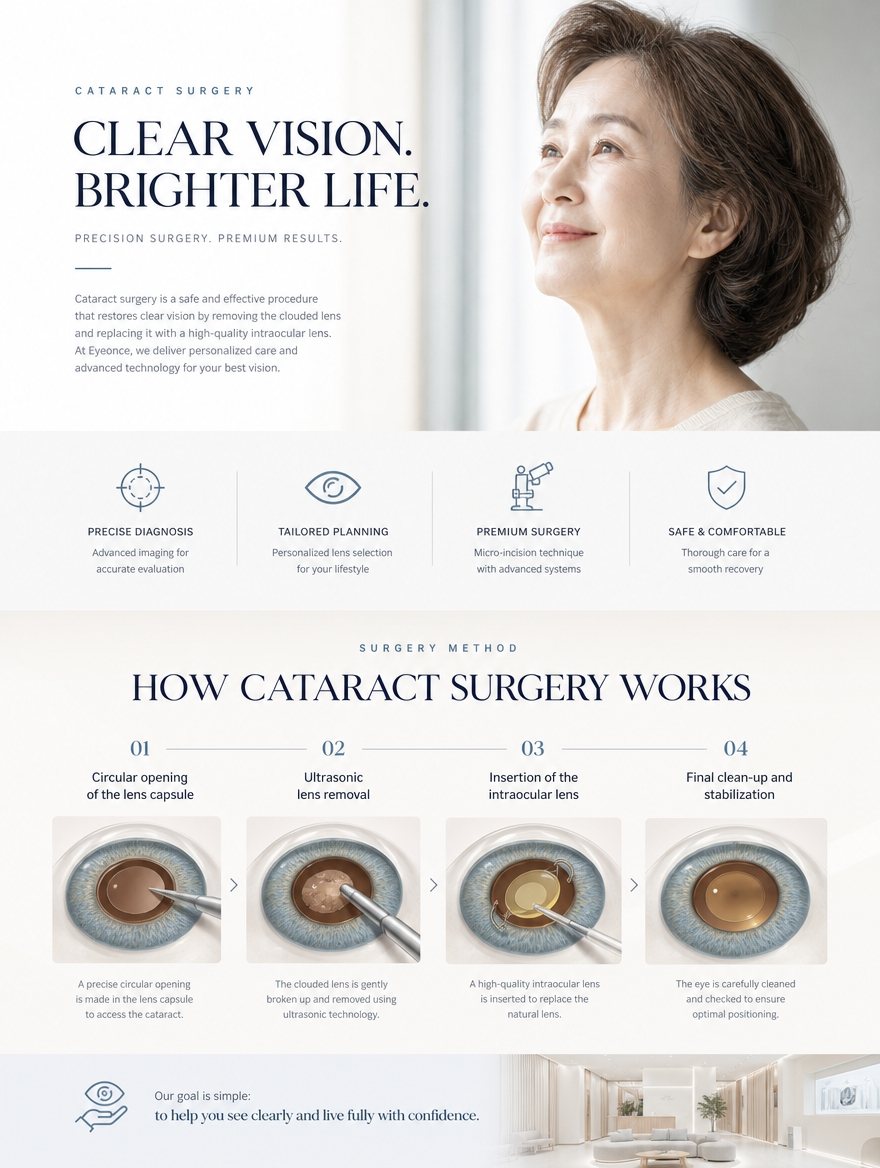
Cataract surgery at EYEONCE follows a precise four-step process — a circular opening is made in the lens capsule, the clouded lens is broken down and removed with ultrasonic phacoemulsification, a premium intraocular lens (IOL) is inserted in its place, and the eye is carefully cleaned and stabilized.
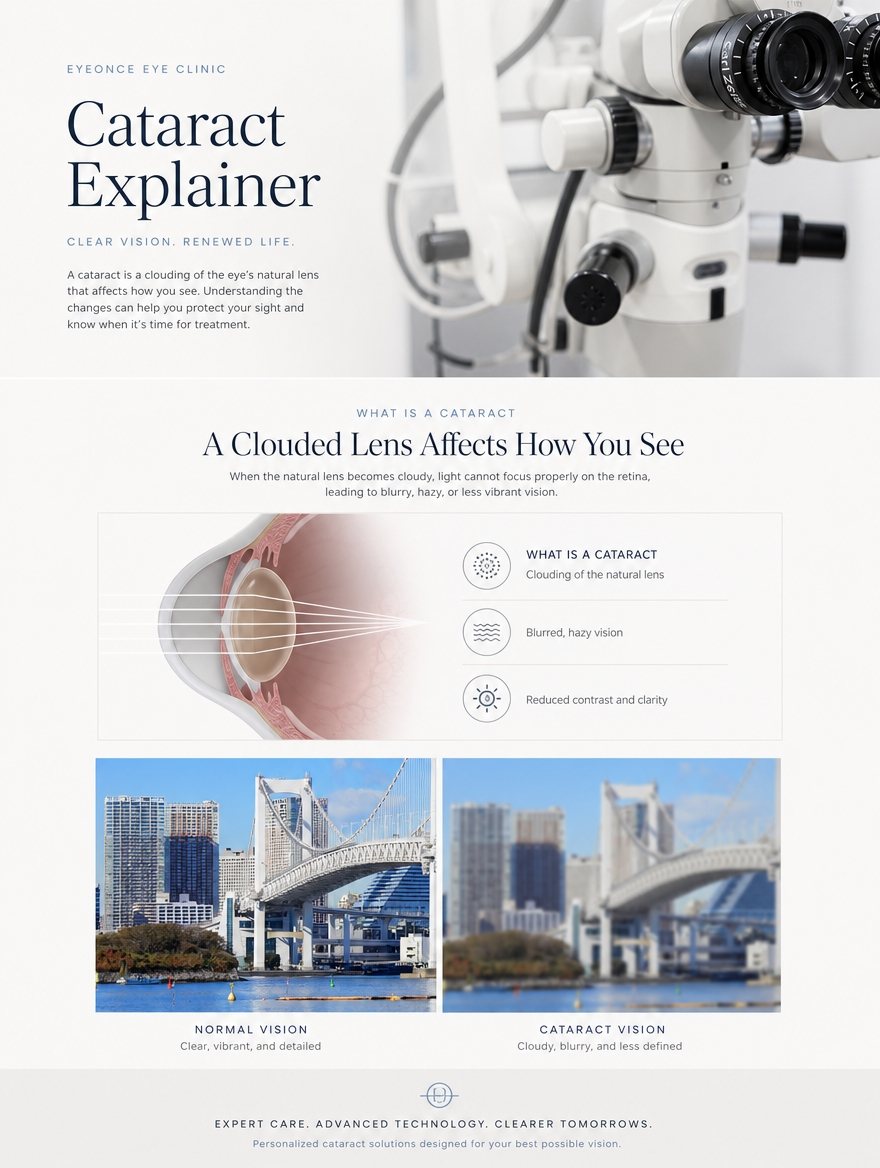
A cataract itself is simply a clouding of the eye's natural lens: light can no longer focus properly on the retina, so vision gradually turns blurry, hazy and less vibrant — often described by patients as looking through a fogged window.
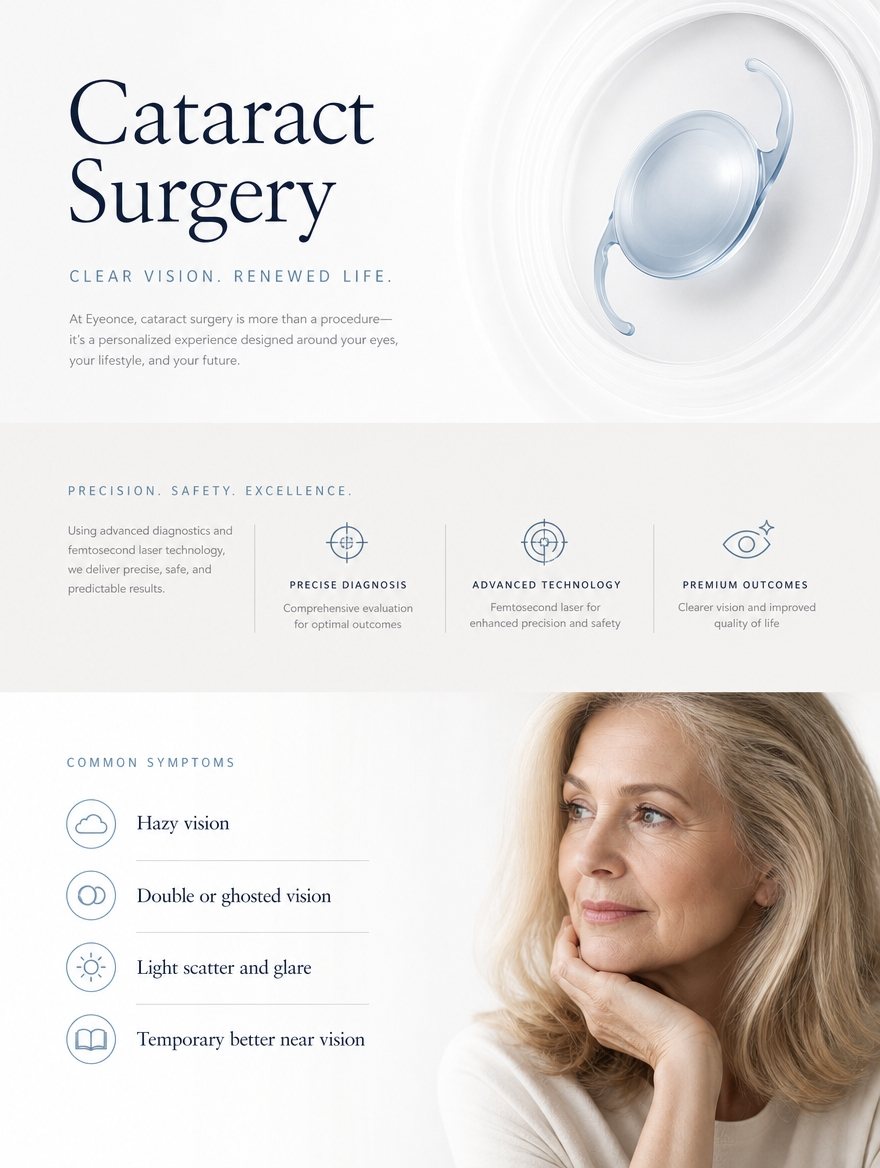
Cataracts don't only cause hazy vision — many patients also notice double or ghosted images, glare and light scatter at night, or a temporary improvement in near vision before things worsen.
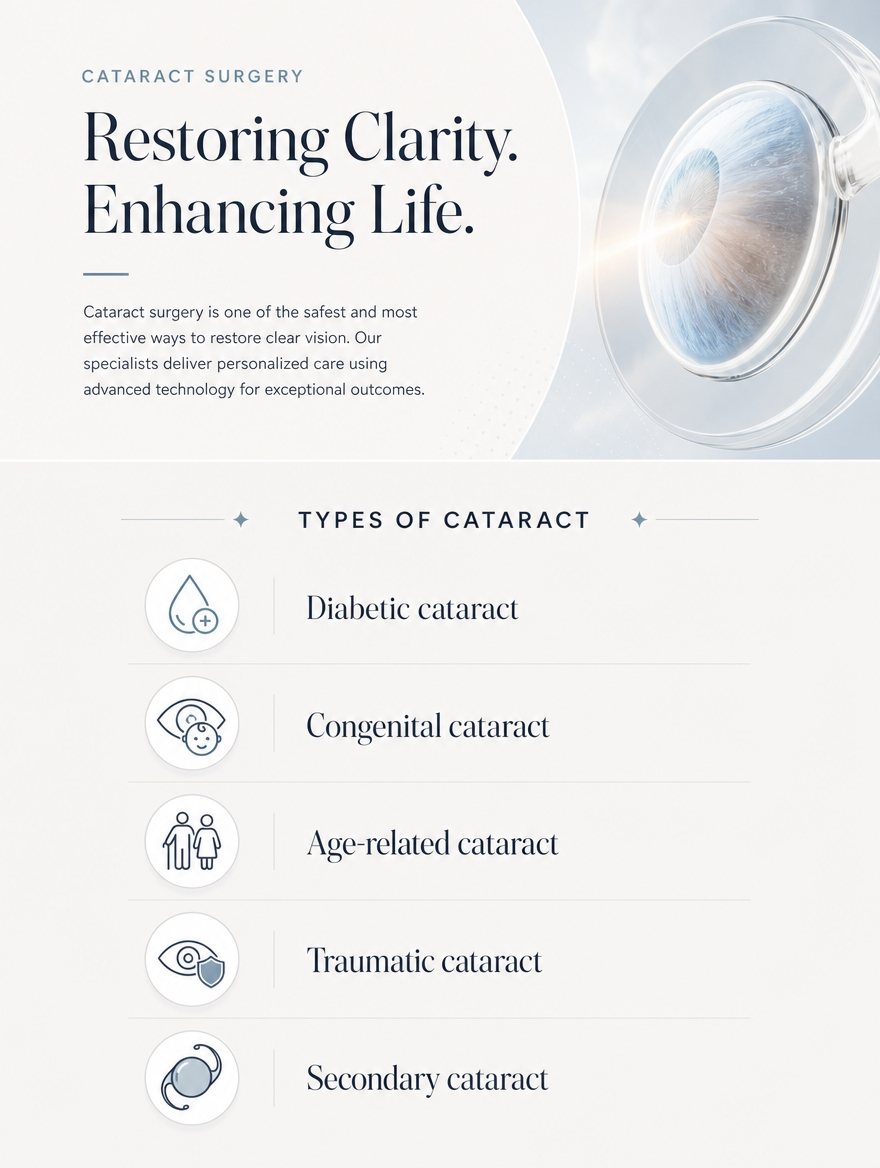
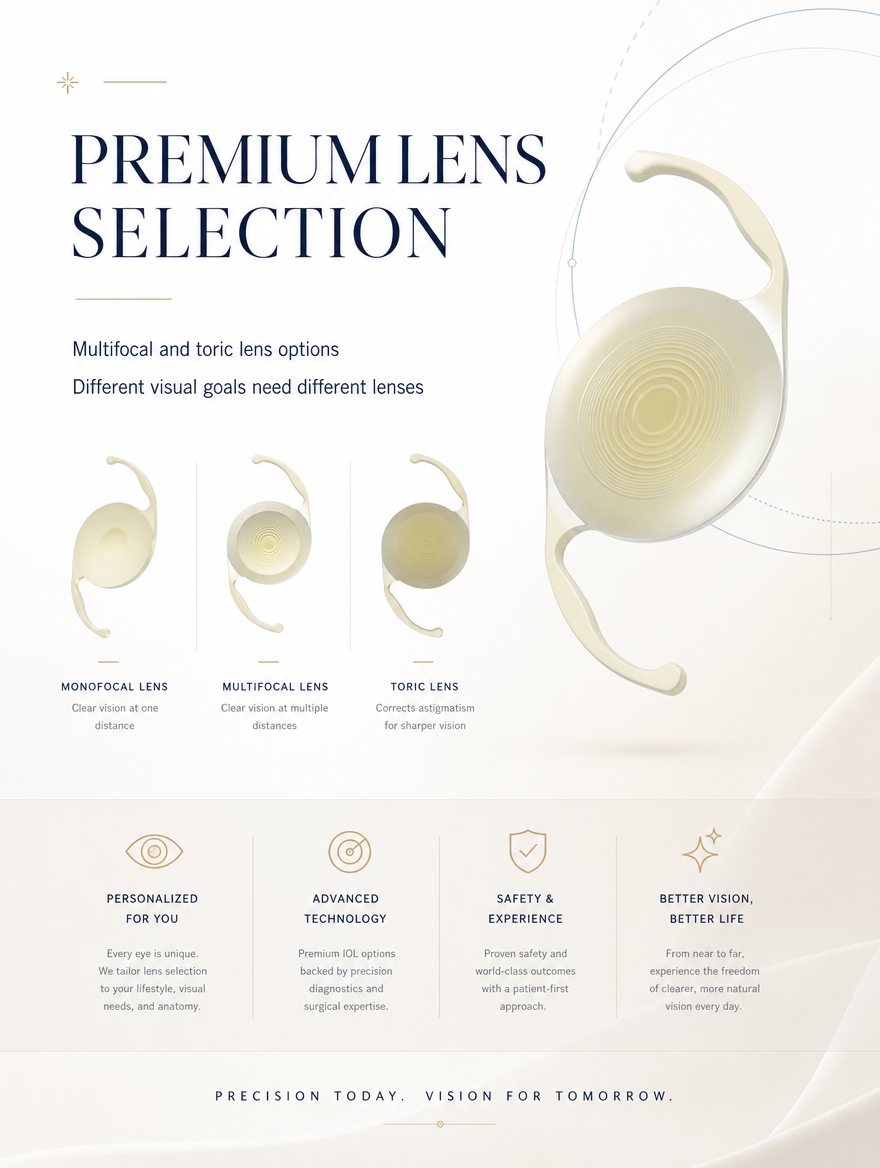
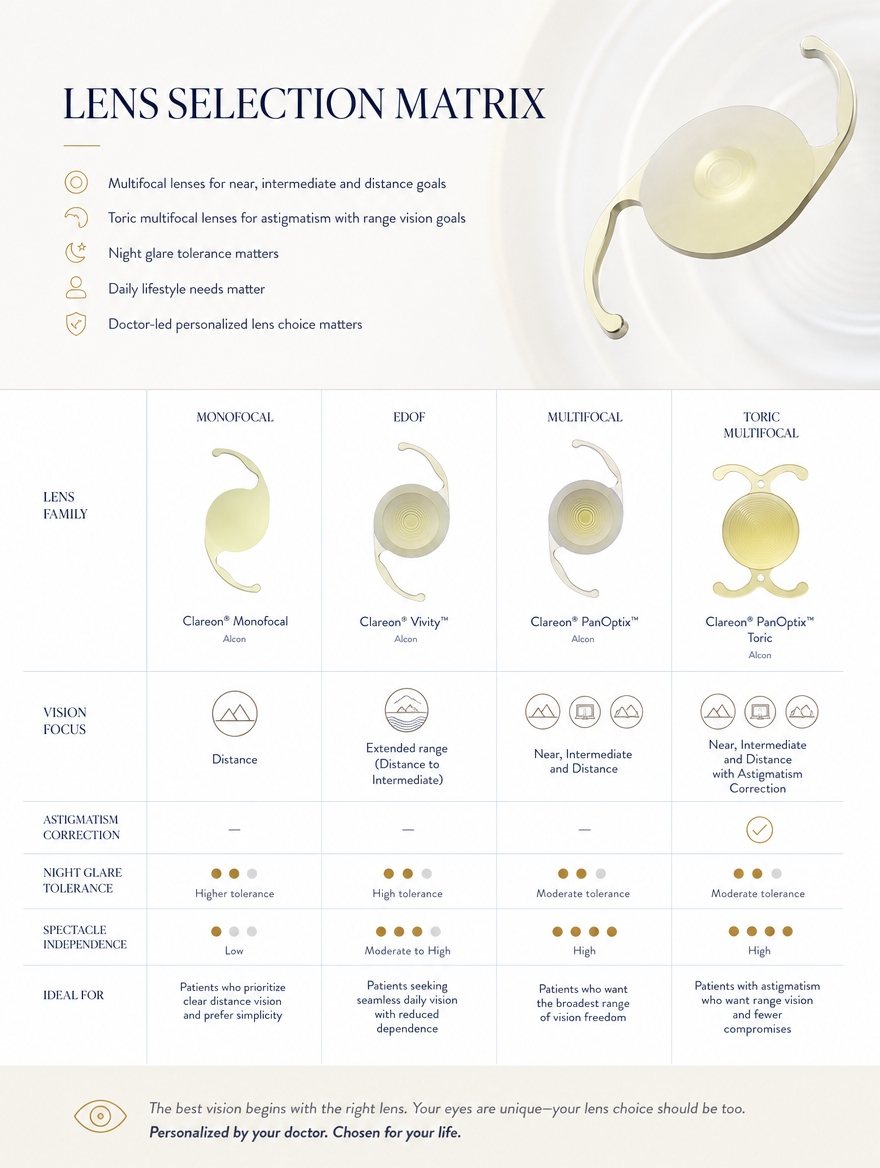
Cataracts aren't limited to age either: diabetic, congenital, traumatic and secondary cataracts are all treated at EYEONCE alongside the far more common age-related type. Every case starts with the same lens-family decision — monofocal for one clear distance, multifocal for near-and-far freedom, or toric for astigmatism correction.
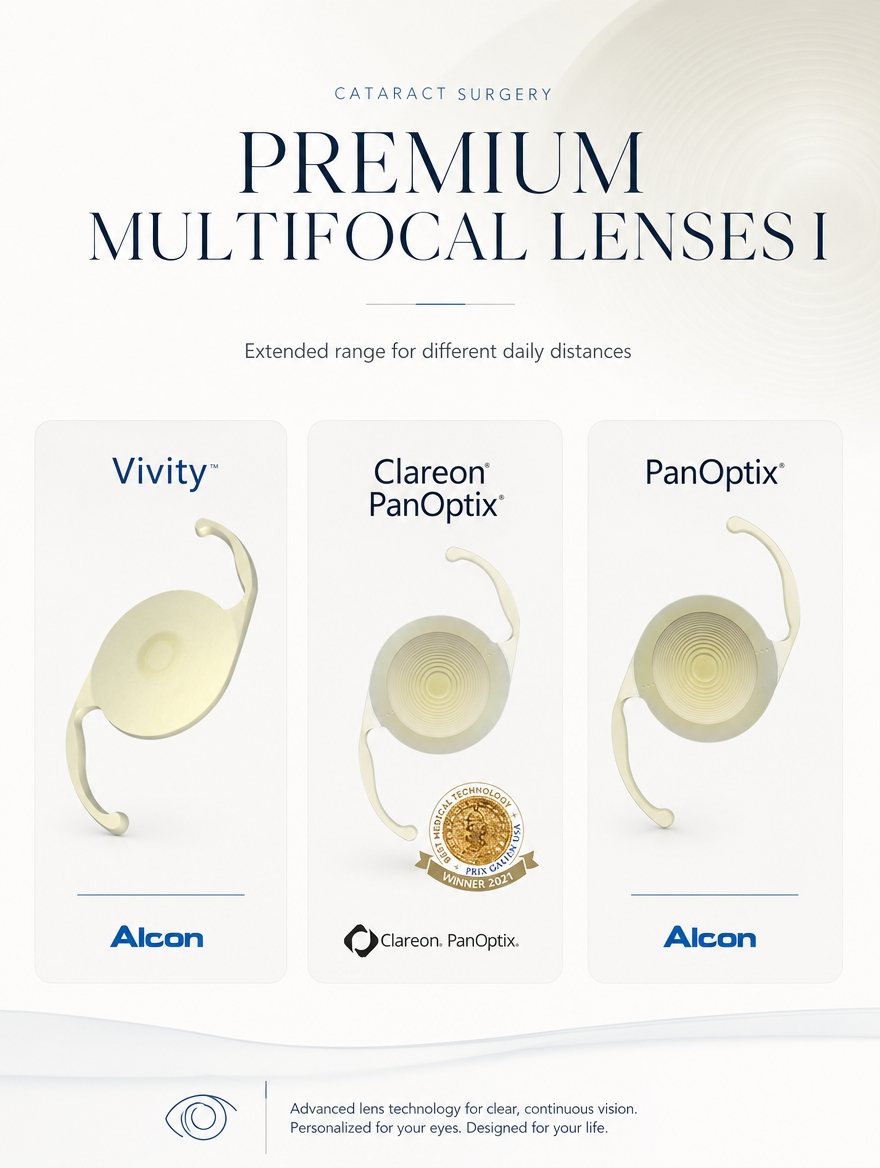
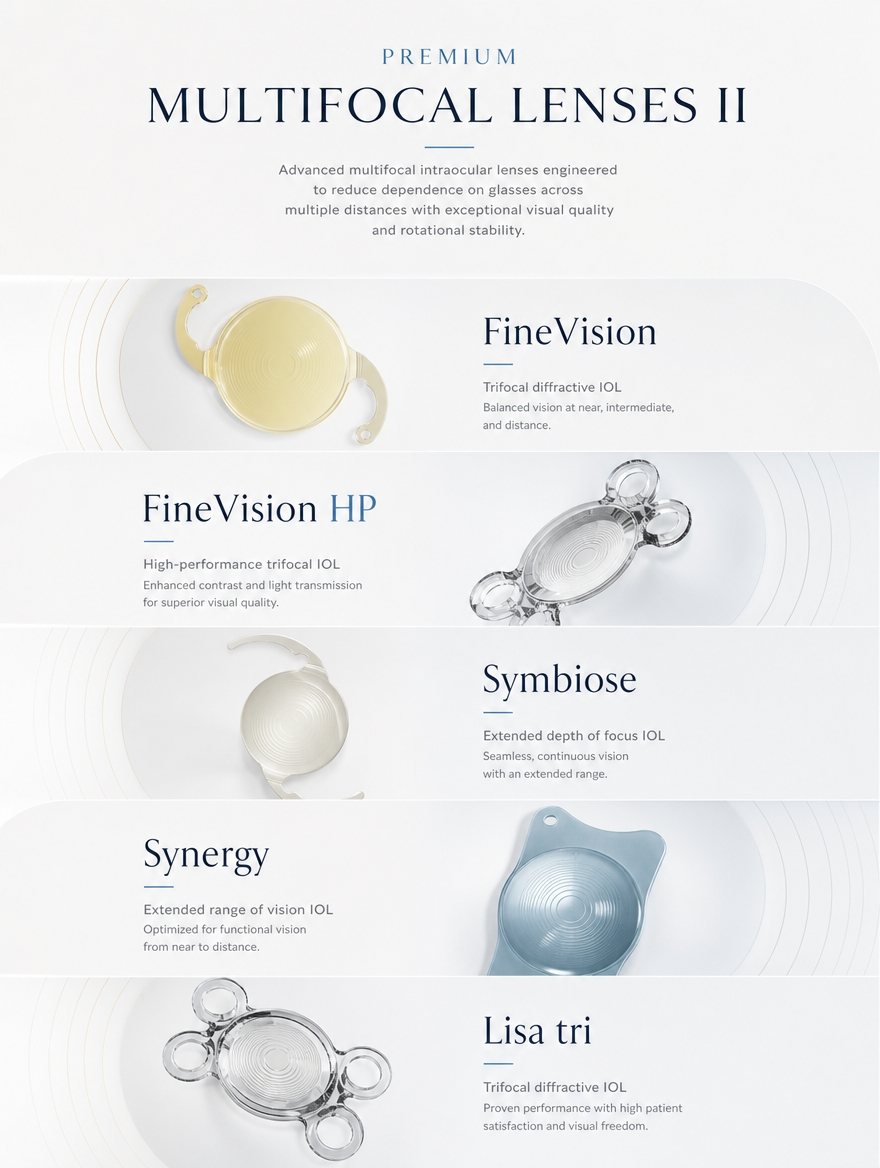
For patients who want the broadest possible freedom from glasses, EYEONCE offers a full range of premium trifocal and extended-depth-of-focus (EDOF) intraocular lenses — including Alcon's Vivity and Clareon PanOptix, PhysIOL's FineVision and FineVision HP, and Johnson & Johnson's Symbiose, Synergy and Lisa tri.
Toric versions of PanOptix, FineVision, Symbiose and Synergy add astigmatism correction on top of multifocal or EDOF vision, so patients with both cataracts and astigmatism don't have to choose between the two.
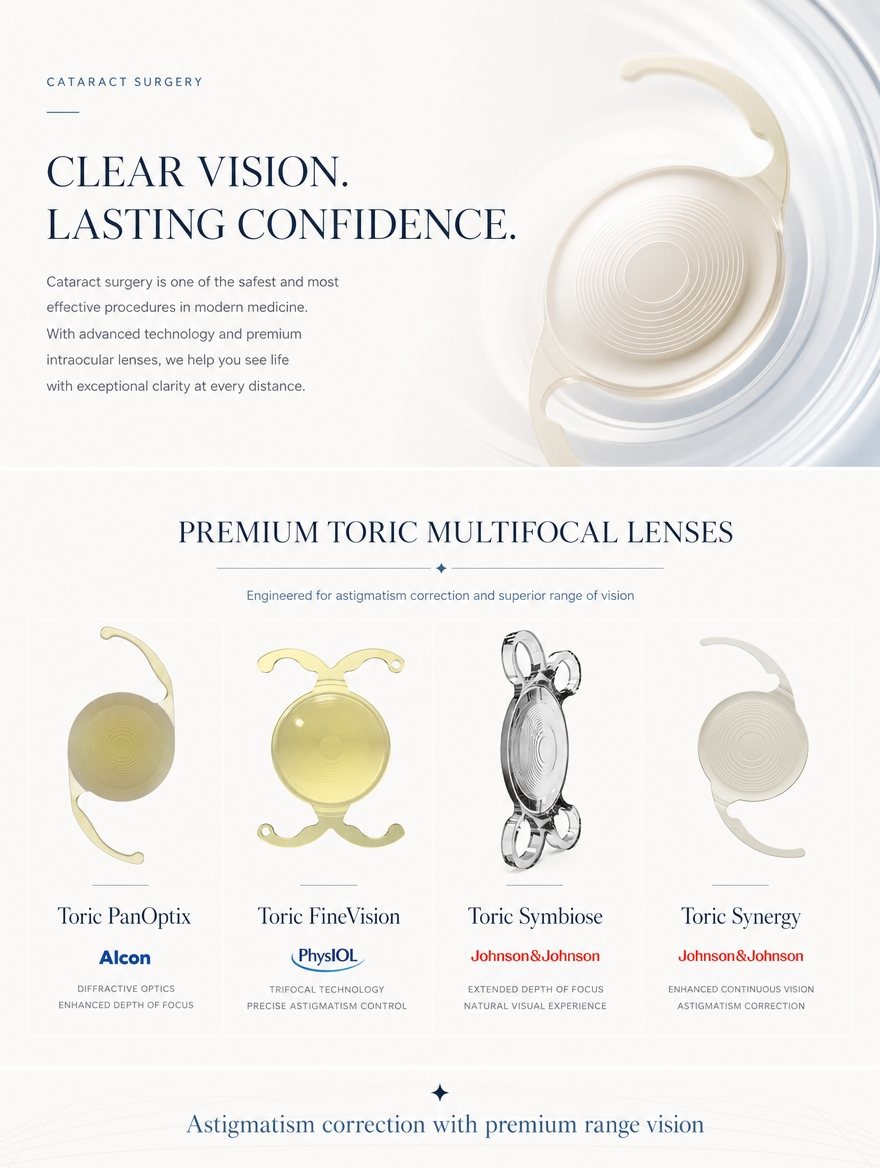
The right lens depends on daily life, not just prescription — how much you value distance clarity versus near-and-far freedom, how much night glare you're willing to tolerate, and whether astigmatism needs correcting.
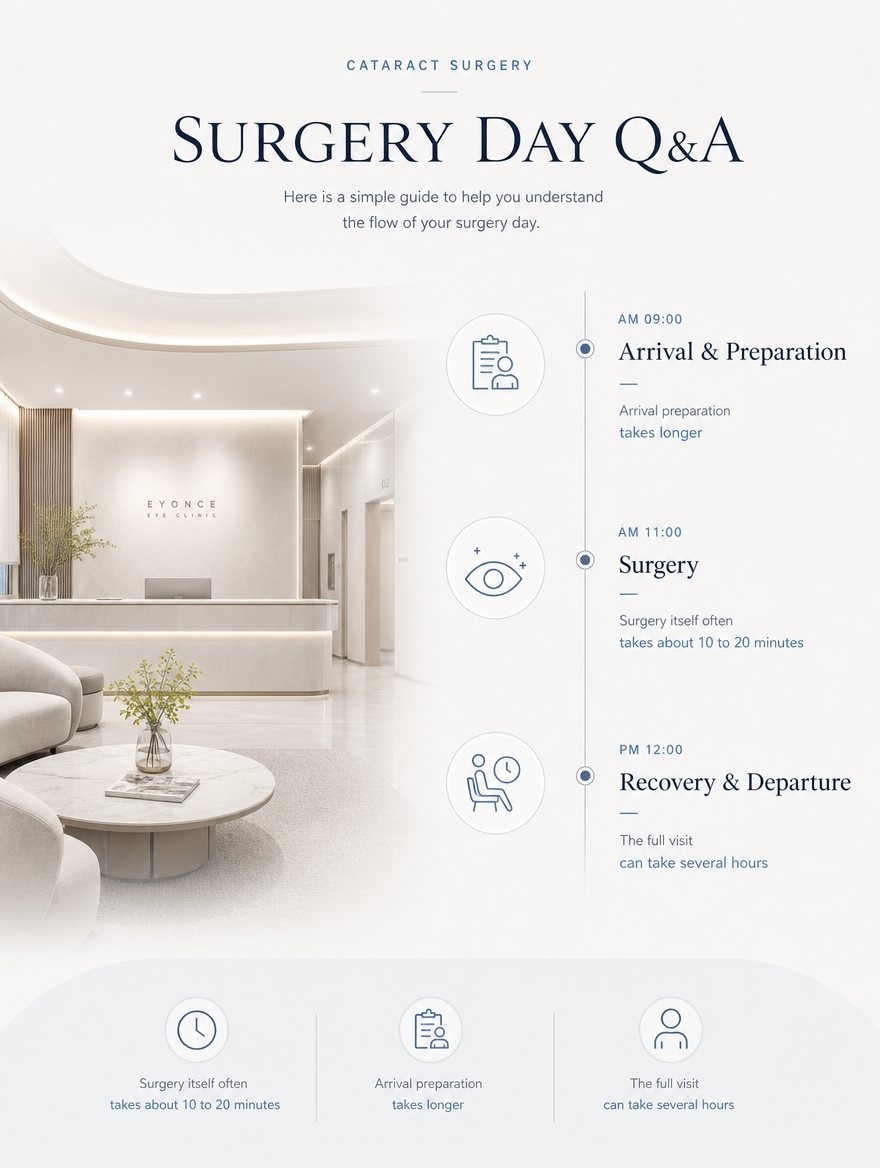
Surgery day itself is straightforward: arrival and preparation in the morning, roughly 10–20 minutes of actual surgery per eye, and recovery before departure — often complete in a few hours.
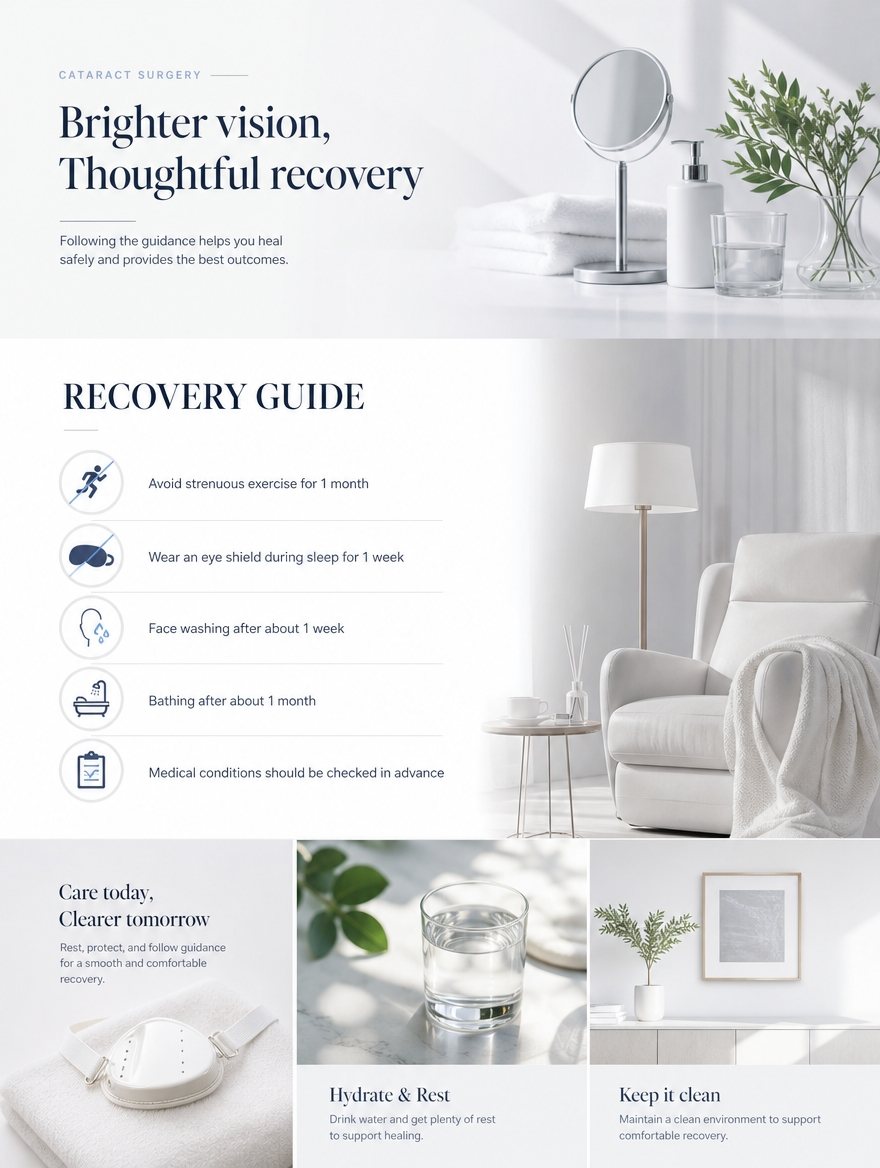
Aftercare is equally structured: an eye shield during sleep for a week, no strenuous exercise for a month, and a clear timeline for washing your face and bathing safely.

Many patients notice sharper edges and brighter colors within days. Our interpreters stay with you from the first exam through your follow-up visit.
Choosing between monofocal, EDOF, multifocal and toric multifocal ultimately comes down to four factors mapped during your consultation: vision focus, astigmatism correction, night-glare tolerance and spectacle independence — so your lens is matched to your eyes and your lifestyle.
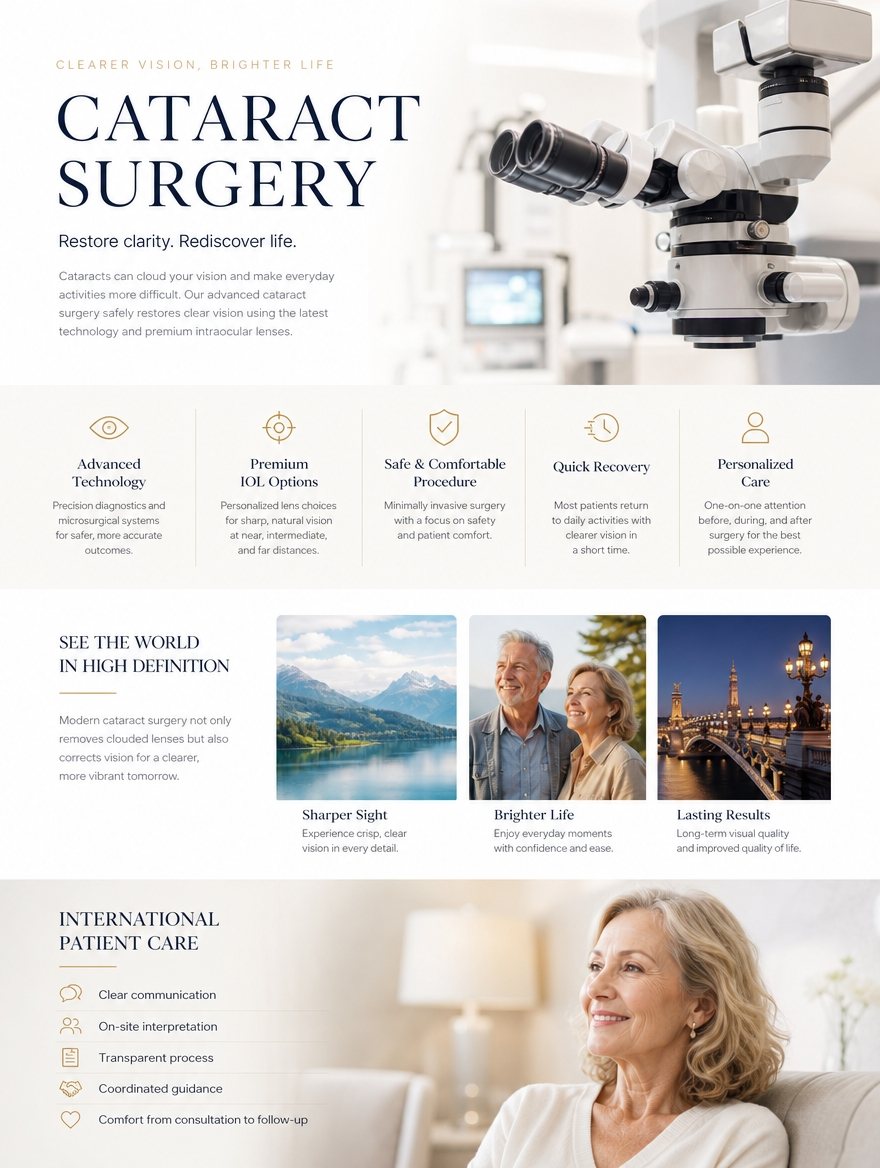
We map your eyes with diagnostic imaging and match the lens to how you live — reading, driving, working. Many patients read and drive without glasses for the first time in years.
She came for cataract surgery with a premium multifocal lens. The team was patient and kind through every step, and the aftercare guidance made managing her recovery simple. For the first time in a decade she reads menus and drives — glasses-free.
Read patient reviewsInternational patients share what actually happened — from their first fears to waking up the next morning without glasses.
Our patients share their stories on Google — verified, public and unfiltered. Open the map to read every review straight from the source.
Tell us your prescription and travel dates. Our English-speaking team will design your personalized plan — free of charge, no pressure.
An English-speaking eye clinic in the heart of Gangnam, Seoul — moments from Sinnonhyeon Station and easily reached from Incheon International Airport.
5–6F, Duo Sinnonhyeon, 368 Sapyeong-daero, Seocho-gu, Seoul, South Korea
+82-10-6308-0984 — English, Chinese, Mongolian & Thai
Mon, Tue, Thu, Fri 09:00–18:00 · Sat 09:00–16:00 · Lunch break 13:00–14:00 · Closed Wed & Sun
By appointment only · Registration may close early depending on the day’s schedule.
Sinnonhyeon Station (Line 9 / Sinbundang Line) — 3 min walk. Gangnam Station (Line 2) nearby.