📲 WhatsApp +82-10-6308-0984 Gangnam · Seoul · Korea
EYEONCE Home
Procedure Differences Reviews Blog Free Consultation
Near · Intermediate · Far

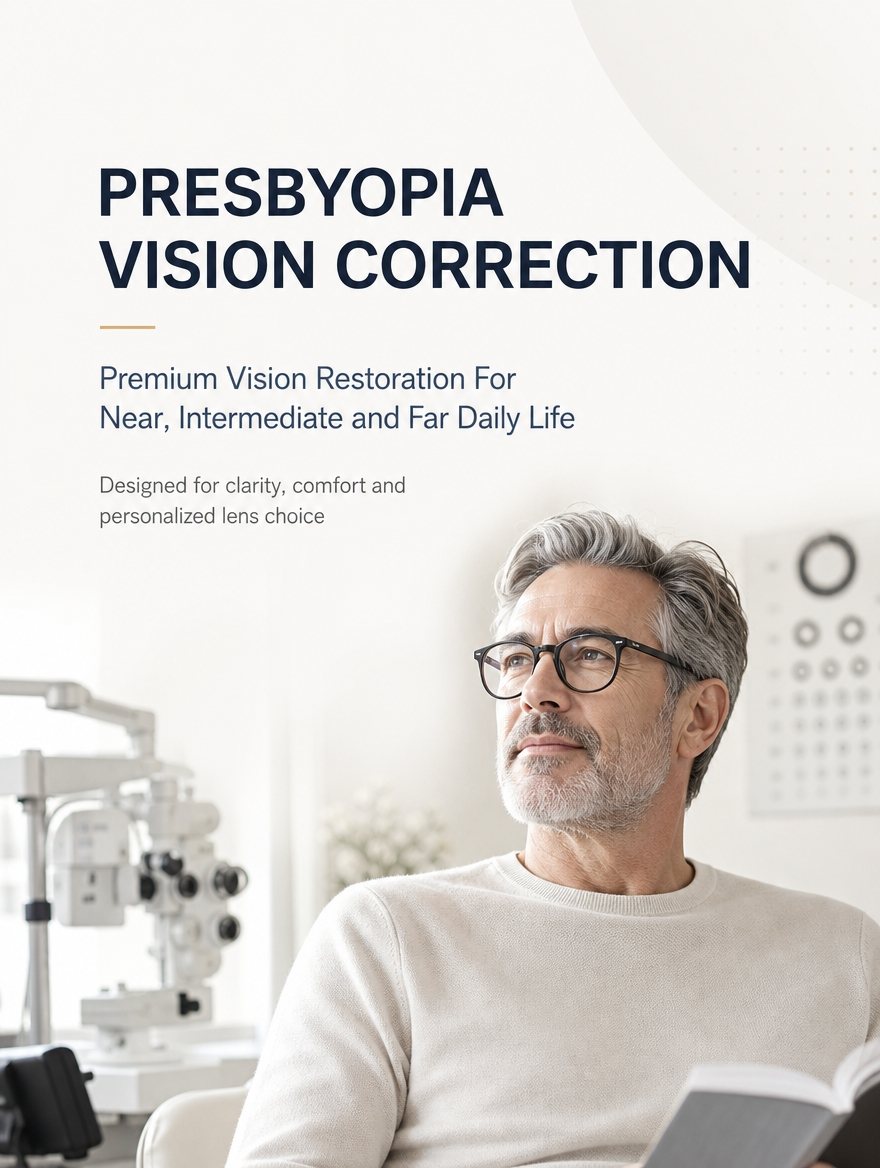
Presbyopia Correction

Lens correction for near, intermediate and far vision — so you can read, work and live without constantly reaching for reading glasses.

Life Without Reading Glasses

One solution for every distance

Presbyopia is the natural, age-related loss of near focus. With multifocal and extended-range lenses, EYEONCE corrects vision across all distances — from your phone screen to the road ahead.

Near, intermediate & far Premium multifocal lenses Lens chosen for your prescription Less dependence on glasses 3D ocular mapping Lifetime aftercare
📖

Near

Read a book, your phone and fine print comfortably — without holding it at arm's length.

💻

Intermediate

The everyday middle distance: your laptop, the dashboard, a face across the table.

🌄

Far

Crisp distance vision for driving, travel and simply enjoying the view around you.

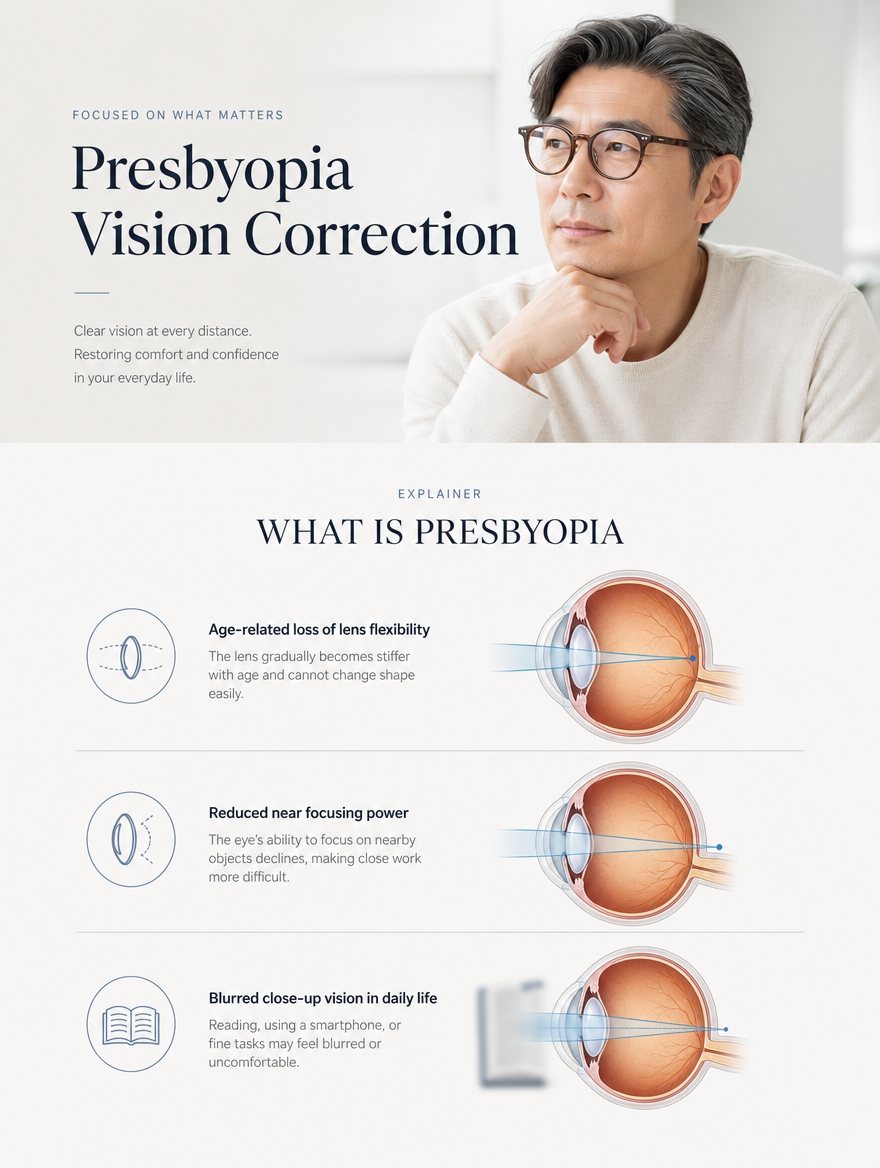
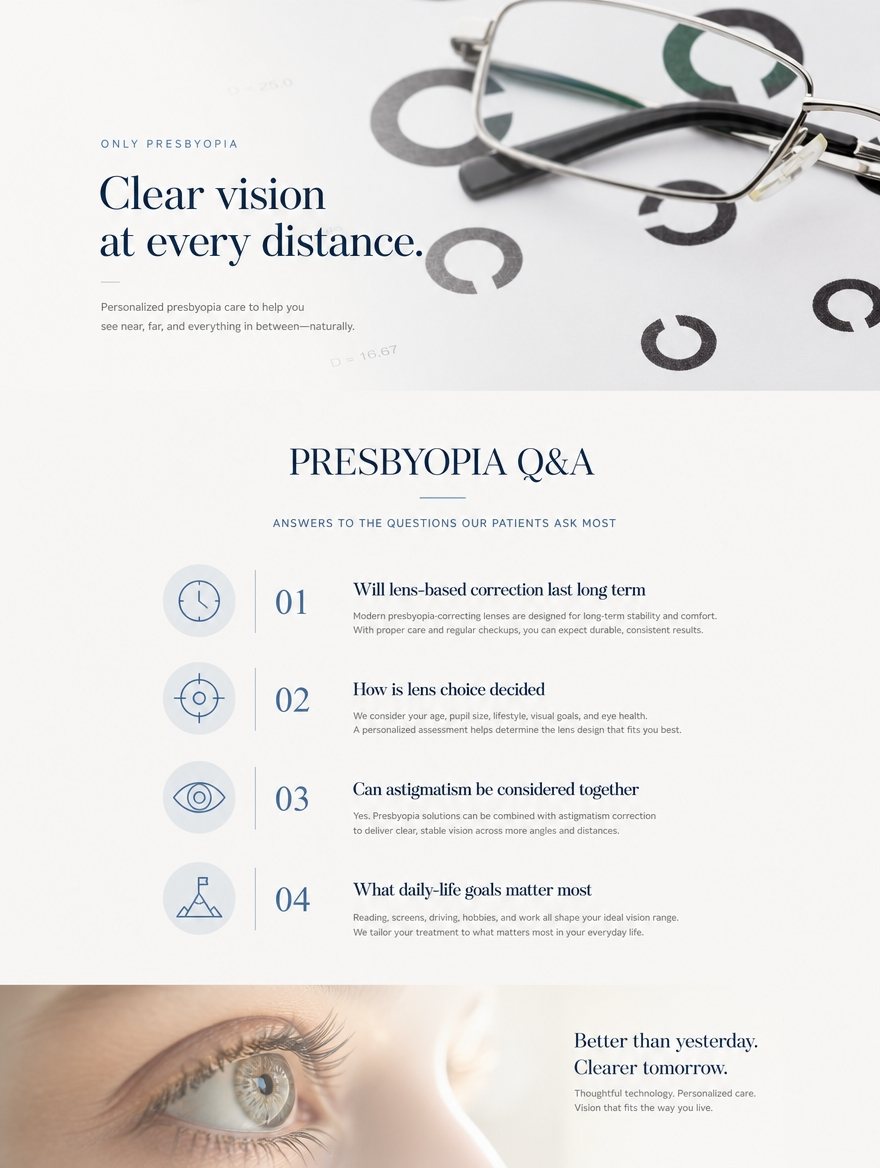
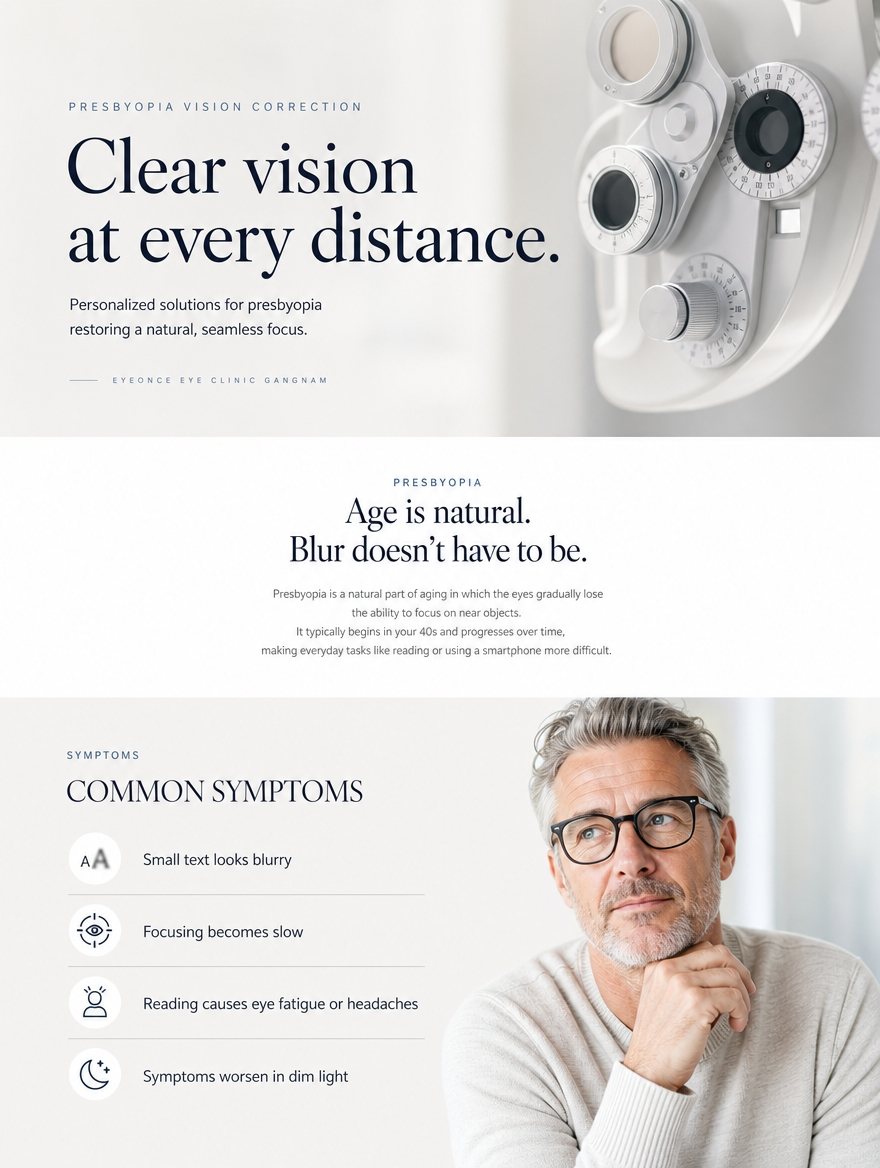
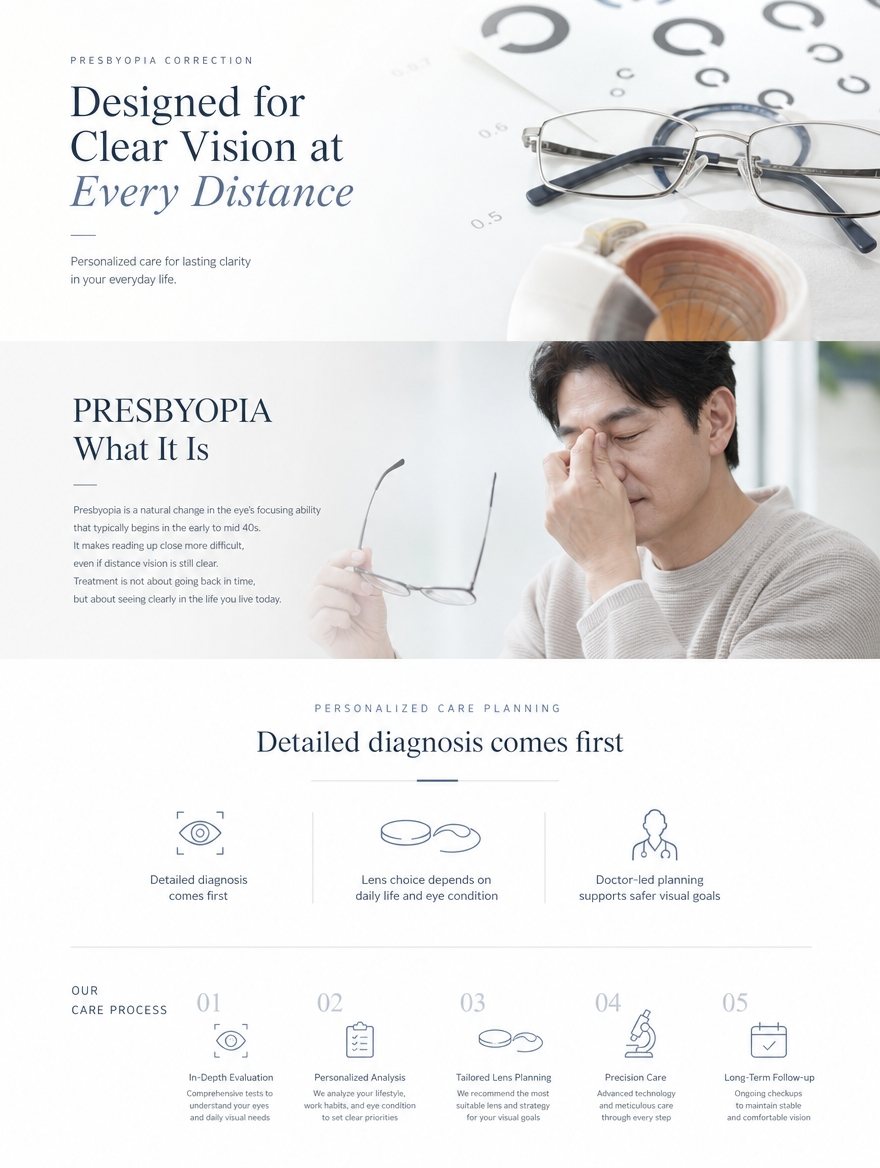
Presbyopia is the natural, age-related stiffening of the eye's lens — usually starting in the early-to-mid 40s — that gradually reduces near-focusing power, making reading, phone screens and other close-up tasks harder even for people who never needed glasses before.

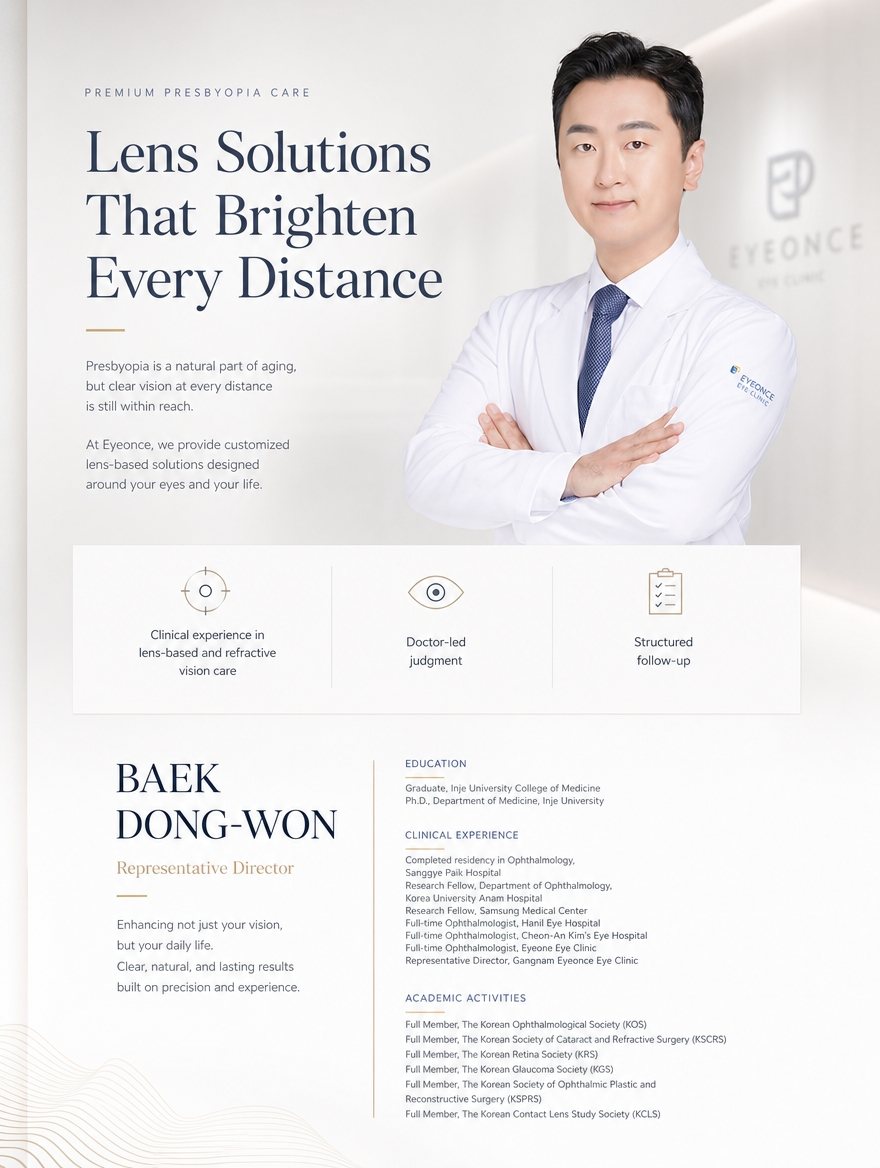
Every EYEONCE presbyopia plan is led by Dr. Baek Dong-won, whose clinical background spans cataract and refractive surgery residency and fellowship training as Representative Director.
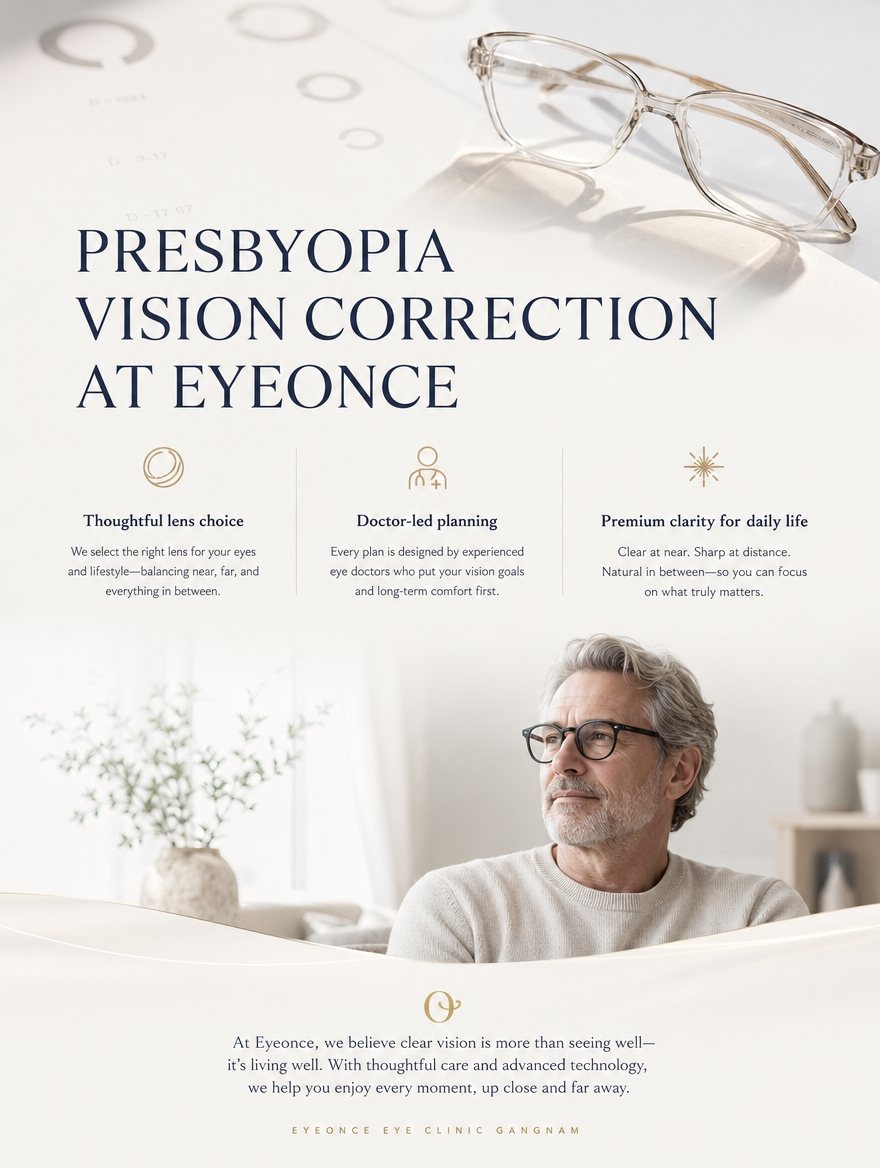
What presbyopia is and doctor-led lens-based care at EYEONCE Eye Clinic Seoul — panel 1 What presbyopia is and doctor-led lens-based care at EYEONCE Eye Clinic Seoul — panel 2 What presbyopia is and doctor-led lens-based care at EYEONCE Eye Clinic Seoul — panel 3

Common symptoms go beyond blurry text: focusing becomes slow, reading causes eye fatigue or headaches, and symptoms typically worsen in dim light.

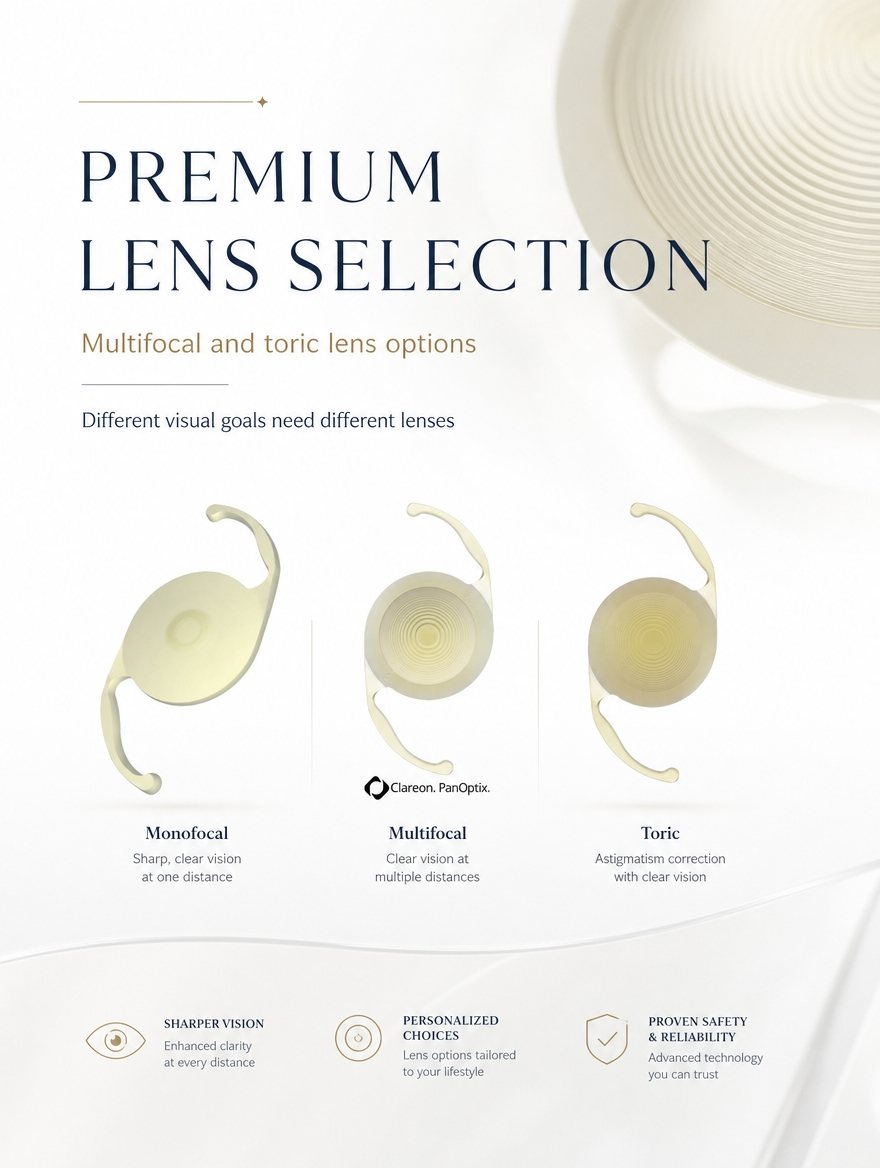
Many patients move from reading glasses to lens-based surgery once glasses become a daily hassle. Every plan starts with the same three lens families: monofocal for one clear distance, multifocal for near-and-far freedom, or toric where astigmatism also needs correcting.
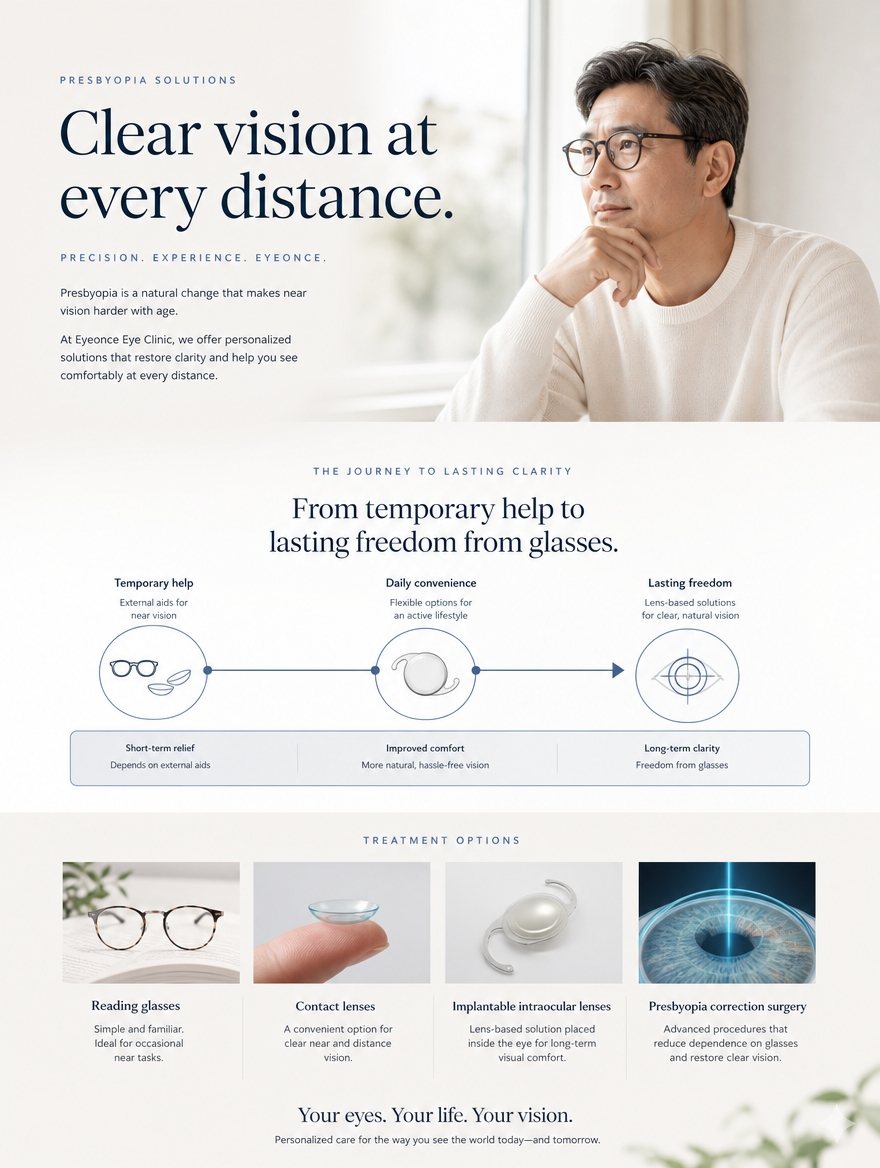
Presbyopia symptoms, treatment options and premium lens selection at EYEONCE Eye Clinic Seoul — panel 4 Presbyopia symptoms, treatment options and premium lens selection at EYEONCE Eye Clinic Seoul — panel 5 Presbyopia symptoms, treatment options and premium lens selection at EYEONCE Eye Clinic Seoul — panel 6

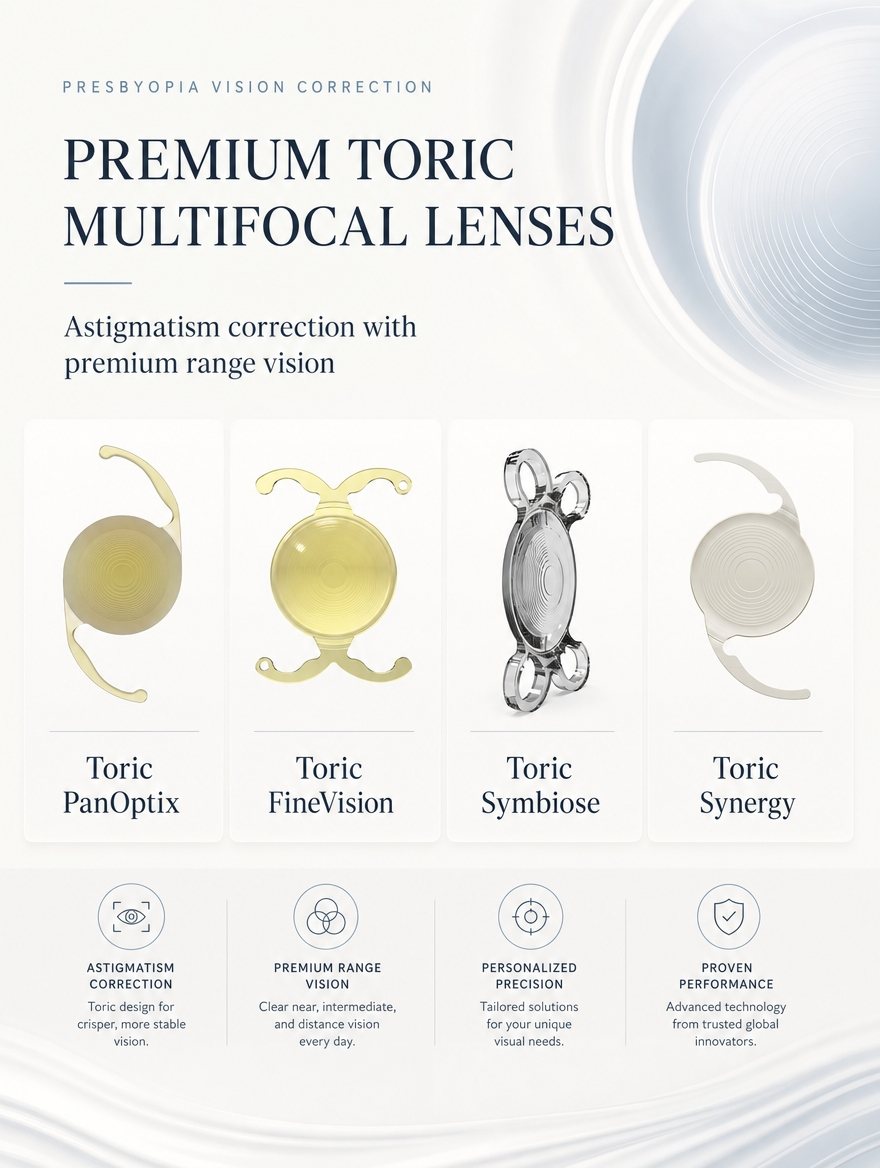
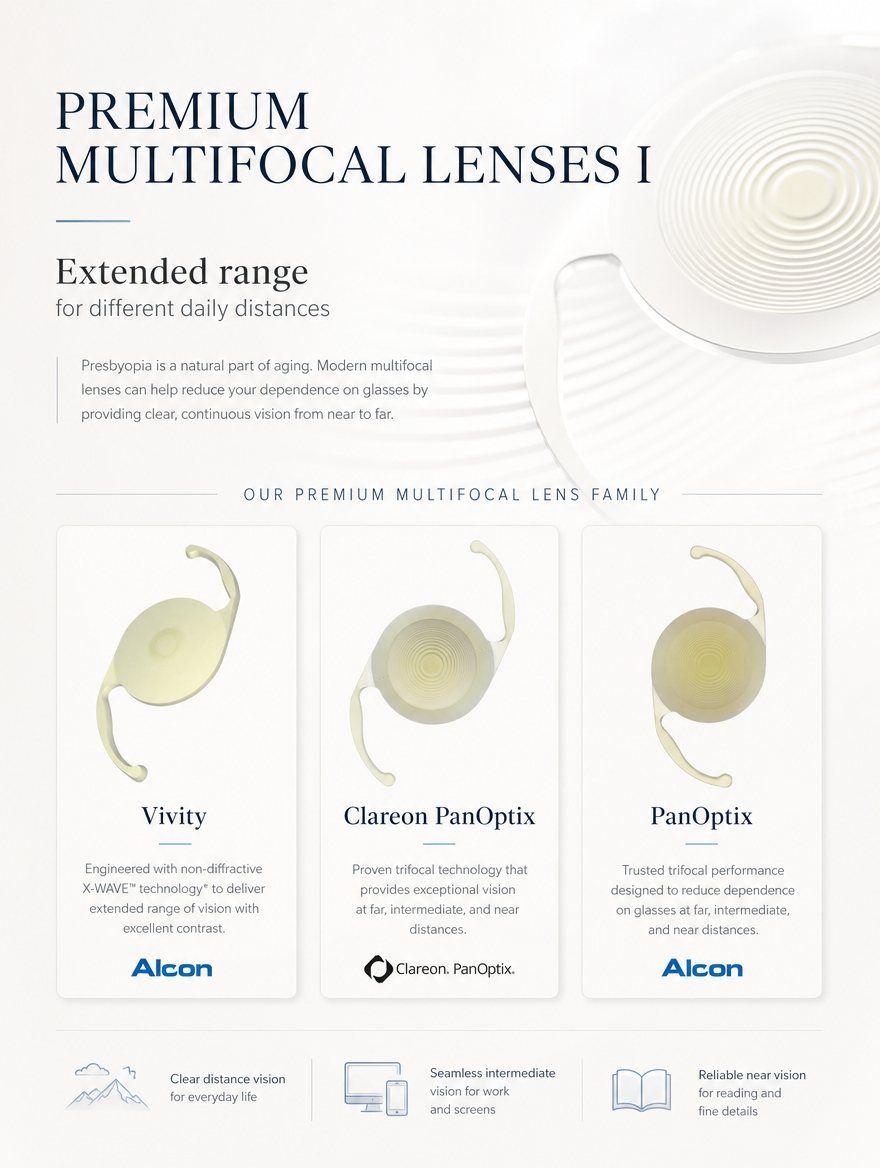
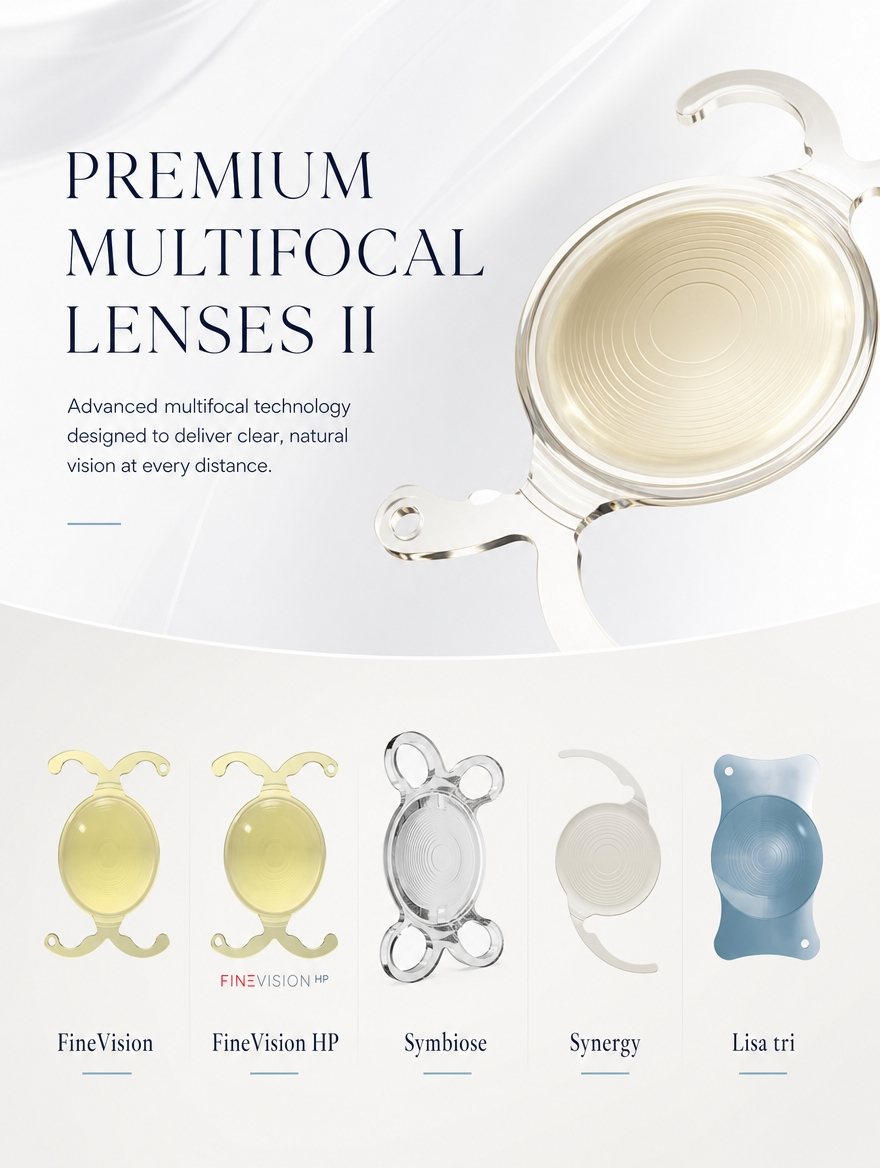
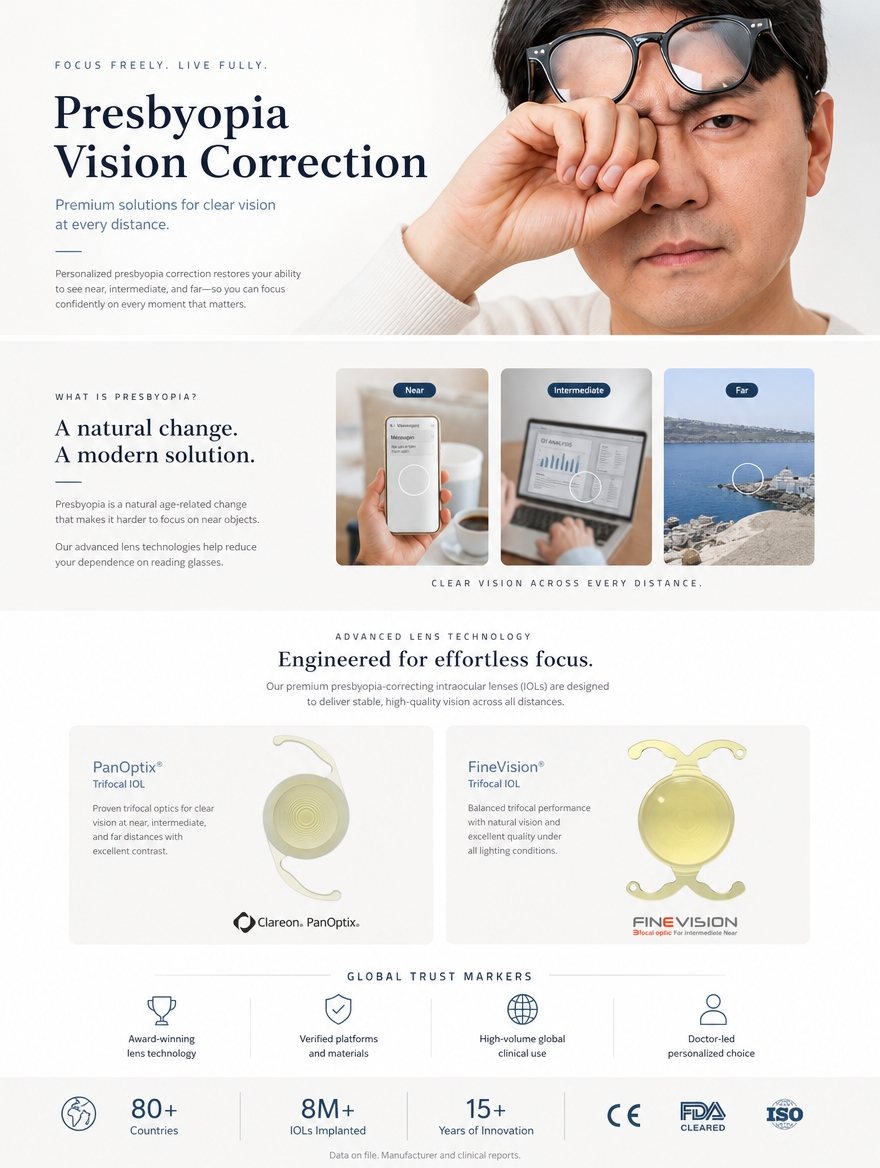
EYEONCE offers a full range of trifocal and extended-range intraocular lenses — Alcon's Vivity and Clareon PanOptix, PhysIOL's FineVision and FineVision HP, and Johnson & Johnson's Symbiose, Synergy and Lisa tri.

Toric versions of PanOptix, FineVision, Symbiose and Synergy add astigmatism correction alongside multifocal vision for patients who need both.
Premium trifocal and toric multifocal IOL brands for presbyopia at EYEONCE Eye Clinic Seoul — panel 7 Premium trifocal and toric multifocal IOL brands for presbyopia at EYEONCE Eye Clinic Seoul — panel 8 Premium trifocal and toric multifocal IOL brands for presbyopia at EYEONCE Eye Clinic Seoul — panel 9

Choosing the right lens comes down to daily life: how much near, intermediate and distance vision you actually need, whether astigmatism is present, and your tolerance for night glare.

PanOptix and FineVision trifocal IOLs are backed by real scale — implanted in over 8 million eyes across 80+ countries over 15+ years, with CE, FDA and ISO clearances.

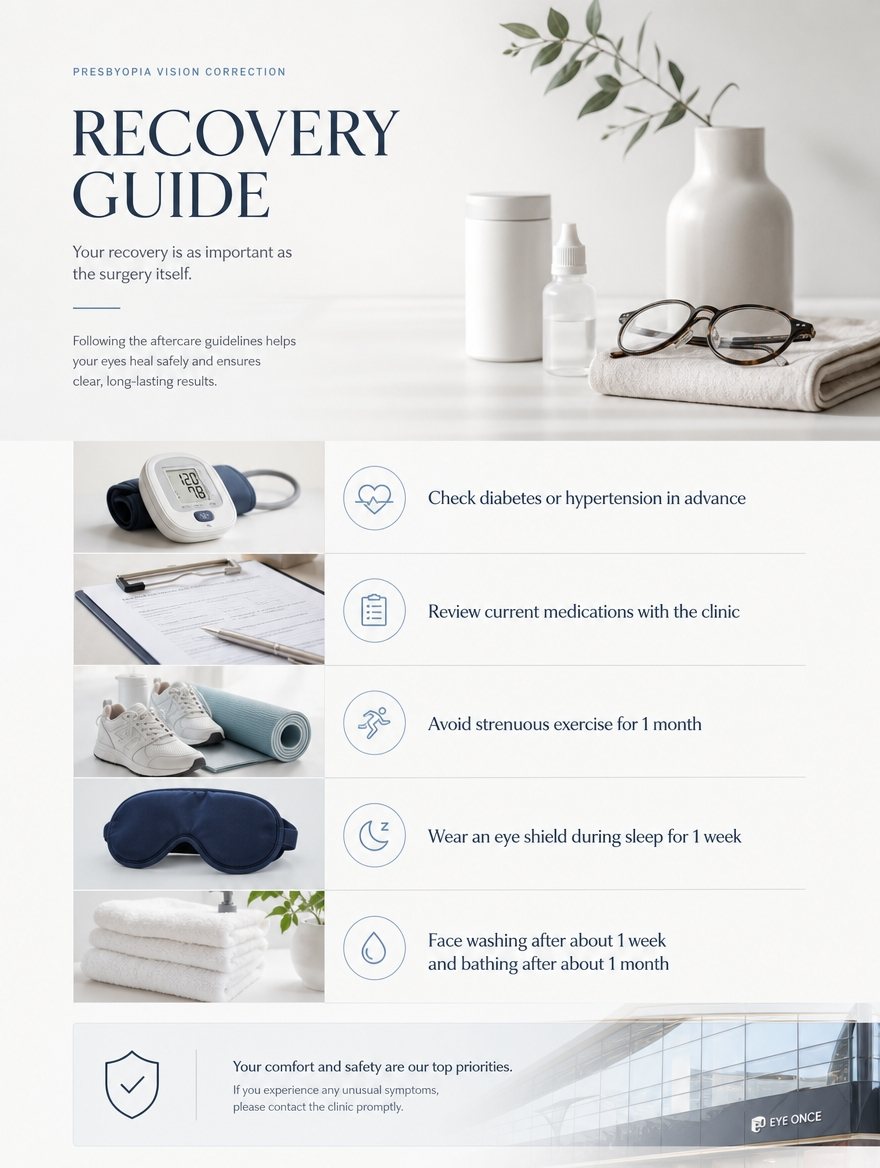
Recovery follows a clear plan: pre-existing conditions like diabetes or hypertension are reviewed in advance, strenuous exercise is avoided for a month, and an eye shield is worn during sleep for the first week.

Choosing a lens, trifocal IOL global trust markers and recovery guide at EYEONCE Eye Clinic Seoul — panel 10 Choosing a lens, trifocal IOL global trust markers and recovery guide at EYEONCE Eye Clinic Seoul — panel 11 Choosing a lens, trifocal IOL global trust markers and recovery guide at EYEONCE Eye Clinic Seoul — panel 12

Every plan follows the same steps: eye exam, lifestyle review, lens selection, surgery and follow-up.

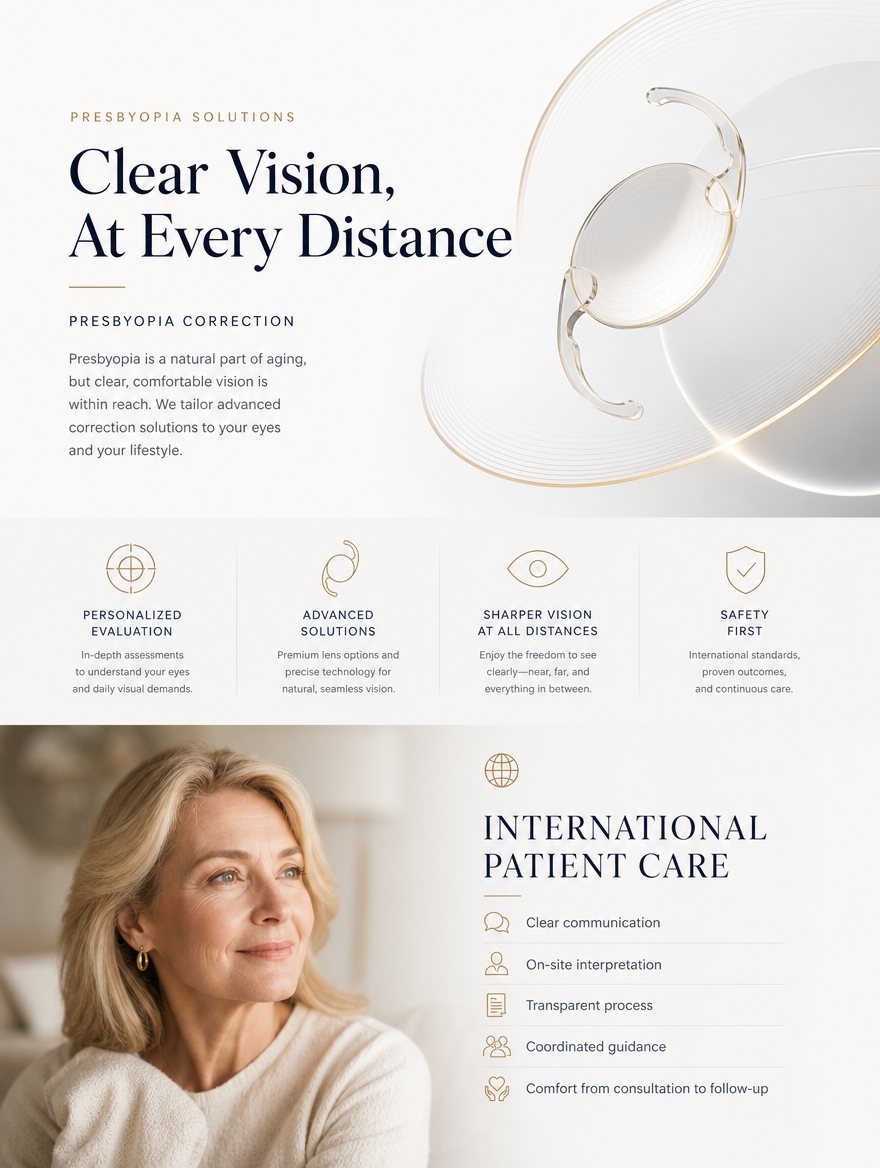
This answers the questions patients ask most: whether lens-based correction lasts long-term, how lens choice is decided, and whether astigmatism can be corrected at the same time. International patients get the same on-site interpretation and WhatsApp follow-up as every other EYEONCE procedure.
Presbyopia care process, patient Q&A and international patient care at EYEONCE Eye Clinic Seoul — panel 13 Presbyopia care process, patient Q&A and international patient care at EYEONCE Eye Clinic Seoul — panel 14 Presbyopia care process, patient Q&A and international patient care at EYEONCE Eye Clinic Seoul — panel 15 Presbyopia care process, patient Q&A and international patient care at EYEONCE Eye Clinic Seoul — panel 16
Good to Know

Presbyopia — questions & answers

Yes. EYEONCE is a Seoul-government-registered clinic for international patients, with in-house interpreters on-site in English, Chinese, Mongolian and Thai. From your first WhatsApp message through surgery and follow-up, there is no language barrier.
For laser vision correction (SMILE PRO, SMILE LASIK, LASIK/LASEK) a stay of about 3-5 days is typical — exam and surgery can often be done the same day, with a next-day check-up before you fly home. For ICL and lens procedures we usually recommend 5-7 days. Send us your travel dates on WhatsApp and we will build the schedule around you.
In the rare case an enhancement is needed, it is covered by our lifetime aftercare. Please contact us on WhatsApp first (+82-10-6308-0984) — we will review a detailed re-examination and, where appropriate, arrange the re-treatment. Reaching out on WhatsApp is the fastest way to get guided next steps.
Yes — in many patients a premium multifocal IOL corrects presbyopia and removes a cataract in the same procedure, restoring full-range vision at once. Your diagnostic assessment determines the best approach for your eyes.
No — the procedure is performed under topical anesthetic drops, so you feel gentle pressure rather than pain. It follows the same comfortable, outpatient approach as cataract surgery, with no stitches and no overnight stay.
Cost depends on the lens family you choose — monofocal, multifocal, EDOF or toric multifocal — and whether one or both eyes are treated. Message us on WhatsApp with your prescription and lifestyle needs for a personalized quote.
Vision typically improves within a day or two, and your brain adapts to the new full-range lens over the following weeks. Some glare or halos at night can occur early and usually settle during the first 1–3 months.
Don't rub your eyes; avoid swimming, saunas and steam rooms for about a month, and eye makeup for two weeks. Keep water and soap out of the eye, attend your follow-up checks, and use all prescribed eye drops exactly as directed.
Bring your glasses and any prescription or medical records and note any medications or eye conditions. If you wear contact lenses, stop soft lenses for 5–7 days before your exam (2–3 weeks for hard / RGP lenses), and arrange transport or a companion for surgery day.
Temporary blurriness or glare is normal as your eyes adapt to a multifocal lens — this neural adaptation can take a little time. Use your prescribed drops diligently. If you feel a foreign-body sensation or pain, visit us right away, or see a local ophthalmologist first and then contact us.
Yes. If anything ever seems wrong after surgery, contact us at any time. Through a detailed re-examination we'll assess your condition and guide the appropriate next steps.
A Real Story

"Reading glasses were taking over my life. Not anymore."

At 52, I reached for reading glasses constantly. A premium full-range lens gave me back near, middle and far in one procedure. Now I read my phone, work at my laptop and drive — all without glasses. I only wish I had done it sooner.

Read patient reviews
Real Patients

Watch their journeys

International patients share what actually happened — from their first fears to waking up the next morning without glasses.

SMILE LASIK — the realityFears vs. what really happened
Why fly to SeoulThe honest cost breakdown
Which surgery to chooseSMILE vs traditional LASIK
From the Middle EastYears of glasses — then 10 minutes
A SMILE journeyAt EYEONCE Gangnam
Cataract, restoredPremium IOL story
Verified on Google

Real reviews from real patients

Our patients share their stories on Google — verified, public and unfiltered. Open the map to read every review straight from the source.

★★★★★

EYEONCE Eye Clinic Gangnam is reviewed publicly on Google by patients from Korea, the US and the Middle East. Tap the map to read them all.

Ready to see clearly?

Your glasses-free life starts
with one message.

Tell us your prescription and travel dates. Our English-speaking team will design your personalized plan — free of charge, no pressure.

Find Us

Getting to EYEONCE

An English-speaking eye clinic in the heart of Gangnam, Seoul — moments from Sinnonhyeon Station and easily reached from Incheon International Airport.

📍
EYEONCE Eye Clinic Gangnam

5–6F, Duo Sinnonhyeon, 368 Sapyeong-daero, Seocho-gu, Seoul, South Korea

📲
WhatsApp Consultation

+82-10-6308-0984 — English, Chinese, Mongolian & Thai

🕘
Opening Hours

Mon, Tue, Thu, Fri 09:00–18:00 · Sat 09:00–16:00 · Lunch break 13:00–14:00 · Closed Wed & Sun
By appointment only · Registration may close early depending on the day’s schedule.

🚇
By Metro

Sinnonhyeon Station (Line 9 / Sinbundang Line) — 3 min walk. Gangnam Station (Line 2) nearby.

From Incheon International Airport (ICN)
Private taxi≈ 60–75 min · approx. ₩70,000–90,000 — the most direct option.
AREX + MetroAirport Railroad to Seoul Station (~50 min), transfer to Line 9 to Sinnonhyeon (~25 min). ≈ 90 min total.
Airport LimousineDirect bus toward Gangnam (~70–90 min), then a short taxi ride.
Chat with us