📲 WhatsApp +82-10-6308-0984 Gangnam · Seoul · Korea
EYEONCE Home
Procedure Differences Reviews Free Consultation
All-Laser Vision Correction

LASIK / LASEK

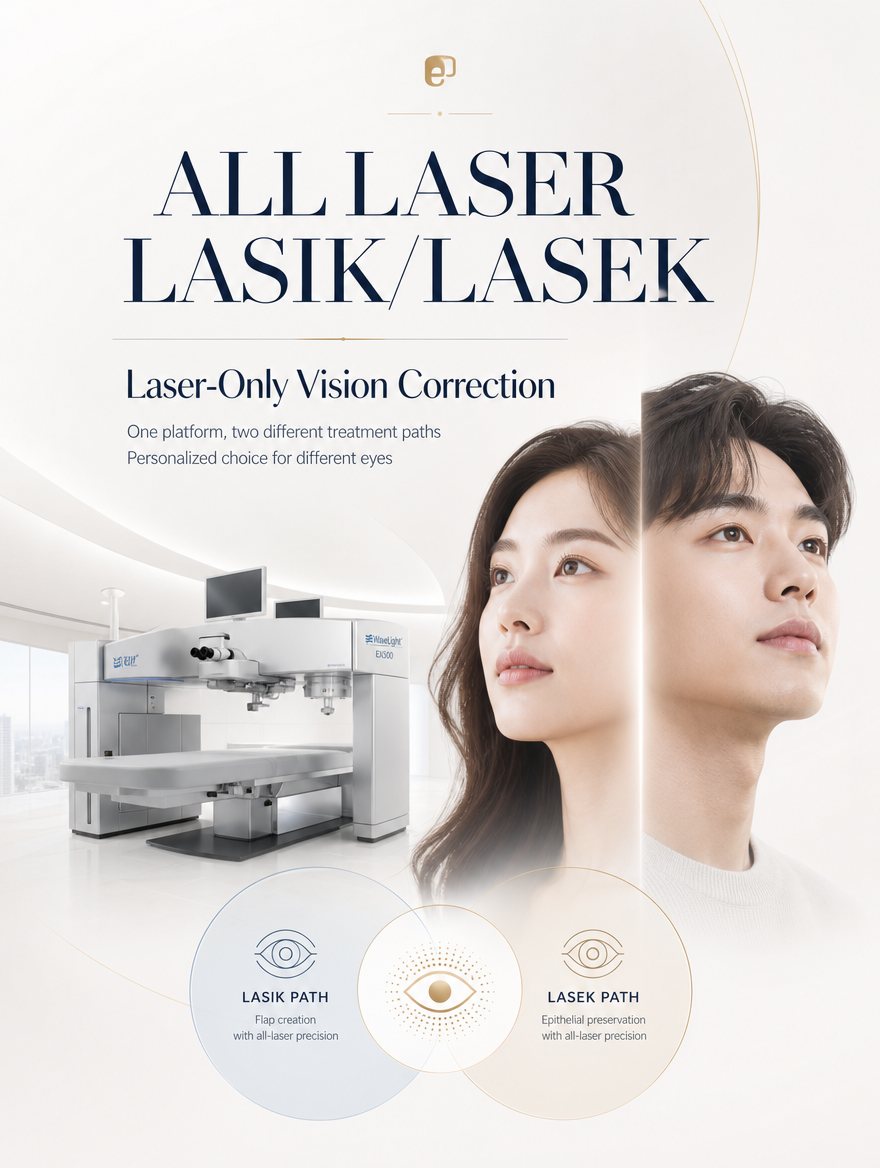
One platform, two different treatment paths — a personalized choice for different eyes. Proven, all-laser vision correction tailored to your cornea, your prescription and your lifestyle.

Two Paths, One Goal

Personalized laser correction

Not every eye is the same. After a precise diagnostic assessment, we recommend the path that best fits your corneal thickness, prescription and daily life.

👁️

LASIK Path

A corneal flap is created with all-laser precision, then reshaped. Fast visual recovery — often clear within a day — ideal for suitable corneas seeking quick turnaround.

LASEK Path

The epithelium is preserved rather than a flap created — a surface approach well-suited to thinner corneas or more active, contact-sport lifestyles. Recovery is more gradual but very stable.

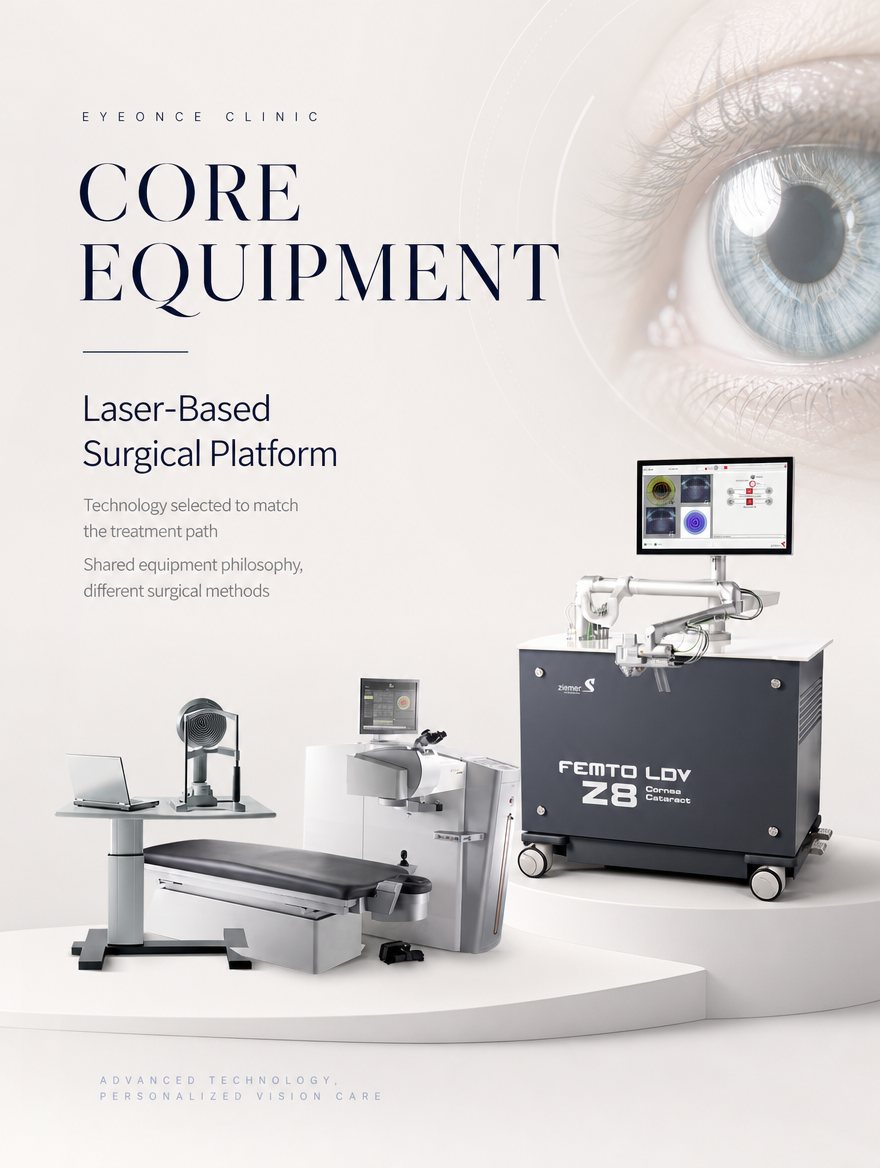
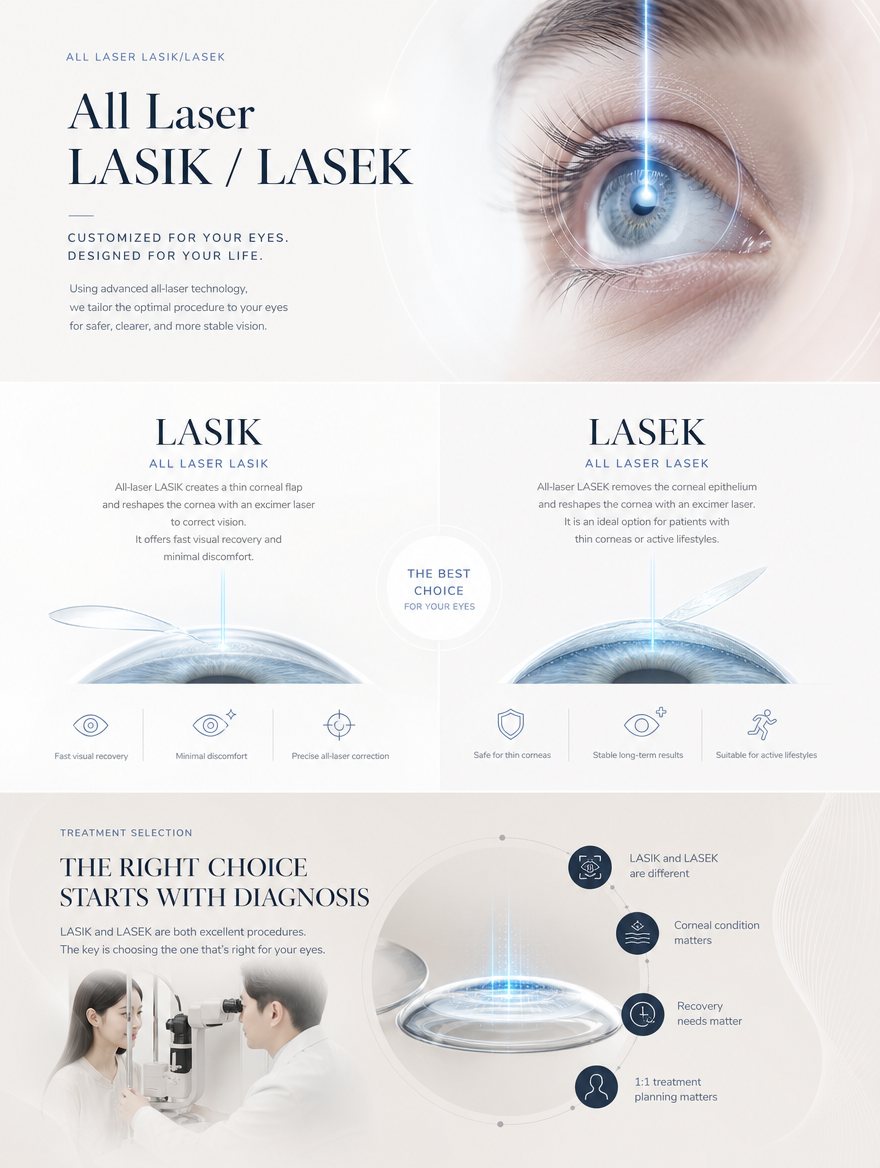
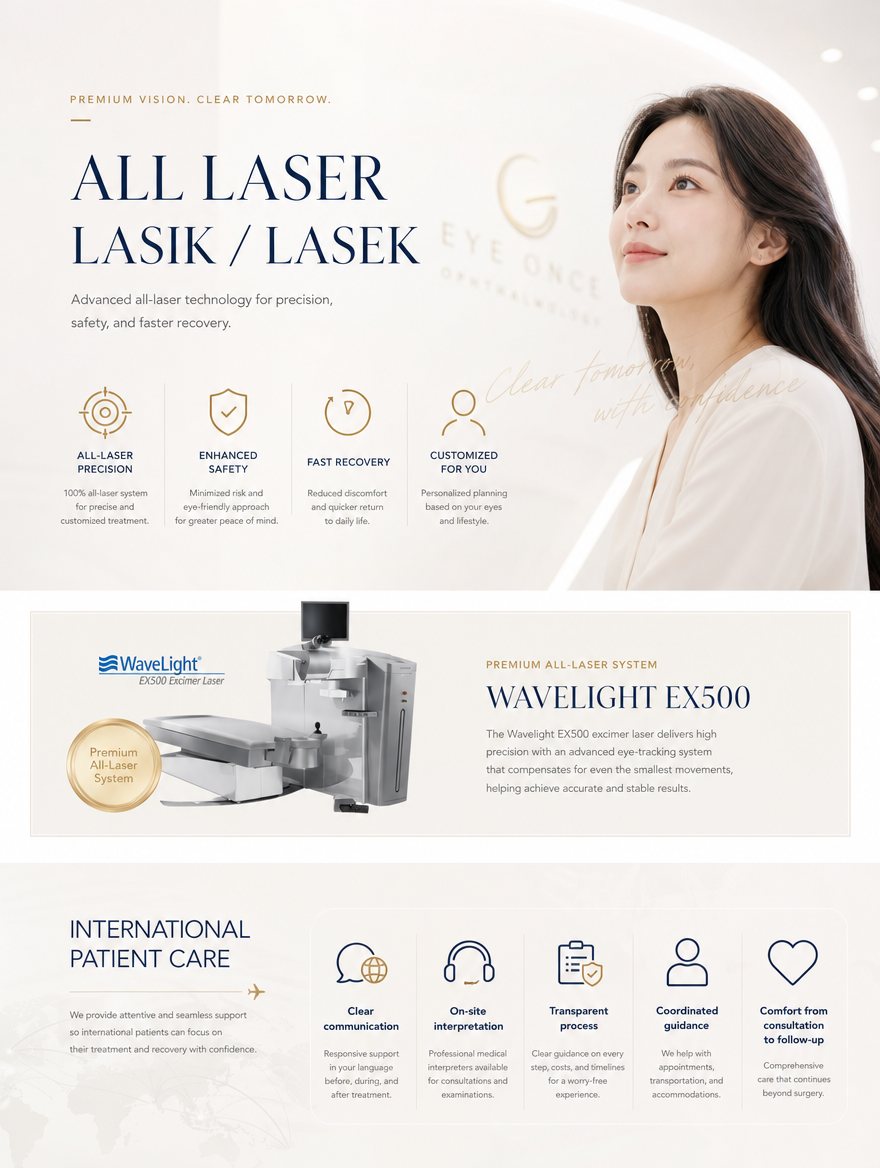
LASIK and LASEK are both all-laser vision-correction paths at EYEONCE, performed on the same core equipment — the Ziemer FEMTO LDV Z8 femtosecond platform and the WaveLight EX500 excimer laser — but they reshape the cornea in fundamentally different ways.

LASIK creates a thin corneal flap with the femtosecond laser before the excimer laser reshapes the tissue beneath it; LASEK instead gently loosens and preserves the corneal epithelium, reshaping the surface directly without ever creating a flap.
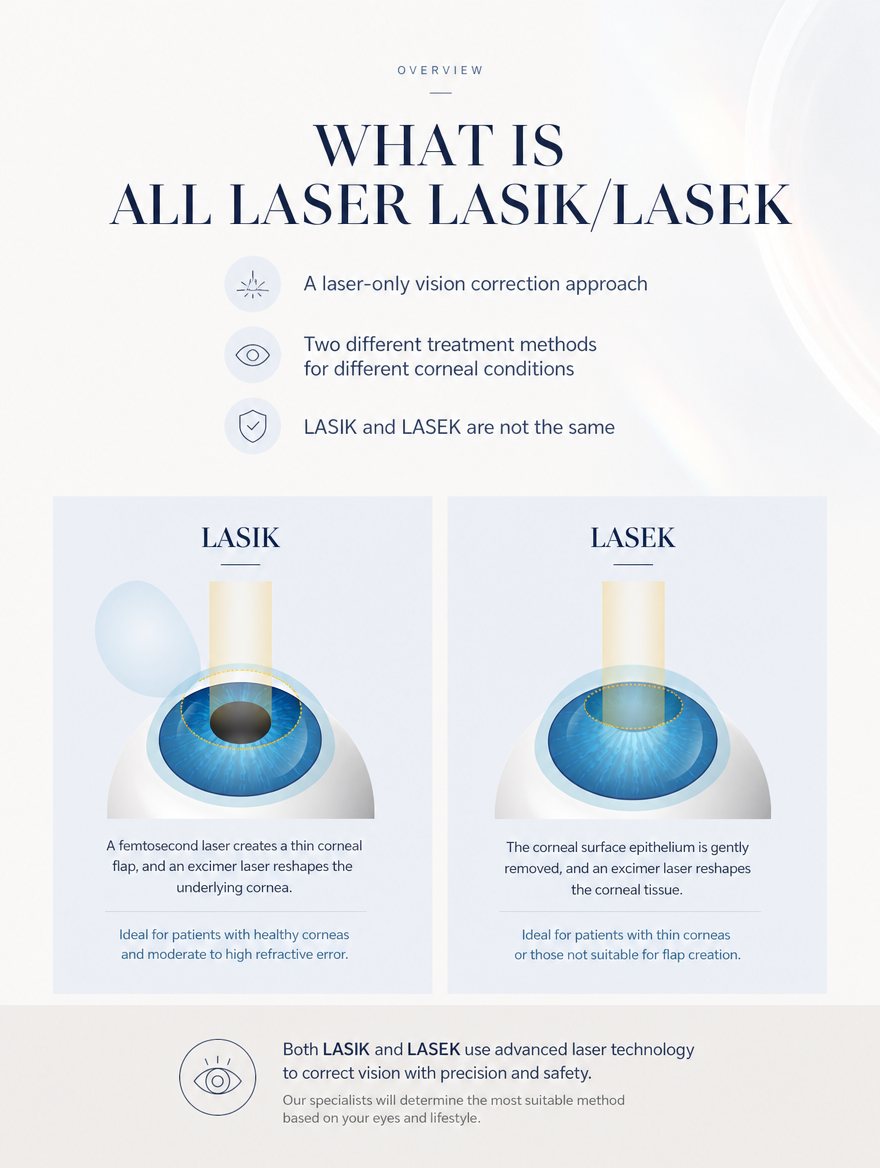
LASIK vs LASEK paths on the Ziemer FEMTO LDV Z8 and WaveLight EX500 at EYEONCE Eye Clinic Seoul — panel 1 LASIK vs LASEK paths on the Ziemer FEMTO LDV Z8 and WaveLight EX500 at EYEONCE Eye Clinic Seoul — panel 2 LASIK vs LASEK paths on the Ziemer FEMTO LDV Z8 and WaveLight EX500 at EYEONCE Eye Clinic Seoul — panel 3

Because both paths share the same all-laser technology, they also share core benefits: no blade contact, a lower discomfort profile, and recovery-conscious protocols built around each patient's cornea.

LASIK follows four steps — a corneal flap is created, the excimer laser reshapes the cornea beneath it, the flap is repositioned, and it adheres naturally without stitches — designed for faster functional recovery in patients with healthy, suitably thick corneas.
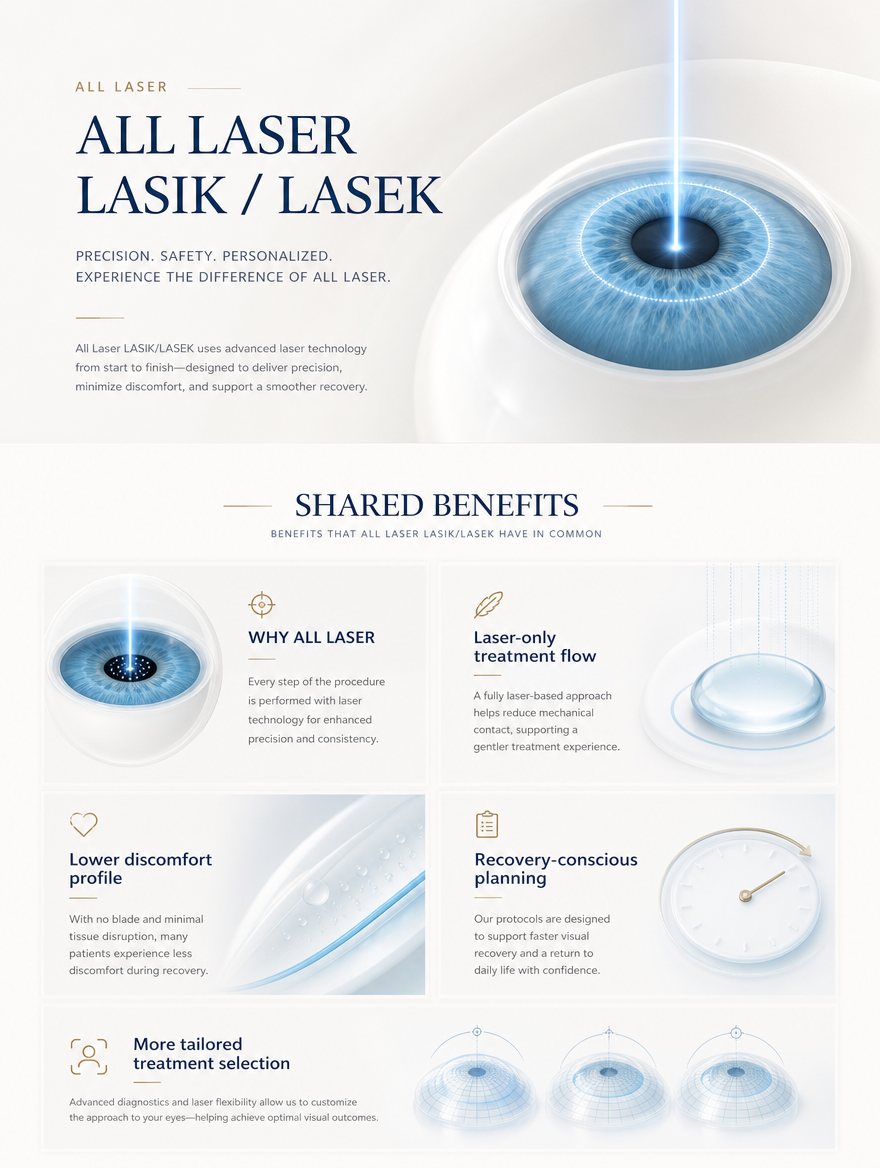
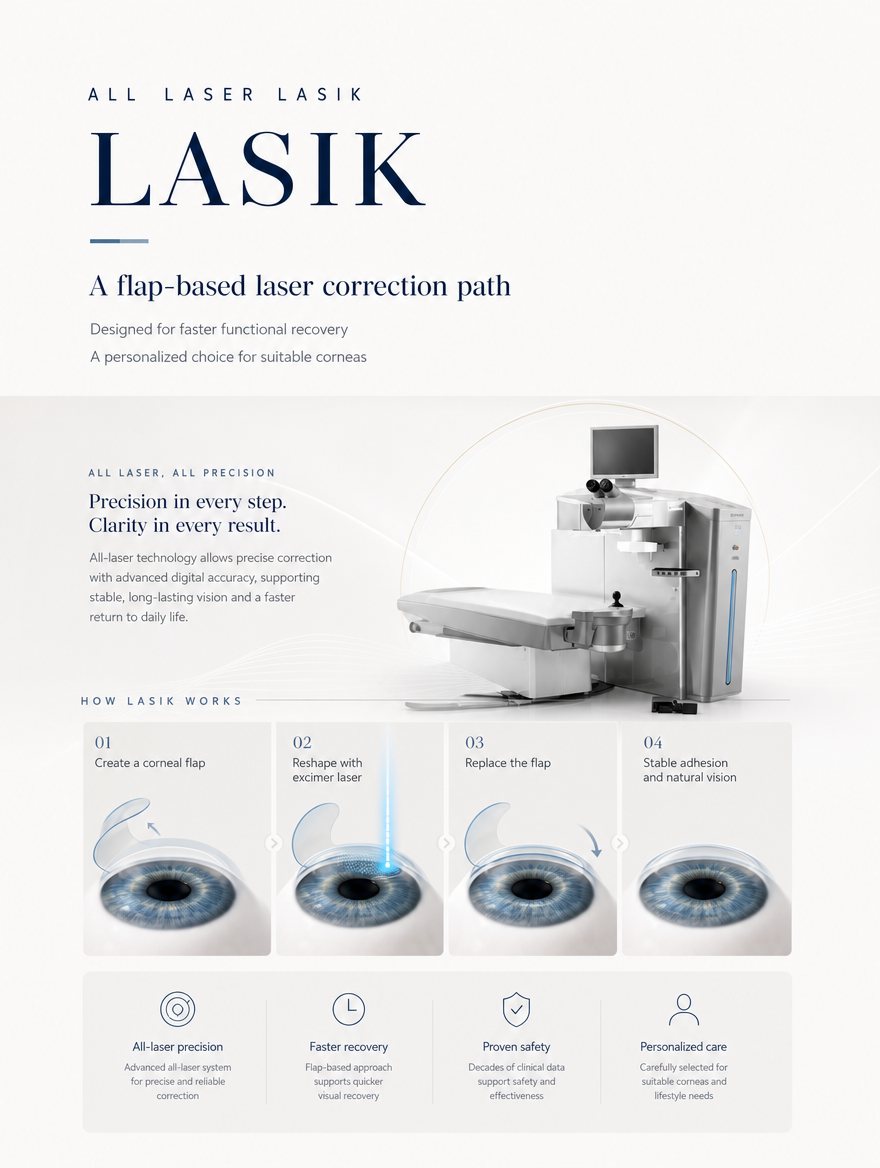
All-laser shared benefits and the LASIK flap procedure at EYEONCE Eye Clinic Seoul — panel 4 All-laser shared benefits and the LASIK flap procedure at EYEONCE Eye Clinic Seoul — panel 5 All-laser shared benefits and the LASIK flap procedure at EYEONCE Eye Clinic Seoul — panel 6

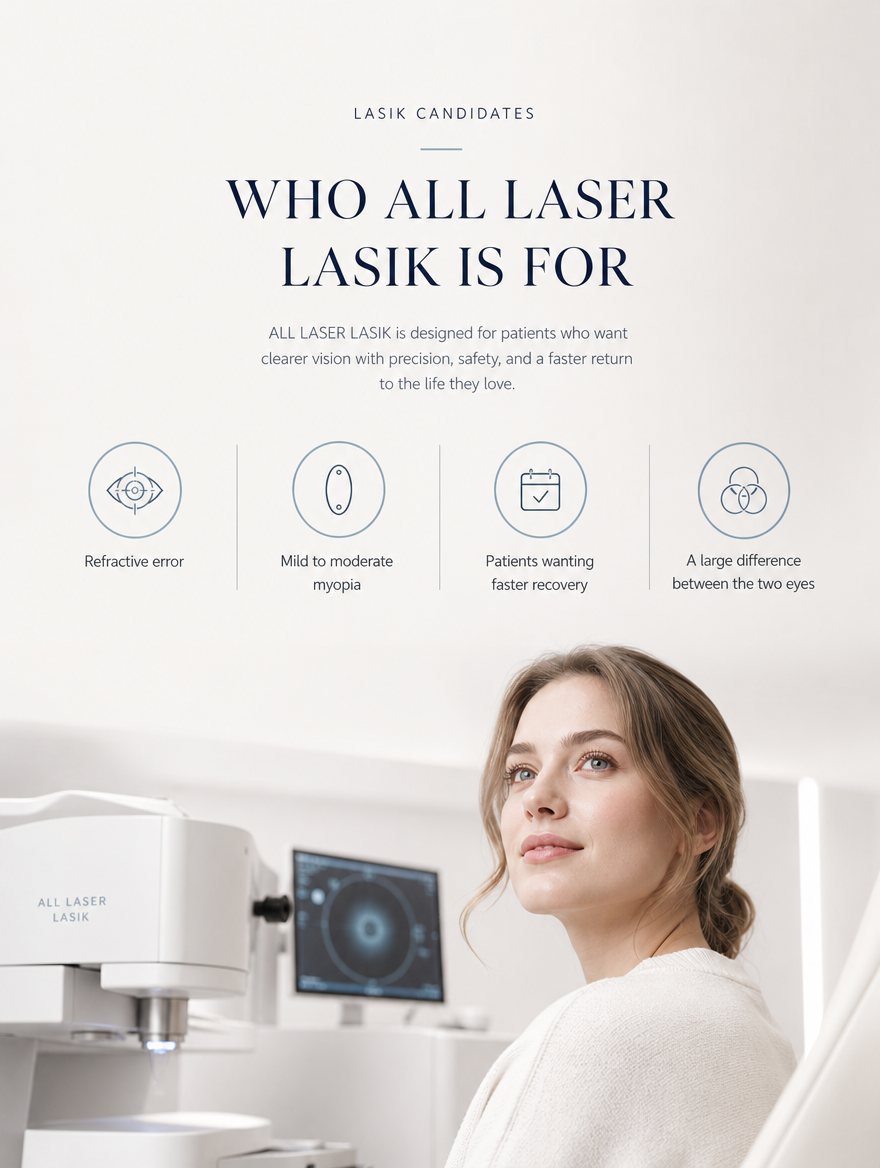
LASIK is best suited to patients with refractive error and mild-to-moderate myopia who want a faster return to daily activity, including cases with a noticeable difference between the two eyes.

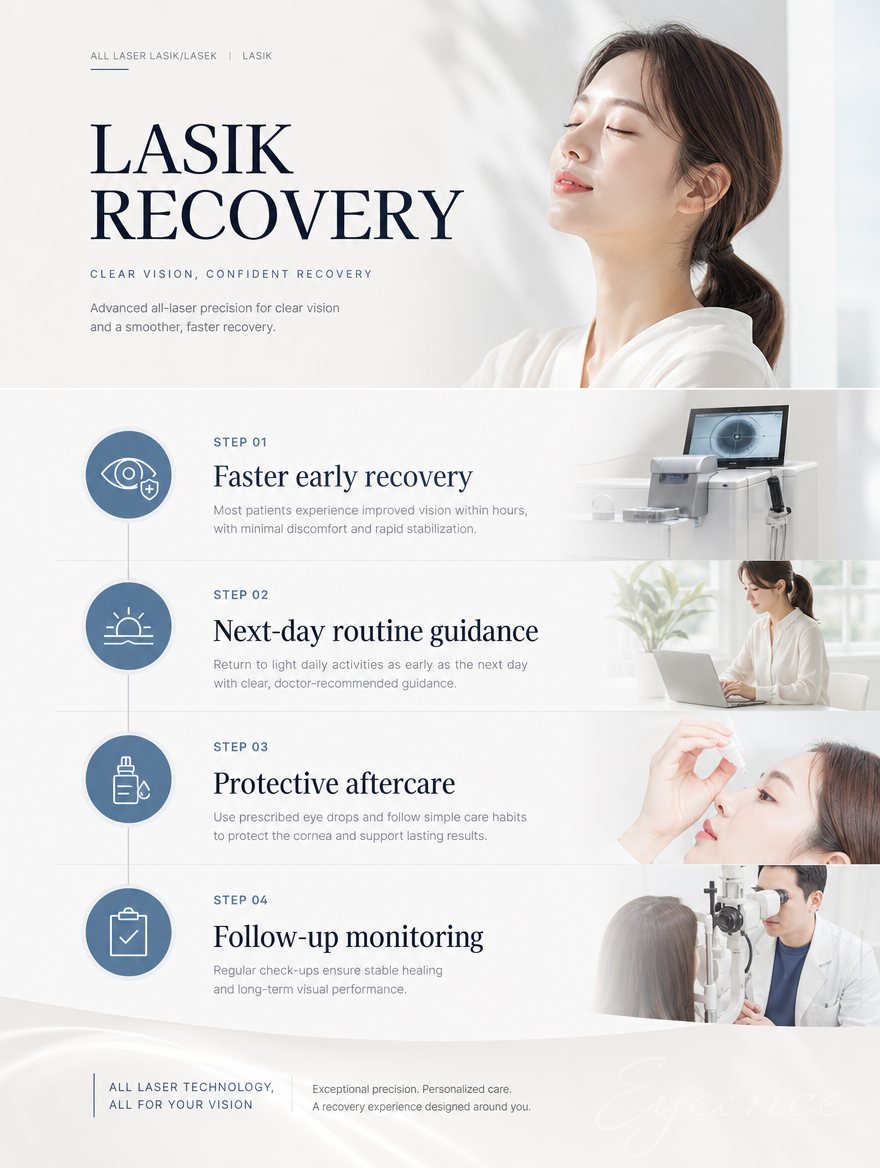
The detailed five-step process — eye analysis, laser flap creation, excimer corneal reshaping, flap repositioning and structured follow-up — typically delivers improved vision within hours, with most patients resuming light activity the very next day under doctor-guided aftercare.
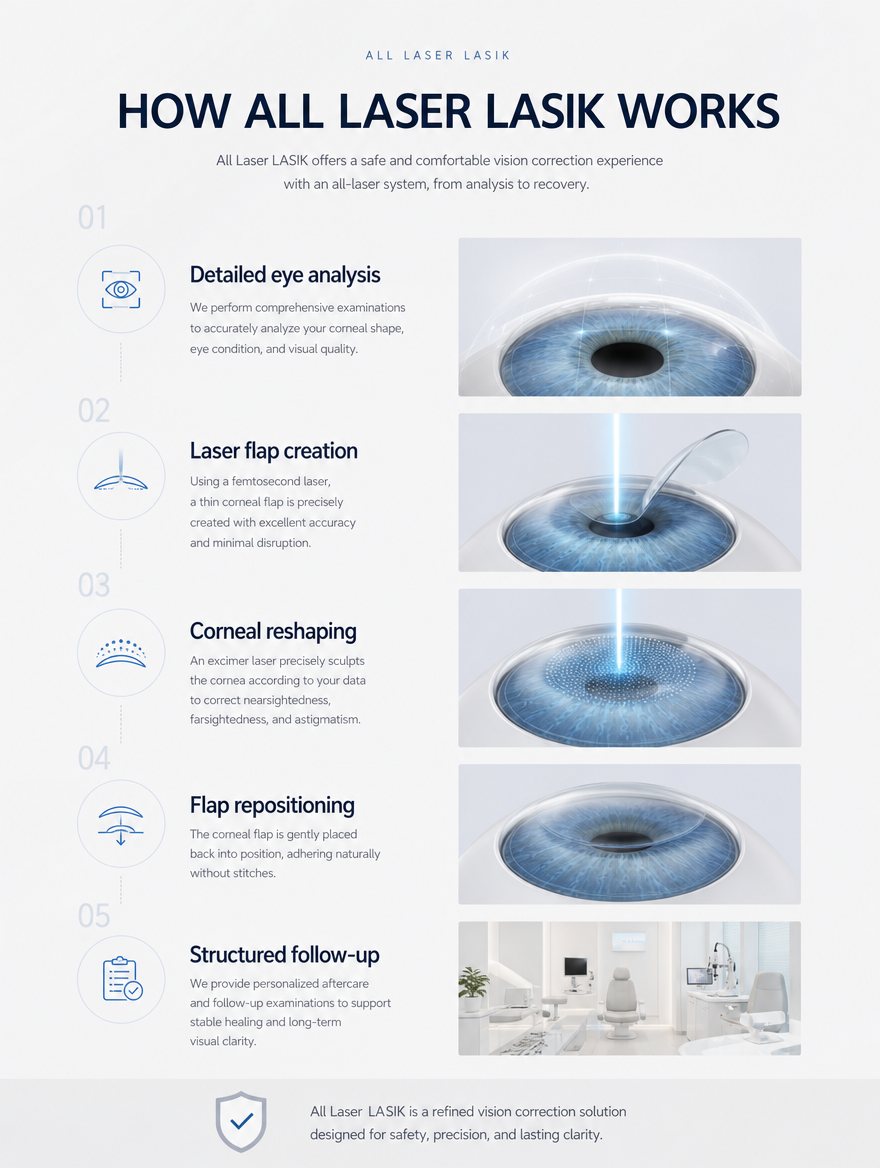
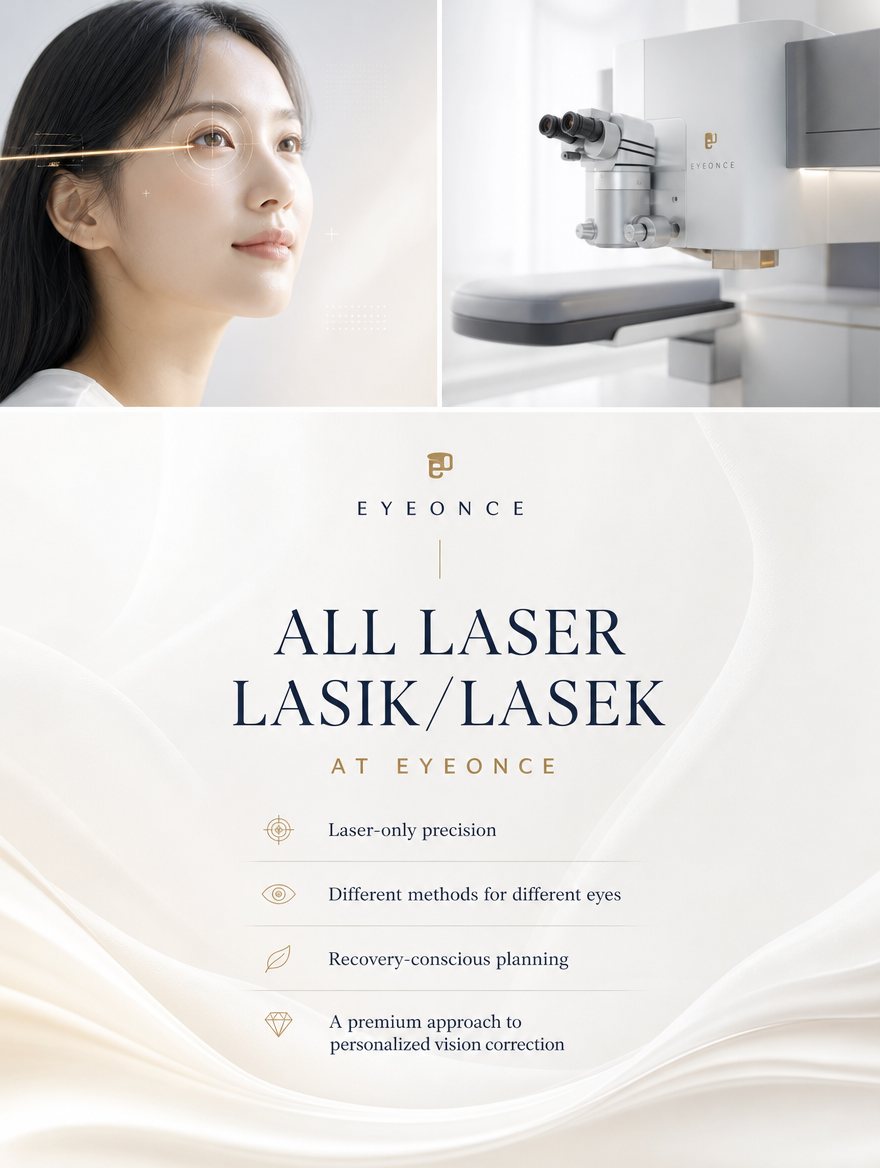
Who LASIK is for and how the flap procedure works at EYEONCE Eye Clinic Seoul — panel 7 Who LASIK is for and how the flap procedure works at EYEONCE Eye Clinic Seoul — panel 8 Who LASIK is for and how the flap procedure works at EYEONCE Eye Clinic Seoul — panel 9

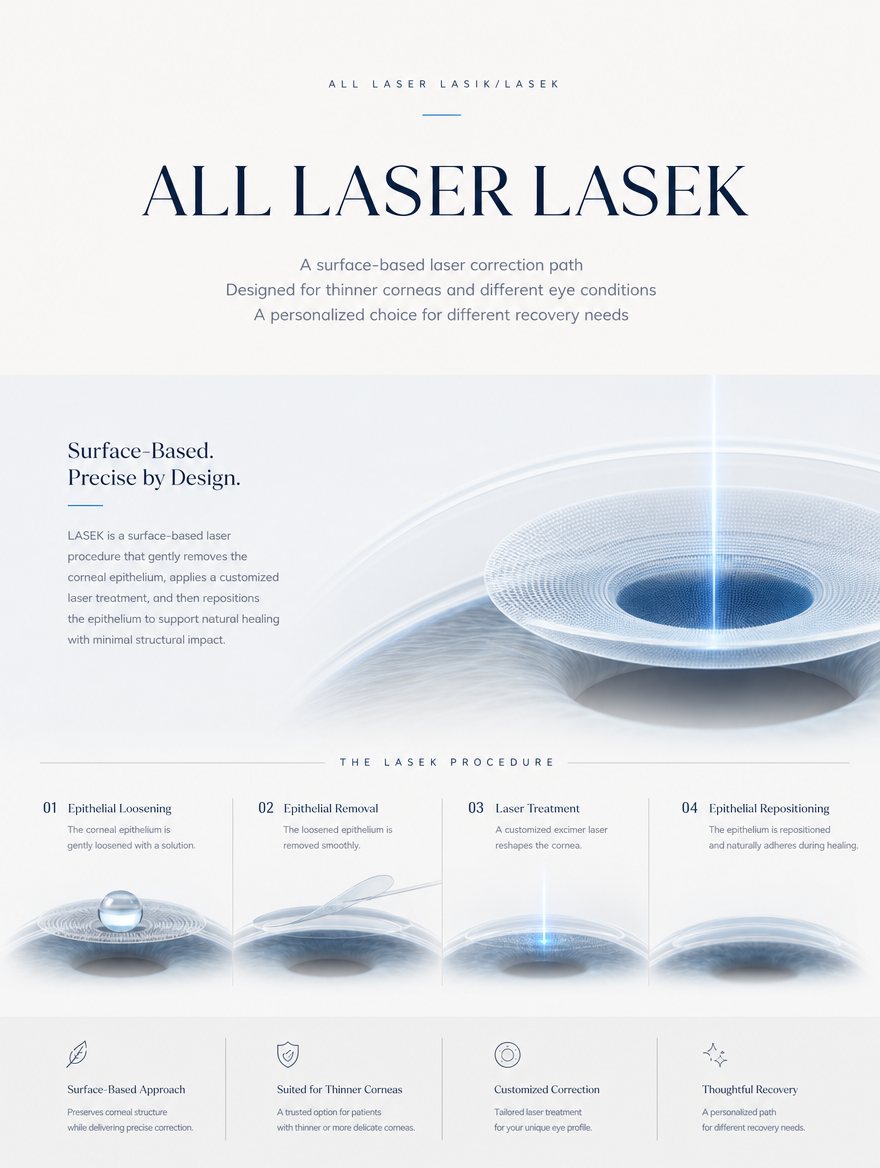
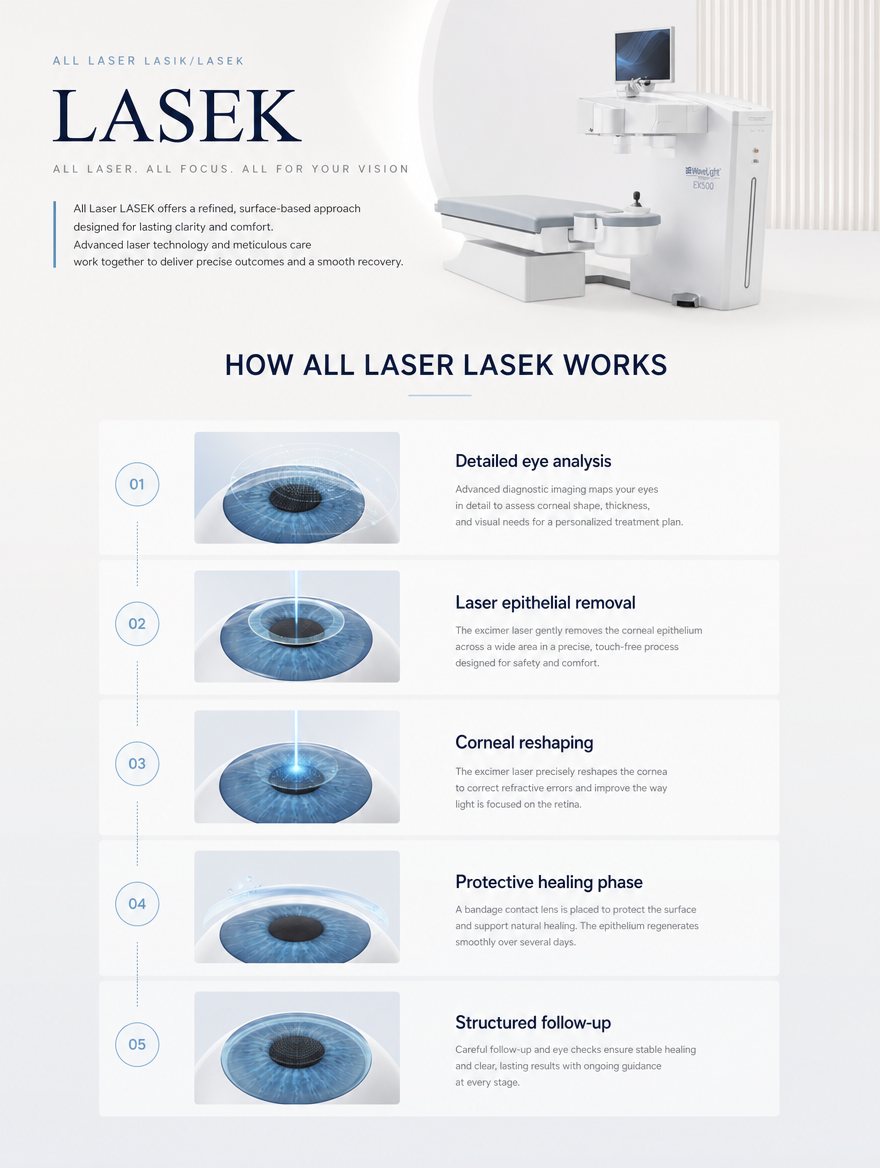
LASEK takes the surface-based path instead: the epithelium is gently loosened, removed, reshaped beneath by the excimer laser, then repositioned to heal naturally in place — a technique also known as surface ablation, in the same family as PRK (Photorefractive Keratectomy).

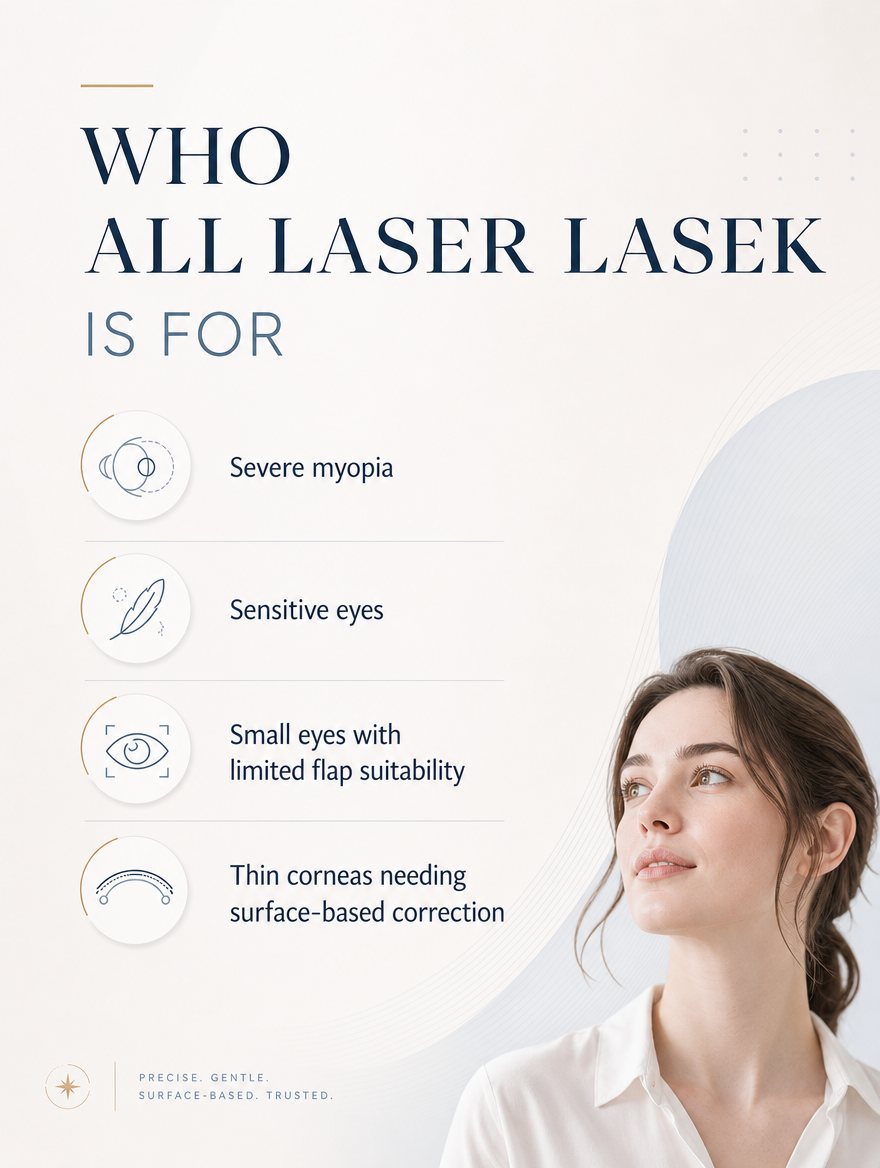
It's the preferred option for patients with thinner corneas, small eyes with limited flap suitability, sensitive eyes, or severe myopia where LASIK's flap approach isn't the safest fit.
LASEK surface ablation technique and ideal candidates at EYEONCE Eye Clinic Seoul — panel 10 LASEK surface ablation technique and ideal candidates at EYEONCE Eye Clinic Seoul — panel 11 LASEK surface ablation technique and ideal candidates at EYEONCE Eye Clinic Seoul — panel 12

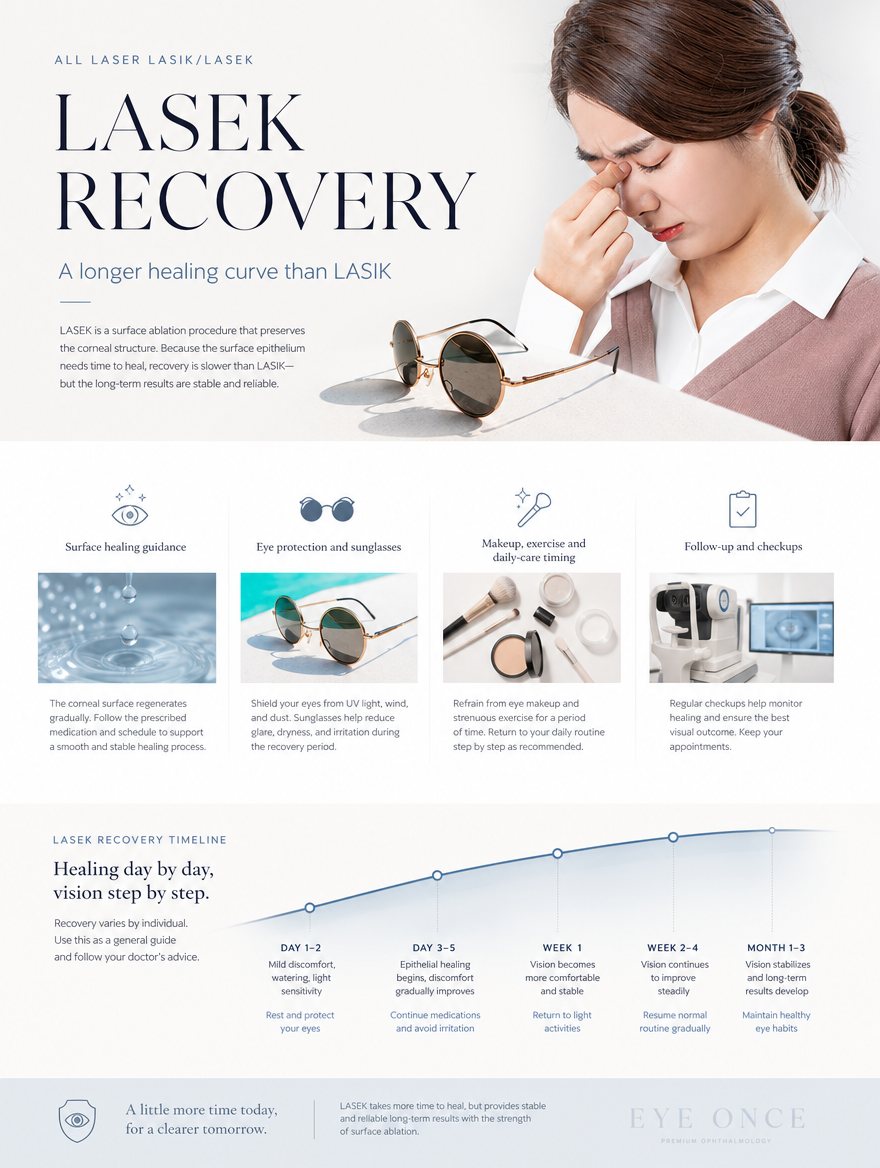
LASEK's trade-off is a longer healing curve than LASIK — mild discomfort and light sensitivity in the first days, gradual improvement through week one, and full stabilization typically by month one to three — supported by a protective bandage contact lens and a clear day-by-day recovery timeline.

Whichever path fits your eyes, both are performed on the same WaveLight EX500 excimer laser with advanced eye-tracking, and EYEONCE's international patient team provides the same on-site interpretation and coordinated guidance throughout.

LASEK recovery timeline, WaveLight EX500 and international patient care at EYEONCE Eye Clinic Seoul — panel 13 LASEK recovery timeline, WaveLight EX500 and international patient care at EYEONCE Eye Clinic Seoul — panel 14 LASEK recovery timeline, WaveLight EX500 and international patient care at EYEONCE Eye Clinic Seoul — panel 15
Good to Know

LASIK / LASEK — questions & answers

Yes. EYEONCE is a Seoul-government-registered clinic for international patients, with in-house interpreters on-site in English, Chinese, Mongolian and Thai. From your first WhatsApp message through surgery and follow-up, there is no language barrier.
For laser vision correction (SMILE PRO, SMILE LASIK, LASIK/LASEK) a stay of about 3-5 days is typical — exam and surgery can often be done the same day, with a next-day check-up before you fly home. For ICL and lens procedures we usually recommend 5-7 days. Send us your travel dates on WhatsApp and we will build the schedule around you.
Contact lenses reshape the cornea, so accurate measurement needs a break: stop soft lenses at least 5-7 days before your exam, hard / RGP lenses at least 3 weeks, and ortho-k (dream) lenses at least 1 month. If you are unsure, message us on WhatsApp.
In the rare case an enhancement is needed, it is covered by our lifetime aftercare. Please contact us on WhatsApp first (+82-10-6308-0984) — we will review a detailed re-examination and, where appropriate, arrange the re-treatment. Reaching out on WhatsApp is the fastest way to get guided next steps.
It depends on your cornea. LASIK generally offers faster visual recovery; LASEK preserves the corneal surface and can be preferable for thinner corneas or high-impact lifestyles. Your precision exam determines the safest, best-fit option — and we'll explain exactly why.
LASIK: most patients see clearly within a day or two. LASEK: vision recovers more gradually over one to a few weeks as the surface heals, and is very stable long-term. Temporary haziness and fluctuation in the first 1–3 months are normal for both.
Don't rub your eyes; wear protective shields while sleeping in the early days. Avoid swimming, saunas and steam rooms for about a month and eye makeup for two weeks. Wear sunglasses outdoors (especially important for LASEK), avoid dust and smoke, and use all prescribed drops and artificial tears as directed.
Stop soft contact lenses for 5–7 days before your exam (2–3 weeks for hard / RGP lenses). Bring your glasses and prescription records, avoid eye makeup on exam day, and arrange transport or a companion for surgery day.
Temporary blurriness is normal as the cornea heals with your vision. Avoid electronic screens as much as possible for 1–3 months and use your prescribed eye drops and artificial tears diligently. If you feel a foreign-body sensation or pain, visit us right away — or see a local ophthalmologist first and then contact us.
Yes. If anything seems wrong after surgery, contact us at any time. Through a detailed re-examination we'll assess your condition and, where appropriate, assist with a re-treatment.
No — both are performed under topical anesthetic drops, so you feel pressure rather than pain during surgery. LASIK recovery is typically more comfortable in the first days; LASEK (a surface ablation technique related to PRK) can involve mild discomfort or light sensitivity for a few days while the epithelium heals, manageable with prescribed drops and a protective bandage contact lens.
Cost depends on which path — LASIK or LASEK — best fits your corneas, confirmed at your pre-op exam. Message us on WhatsApp with your prescription for a personalized quote; all-laser LASIK/LASEK in Seoul is frequently more affordable than equivalent surgery in the US, UK or Australia.
A Real Story

"Thin corneas ruled out other options — LASEK was perfect."

I was worried my thin corneas meant I would never be glasses-free. The team assessed me honestly and recommended the LASEK path. Recovery was gradual, exactly as they explained, and my vision is now crisp and stable. I trusted them because they told me the truth.

Read patient reviews
Ready to see clearly?

Your glasses-free life starts
with one message.

Tell us your prescription and travel dates. Our English-speaking team will design your personalized plan — free of charge, no pressure.

Find Us

Getting to EYEONCE

An English-speaking eye clinic in the heart of Gangnam, Seoul — moments from Sinnonhyeon Station and easily reached from Incheon International Airport.

📍
EYEONCE Eye Clinic Gangnam

5–6F, Duo Sinnonhyeon, 368 Sapyeong-daero, Seocho-gu, Seoul, South Korea

📲
WhatsApp Consultation

+82-10-6308-0984 — English, Chinese, Mongolian & Thai

🕘
Opening Hours

Mon–Fri 09:30–18:30 · Sat 09:30–16:00 · Closed Sundays & public holidays

🚇
By Metro

Sinnonhyeon Station (Line 9 / Sinbundang Line) — 3 min walk. Gangnam Station (Line 2) nearby.

From Incheon International Airport (ICN)
Private taxi≈ 60–75 min · approx. ₩70,000–90,000 — the most direct option.
AREX + MetroAirport Railroad to Seoul Station (~50 min), transfer to Line 9 to Sinnonhyeon (~25 min). ≈ 90 min total.
Airport LimousineDirect bus toward Gangnam (~70–90 min), then a short taxi ride.
Chat with us