
Patients with very high prescriptions often arrive having already been told "no" somewhere else — sometimes correctly, sometimes not. Here's what actually goes into that decision, and why it isn't always the end of the road.
I'm Dr. Baek Dong-won, Representative Director at EYEONCE Eye Clinic in Gangnam, Seoul. Most of my patients with moderate myopia and a bit of astigmatism have a fairly straightforward path to LASIK, LASEK or SMILE LASIK. High myopia combined with meaningful astigmatism is a different conversation, because the two numbers interact — correcting both at once with a laser asks more of the cornea than correcting either one alone, and that's where corneal thickness starts to matter a lot more than it does for an average prescription.
None of that means there's no solution. It means the solution is decided by your actual measurements, not by a general rule of thumb — which is the part I want to walk through here.
There's no single number that applies to everyone, because the real limiting factor isn't your prescription in isolation — it's your prescription relative to how much healthy corneal tissue you have to work with. Two patients with an identical glasses prescription can get different recommendations once their corneal topography and thickness are measured. This is exactly why a diagnostic exam, not a prescription printout, is the only reliable way to answer "am I a candidate."
LASIK, LASEK and SMILE LASIK all work by removing a precise amount of corneal tissue to reshape it — more tissue removal for a higher prescription. A cornea needs to retain enough structural thickness after that removal to stay stable for life. When the prescription is high enough, or the cornea is naturally on the thinner side, the amount of tissue that would need to be removed starts to exceed what's safe to take. That's not a judgment call clinics make loosely — it's a calculation done from your topography and pachymetry results at the exam.
This is where ICL (Implantable Collamer Lens) changes the equation. Instead of removing corneal tissue, a toric ICL is placed inside the eye, in front of the natural lens, correcting myopia and astigmatism together without depending on how thick your cornea is. It's often the better-suited option specifically for the prescriptions and corneal profiles that make LASIK or LASEK or SMILE-based correction a poorer fit — not a downgrade, just a different tool matched to a different starting point.
Corneal topography, pachymetry (thickness mapping), anterior chamber depth and endothelial cell assessment are the measurements that actually decide this, done with our diagnostic imaging platform. None of them can be estimated from your current glasses or contact lens prescription. If you've been told "no" at another clinic without this level of measurement, it's worth getting it done properly before accepting that as final.
If ICL ends up being your path, recovery timing is comparable to laser vision correction for most patients — noticeably clearer vision within a day or two, with a follow-up exam before you fly home. And whichever procedure you have, our lifetime aftercare commitment applies the same way: if anything feels off after you're back home, you can reach us at any time for a re-examination and guidance on next steps.
If you are also considering SMILE PRO, read SMILE PRO in Seoul: high prescriptions and thin corneas.
Whether LASIK, LASEK, SMILE LASIK or ICL fits your eyes depends entirely on your own measurements. This article explains the factors involved; it can't replace a diagnostic exam with our team.
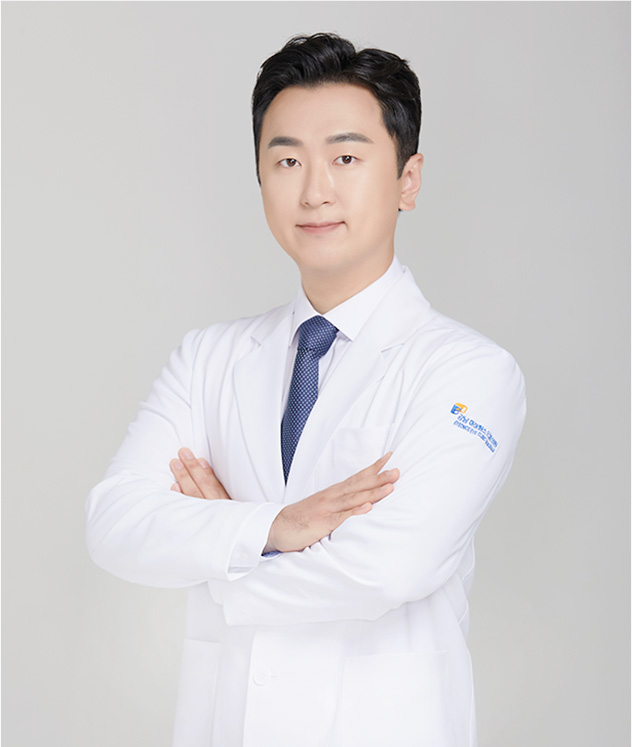
Representative Director, EYEONCE Eye Clinic Gangnam · Former Clinical Instructor, Dept. of Ophthalmology, Samsung Seoul Hospital · Member, Korean & American Societies of Cataract and Refractive Surgery · Last reviewed October 2026
International patients share what actually happened — from their first fears to waking up the next morning without glasses.
Our patients share their stories on Google — verified, public and unfiltered. Open the map to read every review straight from the source.
Tell us your prescription and travel dates. Our English-speaking team will design your personalized plan — free of charge, no pressure.
An English-speaking eye clinic in the heart of Gangnam, Seoul — moments from Sinnonhyeon Station and easily reached from Incheon International Airport.
5–6F, Duo Sinnonhyeon, 368 Sapyeong-daero, Seocho-gu, Seoul, South Korea
+82-10-6308-0984 — English, Chinese, Mongolian & Thai
Mon, Tue, Thu, Fri 09:00–18:00 · Sat 09:00–16:00 · Lunch break 13:00–14:00 · Closed Wed & Sun
By appointment only · Registration may close early depending on the day’s schedule.
Sinnonhyeon Station (Line 9 / Sinbundang Line) — 3 min walk. Gangnam Station (Line 2) nearby.