
LASIK reshapes the cornea: a thin flap is lifted, a laser removes a measured layer of tissue beneath it, and the flap is laid back. Thin or irregular corneas and unstable prescriptions can rule it out.
What does LASIK do to the cornea, step by step?
The laser removes tissue, and tissue is a fixed budget
Exam findings that usually move LASIK off the table
What decides the cost of LASIK?
What are the risks and limits of LASIK, and what does it not do?
What can go wrong after LASIK, and how much of it settles?
If LASIK isn't the answer, what usually is?
What happens with follow-up after you fly home?
Are you trying to work out what does lasik do to your cornea, and whether yours can spare the tissue?
It's worth reading on before you book anything.
By the end you will know what decides the cost, what review threads claim versus what is medically true, and which methods exist, so you can decide whether to ask about LASIK or about something else.
Hello, I'm Dr. Baek Dong-won, Representative Director of EYEONCE.
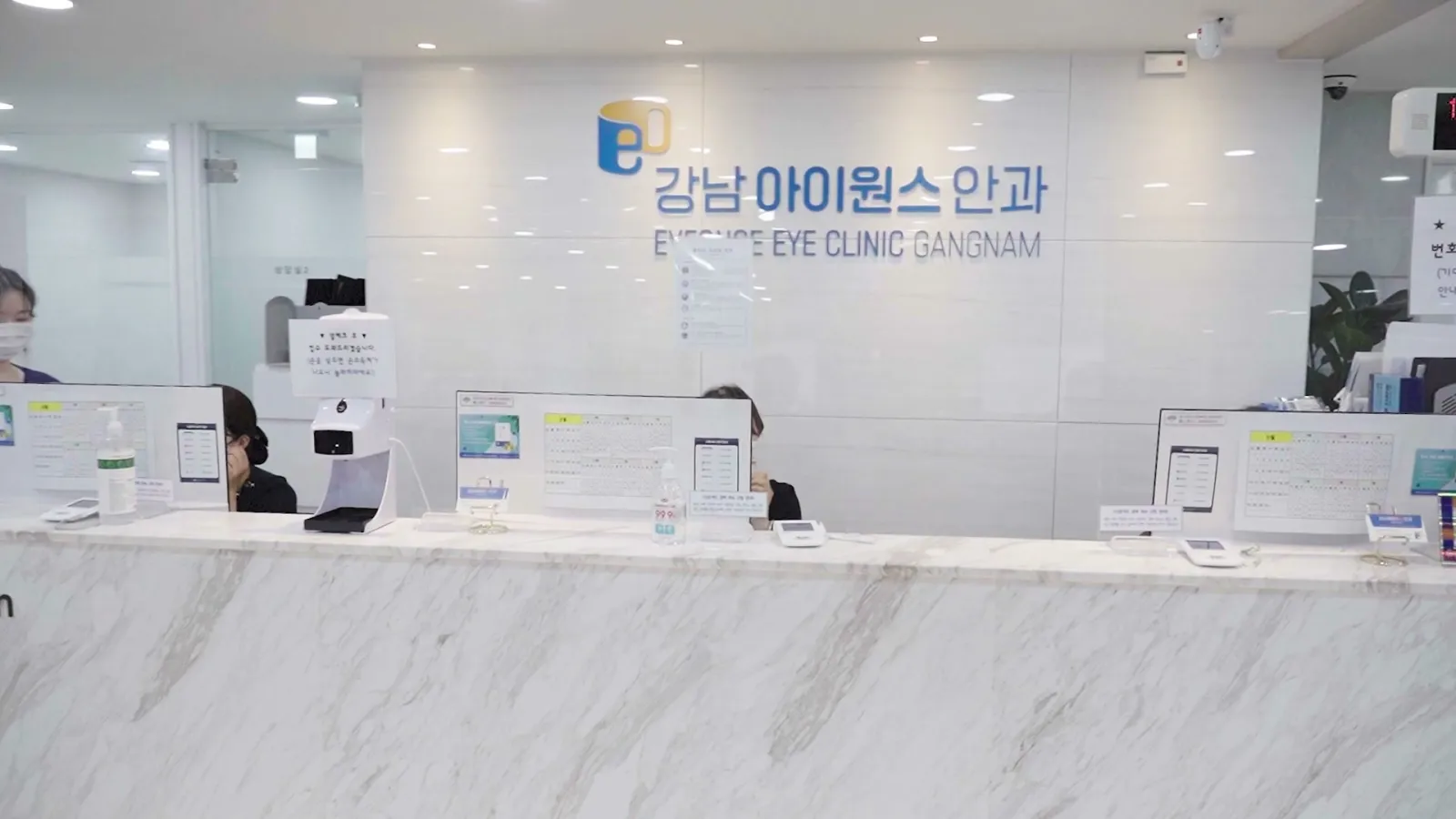
At our Gangnam clinic the same doctor sees you from the diagnostic exam through surgery and every follow-up check. Lifetime Aftercare includes re-examination whenever you need it, with re-treatment support where it's indicated.
I wrote this because many people assume LASIK just "fixes" the eye, when it actually removes a measured amount of tissue that can't be put back.
The short answer: the surgeon lifts a thin flap, a laser removes a measured layer underneath, and the flap is laid back, so LASIK spends some corneal tissue to buy focus.
Three things happen: a flap is made, a laser reshapes the tissue under it, and the flap goes back. You stay awake, the eye is numbed with drops, and the FDA's description of LASIK surgery day mentions feeling pressure and a brief dimming of vision while the eye is held steady.
EYEONCE's vision correction runs on the Ziemer FEMTO Z8 and WaveLight EX500 platforms, with Topcon diagnostics for the measurements beforehand.
What changes is the focusing power of the front surface. The rest of the eye stays as it was: the length of the eyeball, the natural lens behind the iris, the retina at the back. That point comes back later, because it explains most of what LASIK can't do.
The higher your prescription, the deeper the laser has to go, and a cornea only has so much thickness to give. Every LASIK plan is a subtraction: starting thickness, minus the flap, minus the tissue the laser removes, equals what's left to hold the cornea's shape for the rest of your life.
The flap contributes little strength once it has been cut, so the layer that matters is the one underneath it. This is why a high prescription and a thin cornea are such a difficult pair for LASIK in particular. The prescription sets the amount of tissue that comes off; the starting thickness and flap depth set the amount that remains. When that remainder looks too slim, the safer move is to change the method instead of pushing the numbers.
Thickness is only half of the picture. A topography map shows the shape of the whole cornea, and an uneven pattern can matter more than a single thin reading.
On a topography map, the finding that makes me hesitate most is asymmetry: the lower cornea steeper than the upper, or the thinnest point sitting well off-center. A cornea like that can look acceptable on one thickness number and still be a poor candidate for a flap. When I see that pattern, I would rather talk you out of LASIK in the consult room than talk you into it.
If you were told no at home, the reason is very likely on this list, and it's worth asking which one. The U.S. Food and Drug Administration's page on when LASIK may not be right for you names a prescription that has changed in the past year, pregnancy or nursing, conditions and medications that affect healing, and contact sports, along with eye-level risk factors such as thin corneas, large pupils, dry eyes and previous refractive surgery.
| Finding on your exam | Why it matters for LASIK | Often discussed instead |
|---|---|---|
| Thin cornea for your prescription | Too little tissue left under the flap | LASEK, SMILE LASIK or ICL |
| Irregular or asymmetric topography | Flap and tissue removal can further weaken an unstable cornea | Further evaluation before any laser |
| Prescription still changing | The eye can keep drifting after surgery | Waiting until it's stable |
| Dry eye already present | The flap cuts nerves that support tear production | Treating dryness first; ICL for very dry eyes |
| Large pupils in dim light | Halos and glare at night can be more noticeable | ICL is one option |
| Contact sports or impact-prone work | A hard blow can displace a flap | LASEK or SMILE LASIK |
These are properties of the tissue, and they're also why two careful surgeons can occasionally read the same borderline eye differently: one sees a different method as workable, the other sees a no. Both readings start from the same measurements.
Say you are told at home that your prescription is around -7 and your cornea is on the thin side. You would probably assume LASIK is simply "too strong" for you, but that is not quite the question I ask. I look at how much tissue the laser would need to remove for that prescription, and how much would be left after the flap is accounted for. I also check the topography for any irregular shape.
If the remaining tissue looks too limited, or the shape is a concern, I would talk with you about surface treatment or a lens-based option instead. If the numbers leave enough margin, LASIK stays on the list. The same prescription can lead to different answers depending on the cornea underneath.
The cost depends on a few things that differ from one person to the next. The method matters first: flap-based LASIK, SMILE and surface treatments such as LASEK are different procedures, and which one is suitable depends on your exam findings. The amount of correction and the shape and thickness of your cornea affect which methods are possible at all. Extra tests, the number of days you can stay in Korea, and the follow-up checks you need afterwards also play a part.
To get the figure for your own case, ask on WhatsApp and attach a photo of your prescription or any corneal printout you have.
LASIK changes the cornea's focusing power and nothing deeper, so half the answer to “what does lasik do” is what it leaves alone.
Clear vision without glasses is a change to the front window of the eye; the back of the eye still needs its own care.
Most problems are temporary: dryness, glare and halos at night, and sharpness that fluctuates over the first months. Less common are under- or overcorrection and regression that may need an enhancement. Rare but serious are flap complications, infection and corneal ectasia, a progressive weakening and bulging of the cornea.
The FDA's recovery guide describes burning, itching or a scratchy feeling right after the procedure and a first check within a day or two. Our own aftercare guidance for LASIK and LASEK is concrete: don't rub your eyes, wear protective shields while sleeping in the early days, avoid swimming, saunas and steam rooms for about a month and eye makeup for two weeks, wear sunglasses outdoors, and limit screens as much as you can for one to three months while using every prescribed drop and artificial tear as directed.
Temporary blurriness while the cornea heals is normal.
Ectasia is the complication that screening exists to prevent. It's uncommon, it can appear months or years later, and the warning signs most discussed are the ones in the table above: thin or irregular corneas and heavy tissue removal. That's why suitability is settled by the in-person exam, with the full set of measurements in front of the doctor.
I'm a co-author of the Textbook of Dry Eye (2019), and dry eye is the side effect I'd ask you to take most seriously before LASIK. Making the flap severs corneal nerves that help signal tear production, so eyes that already burn by evening often feel it more afterward. In many people it eases over the following months as those nerves recover, but it's a reason to treat dryness first, and sometimes a reason to choose a method without a flap.
If dryness, night glare or a thin reading is the part you're unsure about, send that number or a photo of your topography printout on WhatsApp, plus one line on what matters most to you (night driving, screen hours, a sport). The doctor reviews it, and you'll know which of these risks applies to your eyes and which method is worth measuring for in Seoul.
Three routes handle the tissue problem in different ways, and each fits a different finding from the table.
LASEK treats the surface. The American Academy of Ophthalmology's EyeWiki entry on LASEK describes loosening the thin outer skin of the cornea, applying the laser beneath it and repositioning it, with no flap, at the cost of a slower and more uncomfortable first few days. LASEK preserves the corneal surface and can be preferable for thinner corneas or high-impact lifestyles; who LASEK suits in practice is covered separately.
SMILE LASIK shapes a thin lens-shaped piece of tissue inside the cornea and removes it through a small incision, without a flap. A review in Eye and Vision sets out the fundamentals of this lenticule extraction technique. It still removes tissue, so thickness still counts. Here's how SMILE LASIK differs from LASIK step by step.
ICL removes no corneal tissue at all. We use the EVO Aqua ICL with CentraFLOW, a lens placed behind the iris and in front of the natural lens, and it can be removed or exchanged if your needs change. It's the route the clinic recommends for high myopia or high astigmatism, very large pupils at night, thin corneas, very dry eyes, or a history of corneal injury or disease. If your numbers sit at the high end, how high myopia and astigmatism are assessed together is the next read.
For laser vision correction, a stay of about 3 to 5 days is typical: exam and surgery can often happen on the same day, with a next-day check-up before you fly. For ICL, plan on 5 to 7 days.
A few details change the calendar:
Once you're home, if you feel a foreign-body sensation or pain, see a local ophthalmologist first and then contact us. If an enhancement is ever needed, it falls under our Lifetime Aftercare: message us on WhatsApp first, and after a detailed re-examination we arrange re-treatment where appropriate. Before you leave Seoul, ask for a copy of your exam measurements and surgery details so a local ophthalmologist has something to compare against. SMILE LASIK recovery and daily life shows how the first weeks usually look.
Your next step can be small. Our WhatsApp consultation runs in English, Chinese, Mongolian and Thai. When you do come to Seoul, I examine your eyes myself and recommend the option that fits them.
Results and suitability vary by individual. Your procedure recommendation is confirmed only through an in-person diagnostic exam.
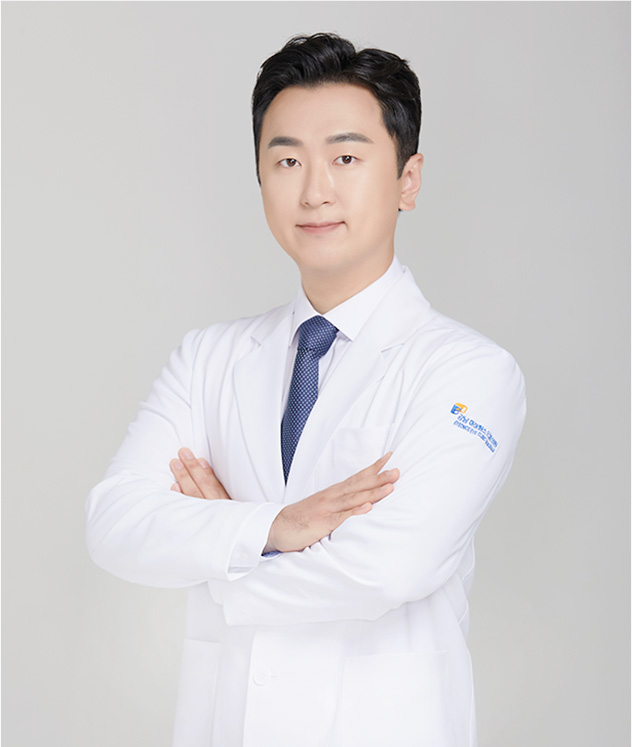
Representative Director · Former Clinical Instructor, Dept. of Ophthalmology, Samsung Seoul Hospital · Member, Korean Society of Cataract and Refractive Surgery · Member, American Society of Cataract and Refractive Surgery
International patients share what actually happened — from their first fears to waking up the next morning without glasses.
Our patients share their stories on Google — verified, public and unfiltered. Open the map to read every review straight from the source.
Tell us your prescription and travel dates. Our English-speaking team will design your personalized plan — free of charge, no pressure.
An English-speaking eye clinic in the heart of Gangnam, Seoul — moments from Sinnonhyeon Station and easily reached from Incheon International Airport.
5–6F, Duo Sinnonhyeon, 368 Sapyeong-daero, Seocho-gu, Seoul, South Korea
+82-10-6308-0984 — English, Chinese, Mongolian & Thai
Mon, Tue, Thu, Fri 09:00–18:00 · Sat 09:00–16:00 · Lunch break 13:00–14:00 · Closed Wed & Sun
By appointment only · Registration may close early depending on the day’s schedule.
Sinnonhyeon Station (Line 9 / Sinbundang Line) — 3 min walk. Gangnam Station (Line 2) nearby.