
There isn't one figure for LASIK in Korea. The procedure your corneas allow, the days you stay in Seoul and the aftercare included decide it. Ask on WhatsApp for your case.
What decides the cost of LASIK in Korea for your eyes?
Methods: LASIK, LASEK and SMILE LASIK, and why your cornea chooses
How many days in Seoul does LASIK recovery take?
What do LASIK reviews from Korea get right, and what do they miss?
Risks and side effects to know
Why one surgeon from exam to follow-up changes what you're paying for
How much does LASIK cost in Korea once you add the flight, the hotel nights and the chance that your exam points to a different procedure than the one you priced?
Read this before you compare quotes or book anything.
By the end you'll know what decides the cost, how the three laser methods differ, what reviews get right and wrong, and how recovery sets the number of days you stay. That's what tells you which option fits your eyes and your budget.
Hello, I'm Dr. Baek Dong-won, Representative Director of EYEONCE Eye Clinic in Seoul and a former Clinical Instructor in the Department of Ophthalmology at Samsung Seoul Hospital.
At EYEONCE, the surgeon who evaluates you is the surgeon who operates on you and follows your recovery, and that surgeon is me. WhatsApp consultation is available in English, Chinese, Mongolian and Thai. Our aftercare is lifetime: you can come back for re-checks, with re-treatment support if it's needed, and the conditions are explained at consultation.
I'm writing this because many people price LASIK before they know which procedure their corneas allow, and that's usually the part of the number that changes.
So how much does LASIK cost in Korea? There isn't one figure. It comes down to which procedure your exam supports (LASIK, LASEK or SMILE LASIK), how many days you stay in Seoul, and what aftercare is included.
If you have your latest glasses or contact lens prescription, send a photo of it on WhatsApp with your age and the one question you most want answered. I review it personally before you book a flight.
Five things move the number, and only one of them is the laser itself. The others are about your eyes, your age and your calendar.
| Factor | Why it changes the cost |
|---|---|
| The procedure your exam supports | LASIK, LASEK and SMILE LASIK use different laser steps, and a thin or irregular cornea can rule one out |
| Your prescription and astigmatism | They set how much tissue is reshaped, and a very high prescription can move you from laser to ICL |
| Your age and near vision | In your 40s, reading vision may bring presbyopia correction into the conversation |
| Days in Seoul | About 3–5 days is typical for laser correction and 5–7 for ICL, and every night is hotel and leave |
| Follow-up once you're home | What re-checks and re-treatment support come with the surgery |
The flight and the hotel are yours to price, and they grow with the number of days the procedure needs. That's why the method question comes first: LASEK heals more slowly than LASIK, and ICL needs a longer stay than either.
So how much does LASIK cost in Korea for someone with your numbers? Ask on WhatsApp what it would cost for your case, and which of these five factors apply to you.
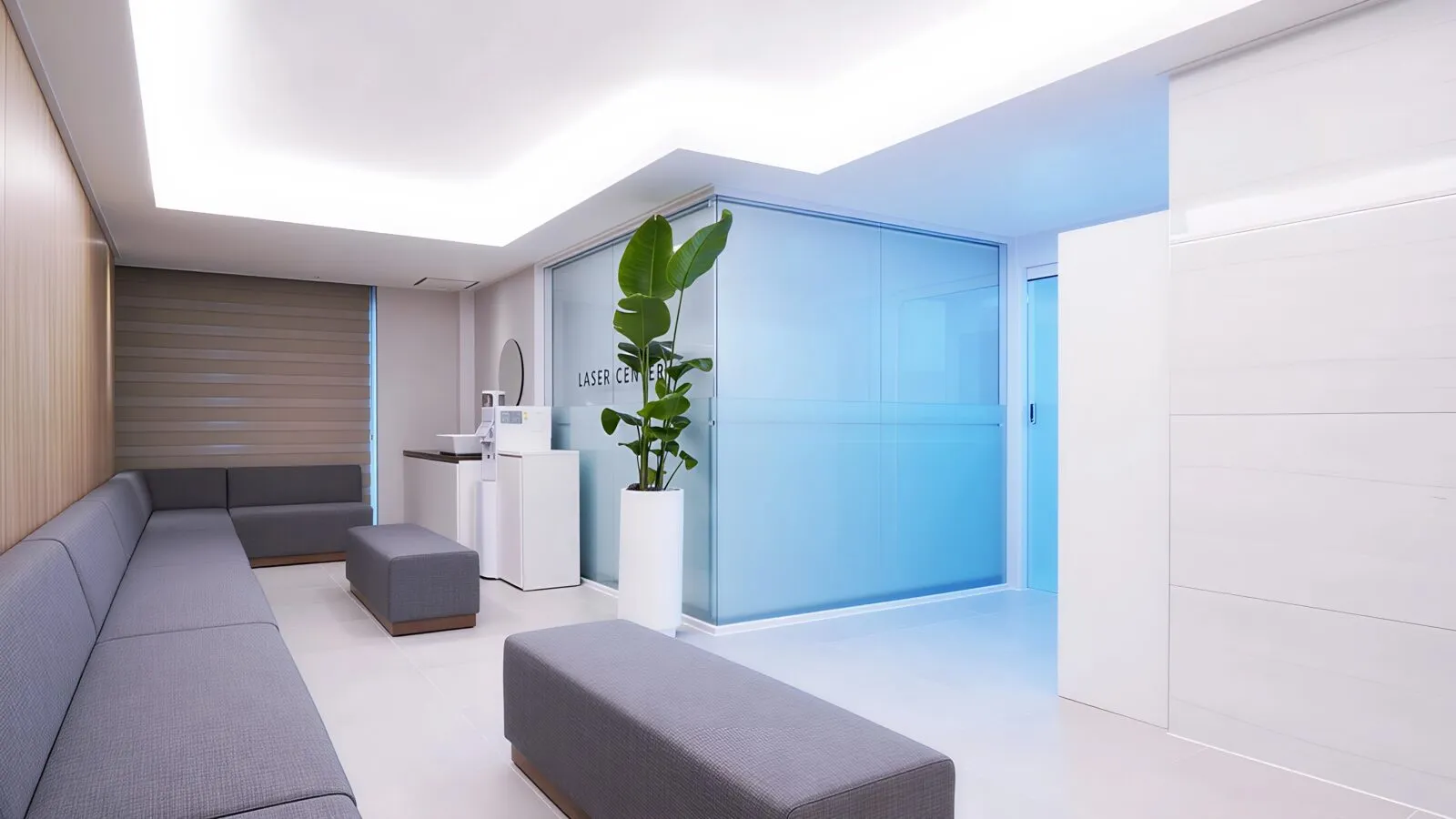
All three are laser procedures, and they reshape the cornea in different ways. Our flagship laser is the Ziemer FEMTO Z8 femtosecond platform, and the reshaping in LASIK and LASEK is done on the WaveLight EX500 excimer laser. Our diagnostic equipment is from Topcon.
In LASIK, the femtosecond laser creates a thin corneal flap, the excimer laser reshapes the tissue beneath it, and the flap is laid back to adhere without stitches. Functional vision usually returns fastest, but it needs a healthy cornea of suitable thickness.
In LASEK, no flap is made. The surface layer of the cornea, the epithelium, is loosened and the excimer laser reshapes the surface directly; it's the same family as PRK. It suits thinner corneas and contact-sport lifestyles. The trade-off is a slower recovery, with discomfort and light sensitivity in the first days and full stabilization typically by one to three months. I've written more on who LASEK is for.
SMILE LASIK uses the Ziemer FEMTO Z8 to shape a thin disc of tissue inside the cornea and remove it through a keyhole incision of 2–4 mm. With no flap, there's no flap to be displaced by a blow during sports, and the dry-eye risk is lower than with traditional LASIK. There's more on what sets SMILE LASIK apart.
If the prescription is very high or the cornea is too thin for any laser, the conversation moves to ICL, a lens placed inside the eye; we use the EVO Aqua ICL. It removes no corneal tissue and can be taken out later, but as surgery inside the eye it needs follow-up checks of eye pressure and lens position, and a stay of about 5–7 days. The factors behind that are in the ICL cost post.
One reading on the exam matters to me more than the prescription. A cornea that steepens unevenly can be an early sign of keratoconus, and laser correction can make that condition worse. A quote built before anyone has seen that map is a quote for an operation you may not be able to have.
Say you're 42, you live in Toronto, you wear soft contacts at about minus 4.50 with a little astigmatism, and your local clinic mentioned your corneas are on the thin side. Before talking about any figure, I'd want three answers from the exam: how thick the cornea is, whether its shape is regular, and how your near vision is holding up.
If the cornea is thick enough and regular, LASIK or SMILE LASIK can be on the table. If it's thin but regular, LASEK is often the safer laser, and you'd plan a few more quiet days. At 42 I'd raise one more point. Correcting distance with a laser doesn't stop presbyopia, the age-related loss of near focus that the American Academy of Ophthalmology describes as a normal part of aging that usually shows up in the 40s. You may need reading glasses within a few years, and that belongs in your decision about what the surgery is worth to you. For the broader checklist, see what to check before LASIK in Korea.
For laser vision correction, a stay of about 3–5 days is typical. The exam and surgery can often be done on the same day, with a check-up the next day before you fly home.
It starts at home. Stop soft contact lenses at least 5–7 days before the exam, and longer for hard or RGP lenses and ortho-k lenses (at least a month for ortho-k), so your cornea is measured in its own shape. When you land at Incheon, the clinic's site lists the routes in by taxi, by AREX and subway, or by limousine bus.
The clinic is open Monday, Tuesday, Thursday and Friday 09:00–18:00 and Saturday 09:00–16:00, with lunch 13:00–14:00, and closed Wednesdays and Sundays. Appointments are required. Because the next-day check needs the clinic to be open, raise it when you book if your surgery would fall on a Tuesday or a Saturday.
On surgery day the eye is numbed with drops, so you'll feel pressure more than pain, and the first day is usually scratchy and watery. By the next morning many people see well enough for daily life after LASIK or SMILE LASIK. LASEK is slower, with a protective bandage contact lens and gradual improvement through the first week. The US FDA's page on what to expect during and after LASIK is worth reading before you go.
For about a month, skip swimming pools, saunas and steam rooms. Leave eye makeup for about two weeks, don't rub your eyes, wear the protective shields at night for the first few nights, and wear sunglasses outdoors, especially after LASEK. Recovery and cost are linked: LASEK may add days, ICL adds more, and every extra night is part of your budget.
Review threads and videos about LASIK in Korea tend to repeat a few claims. Some hold up medically and some leave things out.
“Back to normal the next day.” For LASIK and SMILE LASIK this is close for daily activity, though vision keeps sharpening and settling for weeks. Someone having LASEK shouldn't plan around it.
“It didn't hurt.” The surgery itself is done under numbing drops, so this matches what most people feel on the table. The first day afterward is a different story, and LASEK's first days are uncomfortable for many people.
“The price was all-in.” Reviews rarely list what the figure covered. Ask what yours includes: the exam, the surgery, the next-day check, the drops and the follow-up.
“My night halos were gone in a week.” Glare and halos at night usually ease over the first one to three months, and some people notice them longer. Don't book a long night drive for the week after surgery.
The common reactions are temporary: dry, gritty eyes, glare and halos around lights at night, and vision that fluctuates through the first one to three months while the cornea heals. Over the years, some eyes drift back toward nearsightedness; a Korean study of LASIK and LASEK for moderate myopia looked at which factors were linked to that long-term regression.
Some people should wait or choose another path. The FDA's page When is LASIK not for me? lists, among others, a prescription that is still changing, pregnancy or breastfeeding, certain diseases that affect healing, and thin corneas. An irregular corneal shape is a reason to stop and look again. Surgery goes ahead only when the pre-op precision exam confirms you're a safe candidate, and that is decided in person, on the day.
Once you're home, if you feel a foreign-body sensation or pain, see a local ophthalmologist first and then contact us, or reach us on WhatsApp directly. In the rare case an enhancement is needed, it's covered by our lifetime aftercare after a detailed re-examination. The US CDC's medical tourism guidance also suggests taking copies of your records home and arranging follow-up care there before you travel.
If your dates are fixed, send them on WhatsApp with the one thing you can't move, such as a return flight or the day you're due back at work, and ask how many days numbers like yours usually need. Send us your travel dates and we'll build the schedule around you.
Your operating surgeon leads your consultation and procedure, and you're never handed off to someone you've never met. The person who reads your corneal map is the person who chooses the laser and the person you see at the next-day check. If something feels off three weeks after you're home, you're describing it to the doctor who already knows your eyes.
When I think about what LASIK costs, I think about what you're paying for. Every safe outcome starts with measurement, not guesswork, and the exam is where that happens. If your exam shows LASIK isn't the safe fit, I'll explain the reasoning and what is, so the figure you pay belongs to a procedure your eyes can take. Your outcome matters to us long after you fly home.
To get the figure for your own eyes, send a photo of your prescription and your travel dates on WhatsApp, with one question: which procedure and how many days are likely for numbers like mine, and what would that cost? When you come to Seoul, I examine your eyes myself and recommend the procedure that fits them.
Results and suitability vary by individual. Your procedure recommendation is confirmed only through an in-person diagnostic exam.

Representative Director · Former Clinical Instructor, Dept. of Ophthalmology, Samsung Seoul Hospital · Member, Korean Society of Cataract and Refractive Surgery · Member, American Society of Cataract and Refractive Surgery
International patients share what actually happened — from their first fears to waking up the next morning without glasses.
Our patients share their stories on Google — verified, public and unfiltered. Open the map to read every review straight from the source.
Tell us your prescription and travel dates. Our English-speaking team will design your personalized plan — free of charge, no pressure.
An English-speaking eye clinic in the heart of Gangnam, Seoul — moments from Sinnonhyeon Station and easily reached from Incheon International Airport.
5–6F, Duo Sinnonhyeon, 368 Sapyeong-daero, Seocho-gu, Seoul, South Korea
+82-10-6308-0984 — English, Chinese, Mongolian & Thai
Mon, Tue, Thu, Fri 09:00–18:00 · Sat 09:00–16:00 · Lunch break 13:00–14:00 · Closed Wed & Sun
By appointment only · Registration may close early depending on the day’s schedule.
Sinnonhyeon Station (Line 9 / Sinbundang Line) — 3 min walk. Gangnam Station (Line 2) nearby.