
South Korea eye surgery means one of two things: cosmetic eyelid work, or surgery on the cornea or lens to change how the eye sees. Eyeonce does only the vision side, and each option starts with a full eye exam.
Is South Korea eye surgery the same thing as eyelid surgery?
Which kind of eye surgery is your parent actually asking for?
The operation is short; the follow-up visits set the length of the trip
Will a laser fix a 60-year-old's eyes the way it fixed a 30-year-old's?
Aftercare once you're back home
What decides the cost of eye surgery in South Korea?
What are the risks, and who should wait?
Planning around language and the trip from Incheon
Is your parent talking about South Korea eye surgery without saying whether they mean their eyelids or their vision?
Read on before anyone books a flight.
By the end you will know how eyelid and vision surgery differ, how long the trip really runs, what age changes about laser, and what to plan for aftercare at home, so you know what to ask first.
I'm Dr. Baek Dong-won, Representative Director of Eyeonce, a vision-correction clinic in Gangnam with English-speaking staff. I wrote this because families often assume "eye surgery" is one single operation, and it is not.
The short answer: in the vision sense, South Korea eye surgery means LASIK, SMILE LASIK, ICL, cataract or presbyopia care after a full eye exam. Eyelid surgery is a separate field.

No. Eyelid and under-eye procedures reshape skin, fat and muscle around the eye. Vision surgery changes the cornea or the lens inside the eye. The two use different specialists, different exams and different recovery plans, and a clinic that does one may not offer the other at all.
The cornea is the clear front window of the eye; LASIK, LASEK and SMILE LASIK reshape it with a laser. The lens sits behind the colored iris; cataract surgery replaces it, and an ICL is placed in front of it. The eyelid isn't operated on in any of these. It's only held open.
Upper lids that sag low enough can cut off the top of someone's field of view, and people describe that as "my eyes are getting worse." That complaint belongs with an eyelid specialist, and laser vision correction won't change it.
At Eyeonce, the procedures we offer are SMILE LASIK, LASIK/LASEK, ICL (EVO Aqua), cataract surgery with an intraocular lens, and presbyopia correction. If eyelid or under-eye work is what brought you here, you'll want a different kind of clinic.
Start with the complaint, not the procedure name. Ask what bothers them in daily life. The answer usually points to the lids, the lens or the cornea before anyone sits down at a machine.
| What your parent says | Where the problem often sits | Who examines it |
|---|---|---|
| "My lids feel heavy; I tilt my head back to see" | Upper eyelid | Eyelid (oculoplastic) or plastic surgeon |
| "I hate the bags under my eyes" | Lower-lid skin and fat | Cosmetic specialist; usually not a vision problem |
| "Headlights glare at night and colors look washed out" | Possibly the natural lens (cataract) | Ophthalmologist |
| "I hold my phone at arm's length to read it" | Focusing range after the mid-40s (presbyopia) | Ophthalmologist |
| "I've worn glasses since school and I'm done with them" | The eye's focusing power (myopia, astigmatism) | Ophthalmologist |
Treat the table as a sorting guide, not a diagnosis. The cataract row is the one families most often skip. According to the National Eye Institute, cataracts often cause no symptoms at first; later, vision turns cloudy or blurry, colors look faded, and lamps or headlights seem too bright. The NEI also notes that more than half of Americans age 80 or older either have cataracts or have had surgery for them.
That's why a 60-year-old who asks for "LASIK in Korea" can leave the exam with a completely different plan. If your parent has a recent eye exam report or a current glasses prescription, that page already narrows the rows down.
The assumption is "surgery in the morning, flight home the next day." In practice, most of your time in Seoul goes to the exam beforehand and the checks afterward. The U.S. Food and Drug Administration advises seeing your doctor within 24 to 48 hours after LASIK, then at regular intervals for at least the first six months.
The first check exists because some problems are visible only on examination: how the surface is healing, whether there's inflammation, whether the vision matches what was planned. The FDA describes light sensitivity, glare, starbursts and halos right after surgery, which should improve considerably within the first few days. It also says glare, halos and difficulty driving at night may persist through the stabilization period that follows.
Surgery inside the eye, such as cataract surgery or ICL, comes with its own check schedule, set at the exam for that specific eye. For what daily life looks like in the first days after a laser procedure, our post on getting back to normal routines after SMILE LASIK walks through it.
One calendar detail trips people up. Eyeonce is open Monday, Tuesday, Thursday and Friday from 09:00 to 18:00 and Saturday from 09:00 to 16:00, with lunch from 13:00 to 14:00. A plan that needs a check-up on a Wednesday has to shift by a day, so build the trip around those days before buying flights.
Usually not in the same way. A laser reshapes the cornea; it can't clear a cloudy lens or give the lens back its ability to change focus. From the mid-40s on, the lens becomes part of every decision, which is why age tends to shift the options toward cataract surgery or presbyopia correction.
At the other end, someone with a high prescription or a cornea too thin for laser reshaping may be a better fit for a lens implant. The EVO Aqua ICL (CentraFLOW) we use sits inside the eye and doesn't reshape the cornea. Our post on how myopia and astigmatism numbers point to a procedure goes into those thresholds.
The clinic uses Topcon diagnostics for measurements, and the Ziemer FEMTO Z8 and WaveLight EX500 lasers for corneal procedures. Which one, if any, suits your parent is decided after the exam, not from a menu.
When someone over 50 asks for LASIK, the first question I want answered is whether the blur comes from the cornea's shape or from the lens. Glasses that no longer seem to help, glare that's worse at night, a prescription that has shifted noticeably in a year or two: in general, those point toward the lens. Reshaping the cornea on top of a lens that's still changing rarely makes sense. I do the diagnosis, the surgery and the follow-up myself, so the person reading your parent's measurements is the same person who sees them after the operation.
Say your mother is 62, wears reading glasses, and tells you she wants her eyes done in Korea. I would first ask what actually bothers her. If it is heavy lids that make her look tired, that is an eyelid question and a different kind of specialist. If it is glare when driving at night and small print getting harder to read, I would want to look at the lens inside the eye before talking about laser at all, because at her age clouding of the lens can be the real cause. The same sentence, "I want my eyes done," leads to two different examinations, and her exam report tells us which one applies.
Two doctors, ideally: an ophthalmologist near home for anything urgent, and the surgeon in Seoul. Eyeonce's Lifetime Aftercare covers re-examination whenever you come back, plus support for re-surgery or re-treatment if it's needed. The detailed conditions are explained at the consultation.
The FDA's advice is to contact your doctor without waiting for the scheduled visit if there's severe pain or symptoms get worse instead of better. Once you're home, that means a local eye doctor, the same day. It's worth finding one before the trip and keeping the records and eye-drop schedule from Seoul in one folder, so the local doctor can see what was done.
The assumption that a clinic abroad simply disappears after surgery is understandable. The better question to ask any clinic is concrete: what happens if I need to be seen again, and under what conditions?
The procedure itself comes first: a laser treatment, a lens implant and a cataract lens operation are different surgeries with different requirements. Next is what the eye exam finds, such as the prescription, corneal thickness and any signs of lens clouding, because that decides which options are open to you. Whether one eye or both are treated, and how many follow-up checks are needed, also change the total, and so does the number of days you stay in Seoul for those checks. The way to get the figure for your own case is to ask on WhatsApp and attach a photo of your latest eye exam report or glasses prescription.
Every option on this page carries risk. Common and usually temporary: dryness, glare and halos, light sensitivity. Less common: vision that ends up under- or over-corrected, or inflammation. For surgery inside the eye, infection and raised eye pressure are rare but serious possibilities.
Cataract surgery helps most people; the NEI reports that about 9 in 10 people who have it see better afterward. That figure also means not everyone does, and your parent should hear that before deciding.
These situations commonly lead to waiting or to a different option, and the exam decides each case:
Untreated dryness can make glare and fluctuating vision feel worse after laser surgery, and in some eyes it changes which procedure makes sense. If the answer for your parent is "not now," I'd rather say so in the consultation room than after the operation.
Eyeonce's WhatsApp consultation runs in English, Chinese, Mongolian and Thai. If your parent speaks something else, bringing a family member to the exam helps.
The clinic is at 5–6F, Duo Sinnonhyeon, 368 Sapyeong-daero, Seocho-gu, Seoul. The Eyeonce home page sets out three ways to get there from Incheon Airport: taxi, AREX plus the subway, or the airport limousine bus. For a broader first look at vision procedures in Korea, start with our guide to eye surgery in South Korea, then read what to check before LASIK in Korea if laser surgery is still on the table.
Send a photo of your parent's latest eye exam report or glasses prescription on WhatsApp, add their age, and tell us the one thing that bothers them most (night glare, reading, heavy lids).
Results and suitability vary by individual. Your procedure recommendation is confirmed only through an in-person diagnostic exam.
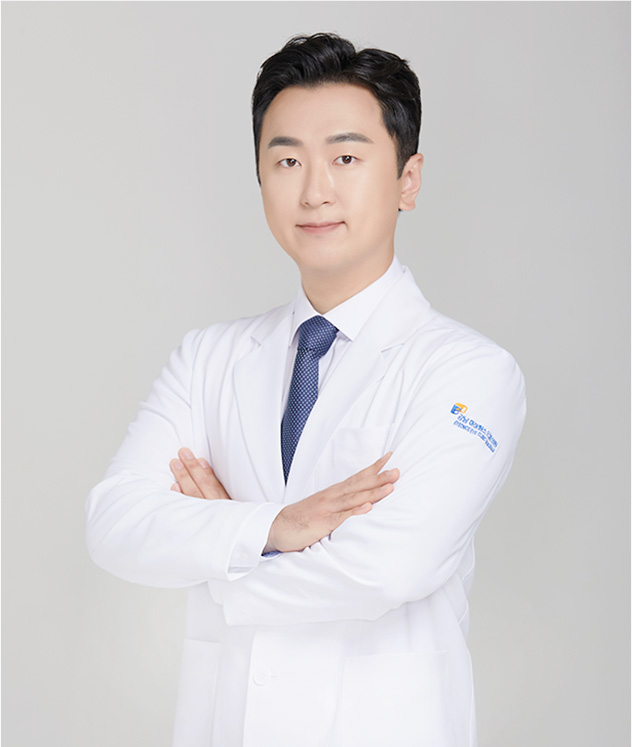
Representative Director · Former Clinical Instructor, Dept. of Ophthalmology, Samsung Seoul Hospital · Member, Korean Society of Cataract and Refractive Surgery · Member, American Society of Cataract and Refractive Surgery
International patients share what actually happened — from their first fears to waking up the next morning without glasses.
Our patients share their stories on Google — verified, public and unfiltered. Open the map to read every review straight from the source.
Tell us your prescription and travel dates. Our English-speaking team will design your personalized plan — free of charge, no pressure.
An English-speaking eye clinic in the heart of Gangnam, Seoul — moments from Sinnonhyeon Station and easily reached from Incheon International Airport.
5–6F, Duo Sinnonhyeon, 368 Sapyeong-daero, Seocho-gu, Seoul, South Korea
+82-10-6308-0984 — English, Chinese, Mongolian & Thai
Mon, Tue, Thu, Fri 09:00–18:00 · Sat 09:00–16:00 · Lunch break 13:00–14:00 · Closed Wed & Sun
By appointment only · Registration may close early depending on the day’s schedule.
Sinnonhyeon Station (Line 9 / Sinbundang Line) — 3 min walk. Gangnam Station (Line 2) nearby.