
Your SMILE LASIK cost in Korea follows the procedure your corneas allow (SMILE PRO, SMILE LASIK, LASIK or LASEK), the days you spend in Seoul and what follow-up covers.
Why is there no single SMILE LASIK price to compare?
Which SMILE LASIK methods could your corneas allow?
Say you were told your corneas are thin
What decides your SMILE LASIK cost in Seoul
What do SMILE LASIK reviews get right and wrong?
How does SMILE LASIK recovery fit a 3–5 day trip?
Before you commit: risks and who should wait
Your first WhatsApp message
Worried that the SMILE LASIK cost Korea clinics quote online will change the moment someone measures the corneas your surgeon at home called borderline?
Read this before you book a flight or compare one more number.
By the end you'll know what decides the cost, what reviews get right and wrong, which methods your corneas might allow, and what recovery looks like on a short trip. That should help you see which option fits your eyes and your budget.
Hello, I'm Dr. Baek Dong-won, Representative Director at EYEONCE in Seoul. I'm a former Clinical Instructor in the Department of Ophthalmology at Samsung Seoul Hospital and a member of both the Korean Society of Cataract and Refractive Surgery and the American Society of Cataract and Refractive Surgery.
At EYEONCE, the surgeon who evaluates you is the surgeon who operates on you and follows your recovery. We're a Seoul-government-registered clinic for international patients with in-house interpreters in English, Chinese, Mongolian and Thai, and our lifetime aftercare continues after you fly home.
I wrote this because people with higher prescriptions often compare one forum price against another before anyone has measured their corneas, and that measurement is what decides which procedure, and so which cost, applies to them.
Your SMILE LASIK cost Korea quote comes down to three things: which procedure your precision exam allows (SMILE PRO, SMILE LASIK, LASIK or LASEK), how many days you need in Seoul, and what follow-up covers.
If a surgeon at home already gave you numbers, send a photo of your latest glasses prescription on WhatsApp with the one question on your mind, such as whether SMILE is still possible for you. I review it personally before you book a flight.
Because the price follows the procedure, and the procedure follows your cornea. Costs vary by procedure at EYEONCE, and which procedure you can safely have isn't known until your eyes are measured.
This is the piece most comparison threads leave out. Every laser correction removes or reshapes corneal tissue, and the higher your prescription, the more tissue it takes. What matters is how much healthy cornea is left afterward and how evenly the surface is shaped. A cornea that steepens unevenly can be an early sign of keratoconus, and laser correction can make that condition worse.
For someone told 'borderline' at home, those two measurements carry more weight with me than the prescription number. A quote written for someone else's eyes tells you little about yours. If their exam allowed SMILE and yours points to LASEK, you're pricing a different operation.
SMILE PRO and SMILE LASIK are both flapless keyhole procedures. The laser shapes a thin disc of tissue, a lenticule, inside the cornea, and it's removed through an incision of about 2–4 mm. No corneal flap is created, which is the main difference from LASIK described in a review of SMILE's development by Reinstein and colleagues. If you want the full comparison, I've covered what actually makes SMILE LASIK different separately.
SMILE PRO is the newer generation of the same idea. At EYEONCE it's delivered as Clear SMILE Supra, with a shorter treatment flow and lower energy delivery than earlier SMILE generations, and I recommend it over standard SMILE when your eyes suit it.
LASIK takes a different route: a thin flap is lifted, the tissue underneath is reshaped, and the flap is laid back without stitches. The flap is cut with the Ziemer FEMTO Z8 femtosecond laser, and the reshaping for both LASIK and LASEK is done on the WaveLight EX500 excimer laser. LASIK suits healthy corneas with enough thickness and gives faster functional recovery. If LASIK itself is on your list, read what to check first for LASIK in Korea.
LASEK keeps the surface layer instead of cutting a flap, then reshapes the cornea directly beneath it. The trade-off is slower healing: some discomfort and light sensitivity in the first days with a bandage contact lens, steady improvement through week one, and stabilization usually by one to three months. The American Academy of Ophthalmology's EyeWiki entry on LASEK covers how this surface approach works.
The exam picks the method, never the brochure. I only go ahead when your pre-op precision exam confirms you're a safe candidate, and whether that ends up being SMILE PRO, LASEK or a lens implant, I'll explain the reasoning to you in plain terms. Every safe outcome starts with measurement, not guesswork.
Say you're around -7.50 with some astigmatism, you've worn contacts for fifteen years, and a surgeon at home said your corneas are on the thin side for LASIK. You've seen SMILE recommended online because there's no flap, and you want to know if that changes the answer.
Here's how I'd reason. Having no flap does help, because more of the front of the cornea stays intact. But SMILE still removes tissue, so a thin cornea is still thin. If your measurements show enough cornea remains after the correction and the shape is even, SMILE PRO or SMILE LASIK may be reasonable.
If the margin is tight, LASEK, which reshapes the surface without cutting a flap, leaves more of the deeper cornea untouched and may be the safer laser path. If even that leaves too little tissue, the conversation moves to ICL, a lens placed inside the eye that removes no corneal tissue. ICL is surgery inside the eye, so its risks include changes in eye pressure, which is why follow-up checks of pressure and lens position matter. For ICL we usually recommend 5–7 days in Seoul.
Each of those paths has its own cost and its own number of days. That's why I won't guess your cost from a number you found online.
In short, these are the factors that move the figure for someone with a higher prescription or a borderline cornea:
To get the figure for your own eyes, message us on WhatsApp with your prescription and ask what it would cost for your case. If LASIK or LASEK is also on your list, how LASIK cost is decided in Korea walks through those factors in more detail.
If you have a corneal thickness or topography printout from an exam at home, add a photo of it along with your travel dates, and ask how many days to plan. Send us your travel dates on WhatsApp and we'll build the schedule around you.
Review threads repeat a few claims. Some hold up medically, and some only hold up for some eyes.
'It doesn't hurt.' Mostly true. The eye is numbed with anesthetic drops, so during the roughly 10-minute procedure you feel pressure rather than pain. Mild scratchiness for the first day is common and is managed with prescribed drops.
'SMILE means no dry eye.' Partly true. The smaller incision is linked to a lower risk of dry eye after surgery compared with flap procedures. Lower risk is still some risk, and if your eyes are already dry, that belongs in the exam conversation.
'I flew home the next day.' Possible for some people, but a next-day check-up comes before the flight, and 3–5 days is the typical stay for laser correction. Vision can also fluctuate for the first one to three months while the cornea heals, so 'perfect on day two' isn't the standard to expect.
'The price in this thread is what you'll pay.' This is the one that misleads people with borderline corneas the most. Someone else's exam allowed a procedure yours may not.
We're open Monday, Tuesday, Thursday and Friday from 09:00 to 18:00 and Saturday from 09:00 to 16:00, closed Wednesdays and Sundays, and appointments are required. Plan your arrival so your exam doesn't fall on a closed day.
On exam day, bring your glasses and prescription records and skip eye makeup. If you're a candidate and surgery happens the same day, arrange transport or a companion to get you back to your hotel. For the first few nights, you sleep with protective shields over your eyes.
Most people see clearly enough for daily life by the next morning, and that's when the next-day check happens. For the rest of the trip, wear sunglasses outdoors, keep away from dust and smoke, use every prescribed drop, and stay out of pools, saunas and steam rooms for about a month. Eye makeup waits about two weeks, and keeping screen time as low as you can over the first one to three months helps. Cabin air on a long flight is dry, so keep artificial tears within reach.
For how this plays out once you're back at work, see when you can return to daily life after SMILE LASIK.
Common temporary effects include dryness, glare or halos around lights at night, some haze, and vision that fluctuates during the first one to three months as the cornea heals. Results vary from person to person, and whether you're a candidate is decided at the in-person exam.
As general medical guidance, it's usually wiser to wait or choose another option if your prescription is still changing, if you're pregnant or breastfeeding, if your cornea is thin or irregular in shape, if you have an active eye infection or inflammation, or if you have certain autoimmune conditions. The U.S. Food and Drug Administration lists several of these in its page on when LASIK is not for you, and the same thinking applies to other laser corrections.
If you feel a foreign-body sensation or pain after you're home, see a local ophthalmologist first and then contact us. If anything seems wrong after surgery, you can contact us at any time. The CDC's medical tourism advice also suggests carrying copies of your records and planning follow-up care at home before you travel.
When you come to Seoul, I examine your eyes myself, recommend the procedure that fits them, and walk you through why.
Results and suitability vary by individual. Your procedure recommendation is confirmed only through an in-person diagnostic exam.
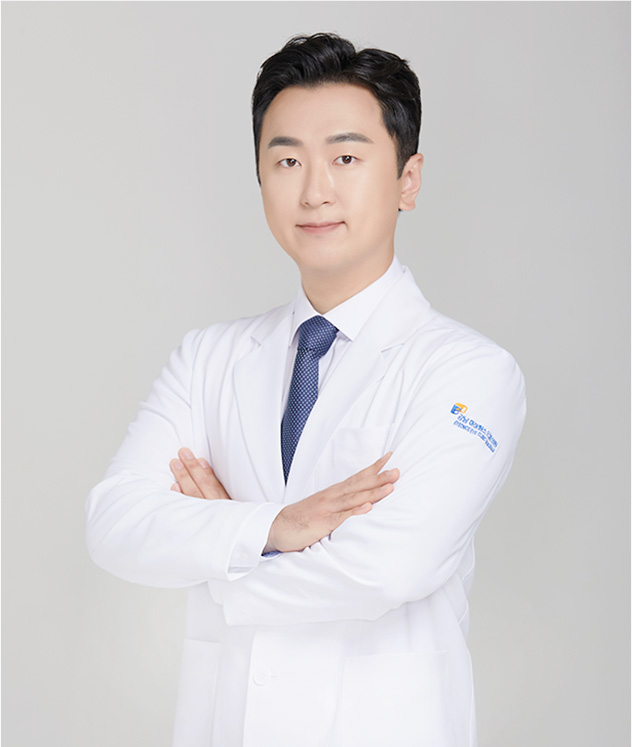
Representative Director · Former Clinical Instructor, Dept. of Ophthalmology, Samsung Seoul Hospital · Member, Korean Society of Cataract and Refractive Surgery · Member, American Society of Cataract and Refractive Surgery
International patients share what actually happened — from their first fears to waking up the next morning without glasses.
Our patients share their stories on Google — verified, public and unfiltered. Open the map to read every review straight from the source.
Tell us your prescription and travel dates. Our English-speaking team will design your personalized plan — free of charge, no pressure.
An English-speaking eye clinic in the heart of Gangnam, Seoul — moments from Sinnonhyeon Station and easily reached from Incheon International Airport.
5–6F, Duo Sinnonhyeon, 368 Sapyeong-daero, Seocho-gu, Seoul, South Korea
+82-10-6308-0984 — English, Chinese, Mongolian & Thai
Mon, Tue, Thu, Fri 09:00–18:00 · Sat 09:00–16:00 · Lunch break 13:00–14:00 · Closed Wed & Sun
By appointment only · Registration may close early depending on the day’s schedule.
Sinnonhyeon Station (Line 9 / Sinbundang Line) — 3 min walk. Gangnam Station (Line 2) nearby.