
Refractive eye surgery in Korea comes in four routes: LASIK/LASEK, SMILE, ICL and lens replacement. After 40, the state of your natural lens, not only your prescription, usually decides which route fits.
"Korean eye surgery" often means eyelids; refractive surgery means focus
Corneal laser after 40 still corrects distance, not reading
When is ICL suggested instead of laser?
When the natural lens is the problem, the route changes
What does the exam in Seoul measure before a route is picked?
What decides the cost of refractive eye surgery in Korea?
Risks and side effects on each route
How many days in Seoul, and what happens once you're home?
Are you weighing refractive eye surgery Korea offers but unsure which route suits eyes over 40?
It is worth reading on before you book a flight or pick a clinic.
After reading, you will know what reviews claim versus what is medical fact, how the four methods (laser, ICL, lens replacement) differ, and what decides the cost, so you can choose what to send first.
Hello, I'm Dr. Baek Dong-won, Representative Director of EYEONCE.
We are a vision-correction clinic in Gangnam, Seoul. Our staff speak English, surgery can be done on the same day, and you can start the conversation on WhatsApp.
I wrote this because many people assume "Korean eye surgery" means eyelids, or that one laser fits every adult.
The short answer: after 40, the best route depends on your natural lens as much as your prescription, so the same -5 D can lead to different recommendations at 35 and at 55.
| Route | What it changes | Usually considered when |
|---|---|---|
| LASIK / LASEK | Reshapes the cornea with a laser | Stable prescription, thick enough cornea, clear lens |
| SMILE LASIK / SMILE PRO | Removes a thin lens-shaped piece of corneal tissue | Similar to LASIK |
| ICL (EVO Aqua) | Adds a lens in front of your own lens | High myopia, thin corneas, very dry eyes |
| Lens replacement | Swaps your natural lens for an IOL | Reading vision slipping, or lens starting to cloud |

Refractive surgery changes how light focuses inside your eye, so you can see without glasses or contacts. Search results for "Korean eye surgery" mix this with eyelid work such as double eyelid surgery or under-eye bag removal, which is cosmetic surgery on the skin and fat around the eye.
EYEONCE is an eye clinic for vision correction, cataract and presbyopia. We do not perform eyelid or under-eye cosmetic procedures, so if puffy lids or bags are your concern, this page is not the right one for you. If the problem is blurry distance vision, reading glasses creeping into your life, or contacts that burn by mid-afternoon, keep reading.
Corneal laser can often still correct distance vision after 40. LASIK, LASEK and SMILE reshape the cornea, and in your 40s they can correct nearsightedness and astigmatism if the cornea is thick and regular enough and the prescription has been stable.
What corneal laser does not do is stop presbyopia. Near focusing fades because the natural lens inside the eye stiffens with age, and a laser on the cornea leaves that lens untouched.
The U.S. Food and Drug Administration's patient guide to LASIK sets out what the surgery day and the first weeks involve. For SMILE specifically, the technique removes a small lenticule of tissue through a small incision rather than lifting a flap, which is described in detail in a review by Reinstein and colleagues in Eye and Vision. The EYEONCE clinic site and two of our posts compare the corneal options at more length: who LASEK is actually for and how SMILE LASIK differs.
Our laser platforms are the Ziemer FEMTO Z8 and the WaveLight EX500. Which corneal route fits your eye is decided after the exam, not by the device list.
ICL is usually suggested when the cornea is the weak link: high myopia or astigmatism, a cornea too thin for laser, very dry eyes, in some cases very large pupils at night, or a history of corneal injury or disease. No corneal tissue is removed.
The lens used here is the EVO Aqua ICL with CentraFLOW. It sits behind the iris and in front of your own lens, goes in through an incision of roughly 3 mm, and its central port keeps the eye's natural fluid flow, so a separate iridotomy is not needed. It can also be removed or exchanged later if your needs change.
For readers over 40, ICL corrects distance only; it does nothing for presbyopia, and it leaves your natural lens in place. If that lens is already showing early clouding, a route that replaces the lens may make more sense than one that adds a second lens in front of it.
Say you are 46, you have worn glasses at about -6 D for years, and you now hold your phone at arm's length. In a forum thread you read that laser "fixed everything" for someone, and you wonder if the same is true for you. As a doctor, I would separate that claim from the medical facts. Laser reshapes the cornea for distance, so reading glasses may still be needed. A high prescription may also leave too little corneal tissue to treat safely.
I would measure your corneal thickness, check the clarity of your natural lens, and ask what bothers you most: night driving, close work, or contacts by afternoon. Only then would I say whether laser, an ICL or lens replacement is worth discussing for you.
If your reading vision is slipping or your lens is starting to cloud, lens replacement becomes a real option: the natural lens is removed and an intraocular lens (IOL) goes in its place.
Lens replacement is one approach to presbyopia, not the only one; we offer both presbyopia correction and cataract surgery, and the exam decides which method suits your eye.
The National Eye Institute notes that cataracts are very common as people get older, and that surgery replaces the cloudy lens with an artificial one. Early cataract can show up as glare at night, ghosted images, or even a short-lived improvement in near vision before things get worse.
IOLs come in families, and the choice rests on four things: which distance you want sharp, whether astigmatism needs correcting, how well you tolerate night glare, and how often you are willing to wear glasses.
| Lens family | What it aims for | Main trade-off |
|---|---|---|
| Monofocal | One clear distance | Glasses for the other distances |
| EDOF (extended depth of focus) | Distance plus intermediate | Some reading tasks may still need glasses |
| Multifocal / trifocal | Near, intermediate and distance | More halos and glare at night for some people |
| Toric versions | Adds astigmatism correction | Depends on precise lens alignment |
The actual surgery takes roughly 10–20 minutes per eye. The bigger time commitment is the decision beforehand, which is why the exam matters so much for this route.
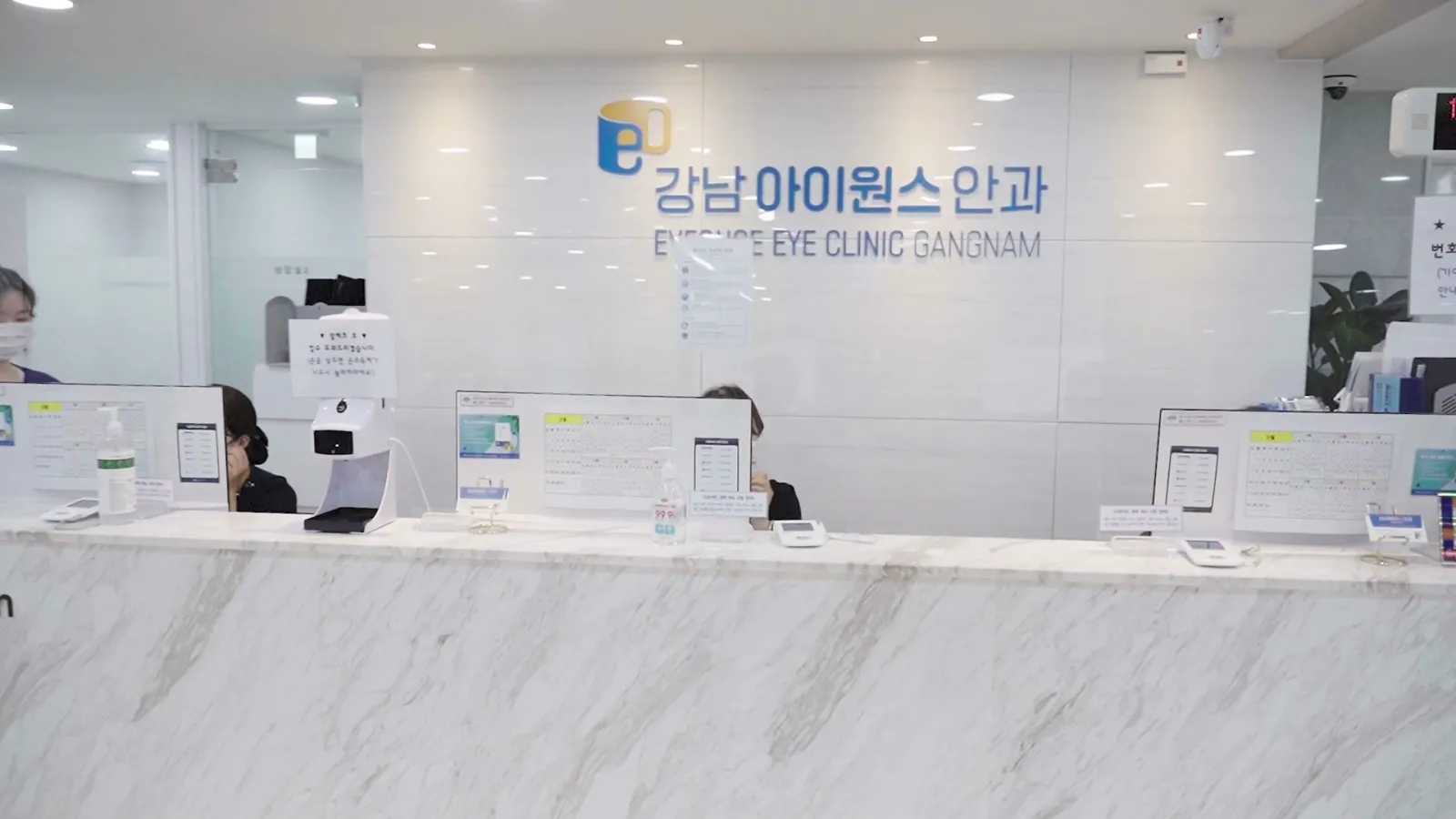
The exam maps the cornea, the inside of the eye and the lens before any route is discussed. Diagnostics here are Topcon, and for ICL planning the 3D analysis covers axial length, anterior chamber depth, corneal curvature and astigmatism, so the lens can be sized and its power calculated for one eye at a time.
For an eye over 40, a few findings tend to move the decision more than the headline prescription:
The tests only work if the cornea is in its natural shape.
For an eye over 45, I look at the lens as carefully as the cornea. If the lens is starting to cloud, a laser that reshapes the cornea today can mean a lens operation a few years later and two rounds of healing. I would rather say that in the exam room than leave it for later. Sometimes the useful answer is "not yet", or a different route from the one you came in asking about.
I see each patient from the diagnosis through the surgery and the follow-up myself. I was formerly a clinical instructor in the Department of Ophthalmology at Samsung Seoul Hospital, and I am a member of both the Korean and the American Society of Cataract and Refractive Surgery; the rest is on the doctor's page.
The cost depends first on the route: corneal laser, an ICL placed inside the eye, and lens replacement are different operations with different materials. It also depends on whether one eye or both are treated, and on your prescription and any astigmatism. The tests needed before a route is chosen, the anaesthesia and medication, and the number of follow-up visits all play a part. So does how many days you can stay in Seoul, since that affects how check-ups are scheduled.
To get the figure for your case, send your glasses prescription or a photo of your last eye exam report on WhatsApp and ask about it there.
Every route carries risk, and the kind of risk differs. Corneal laser risks center on the surface of the eye, ICL risks on pressure and lens position inside the eye, and lens replacement risks on the trade-offs of the new lens plus the general risks of surgery inside the eye.
Dry eye matters more after 40, when tear production often falls. LASEK generally has a slower, more uncomfortable first few days than flap or small-incision methods. As a co-author of the Textbook of Dry Eye (2019), I take a fast-breaking tear film seriously when weighing laser against the alternatives.
ICL. Some temporary haziness or night halos can appear early and usually settle over the first 1–3 months. Follow-up checks matter here because eye pressure and the lens position need monitoring over time.
Lens replacement. Multifocal and trifocal lenses can bring halos and glare around lights at night, which some people adapt to and some find bothersome.
Some eyes should not have any of these routes yet: a prescription that is still changing, certain corneal diseases, or eye conditions that need treatment first. The exam decides that, and individual results vary.
Our travel guidance (clinic site, 2026): for corneal laser, plan about 3–5 days; for ICL and lens procedures, usually 5–7 days. If the exam shows you are suitable, the exam and surgery can often happen on the same day, with a check-up the next day before you fly.
We are closed on Wednesdays and Sundays, so build the trip so that the next-day check does not land on one of those days. Saturday hours are 09:00–16:00, and an appointment is required. We are on floors 5–6 of Duo Sinnonhyeon, a 3-minute walk from Exit 3 of Sinnonhyeon Station, and roughly 60–75 minutes by taxi from Incheon Airport. On-site interpreters work in English, Chinese, Mongolian and Thai.
The U.S. CDC's advice on medical tourism suggests carrying copies of your medical records home and planning follow-up care before you travel, which applies here too.
If something feels wrong after you fly home, contact us at any time, or see a local ophthalmologist first and then contact us. Lifetime Aftercare covers re-examination whenever you need it, with re-treatment support where appropriate; the specific conditions are confirmed at consultation. For more on planning the whole trip, see where to start with eye surgery in South Korea, and for what the first weeks after SMILE look like, returning to daily life after SMILE LASIK.
Not sure which row is yours? Send a photo of your glasses prescription or your last eye exam report on WhatsApp, and ask one question: "Which route should I look at first?" Add a line about what bothers you most, such as night driving, reading your phone, or contacts by afternoon. When you come to Seoul, I examine your eyes and recommend what fits them.
Results and suitability vary by individual. Your procedure recommendation is confirmed only through an in-person diagnostic exam.

Representative Director · Former Clinical Instructor, Dept. of Ophthalmology, Samsung Seoul Hospital · Member, Korean Society of Cataract and Refractive Surgery · Member, American Society of Cataract and Refractive Surgery
International patients share what actually happened — from their first fears to waking up the next morning without glasses.
Our patients share their stories on Google — verified, public and unfiltered. Open the map to read every review straight from the source.
Tell us your prescription and travel dates. Our English-speaking team will design your personalized plan — free of charge, no pressure.
An English-speaking eye clinic in the heart of Gangnam, Seoul — moments from Sinnonhyeon Station and easily reached from Incheon International Airport.
5–6F, Duo Sinnonhyeon, 368 Sapyeong-daero, Seocho-gu, Seoul, South Korea
+82-10-6308-0984 — English, Chinese, Mongolian & Thai
Mon, Tue, Thu, Fri 09:00–18:00 · Sat 09:00–16:00 · Lunch break 13:00–14:00 · Closed Wed & Sun
By appointment only · Registration may close early depending on the day’s schedule.
Sinnonhyeon Station (Line 9 / Sinbundang Line) — 3 min walk. Gangnam Station (Line 2) nearby.