
For one eye in Seoul, plan five to seven days.
What does the first morning after surgery usually look like?
Days 2 to 7: the week the eye settles
Why do the weeks after the flight still matter?
How many days in Seoul should you plan for one eye?
What changes the plan when both eyes have cataracts?
Risks, and the symptoms that should not wait
The lens choice shapes what seeing well means afterwards
If you are asking how long after cataract surgery can you see the difference, most patients notice it within days: sharper edges, brighter colors and less night glare.
For a family flying to Seoul for the operation, the worry is usually narrower: what the day itself involves. The surgery takes roughly 10–20 minutes per eye, and recovery before departure is often complete in a few hours. At EYEONCE Eye Clinic, the surgeon who examines the eye is the same one who operates, and suitable candidates can have the exam and surgery on the same trip.
That continuity matters once you are home, too. You wear an eye shield during sleep for a week and avoid strenuous exercise for a month, and if anything ever seems wrong, you can contact us at any time for a detailed re-examination.
If you are arranging this for a parent, send the dates you are considering on WhatsApp. Our interpreters on-site speak English, Chinese, Mongolian and Thai, so there is no language barrier from your first message.
Brighter, and still a little soft. The patch usually stays on until the follow-up exam, which MedlinePlus says typically happens the next day. When it comes off, colors can look whiter or more vivid while fine print still swims.
The National Eye Institute describes the same pattern: vision might be blurry at first while the eye recovers, and some people see colors as brighter. The surgery itself is short. On the clinic's cataract page, actual surgery time is roughly 10 to 20 minutes per eye, with recovery before departure that is often complete within a few hours.
This is the morning when the question "is this blur normal?" comes up most, usually from the adult child sitting next to the patient rather than the patient.
On a day-one check, the letter chart tells me less than the eye itself. I want to see a clear cornea, a pressure where it should be, and a lens sitting centered. A slightly blurry chart on that morning is common; a hazy cornea or a raised pressure is what changes the plan.
Most of the improvement people can feel happens in this week.
The rules for this week come from the clinic's own aftercare: an eye shield during sleep for a week, no strenuous exercise for a month, and a set timeline for when washing your face and bathing are safe. Prescribed eye drops run on a schedule, and after the patch comes off MedlinePlus advises dark sunglasses outdoors.
For the trip, that translates into slow days. Light activity is what MedlinePlus recommends during recovery, so plan the Seoul days around rest, drops on time and short outings near the hotel. A family member who expects to tour the city with a parent on day three is usually the one who has to adjust.
Because vision keeps sharpening after you are home.
Two things happen in that window. Buying new reading glasses in the first few days, before the eye has settled, is a common way to waste money on the wrong power.
Five to seven days. That is the stay the clinic recommends for ICL and lens procedures, and cataract surgery replaces the eye's lens. The extra days are there so the checks happen before boarding, not after.
A typical shape, for a suitable candidate:
| Day | At the clinic | For the trip |
|---|---|---|
| Arrival | None | Incheon to the clinic: roughly 60–75 minutes by taxi, per the clinic's directions |
| Day 1 | Precision exam; surgery may follow the same day for suitable candidates | Bring a companion; home after a few hours |
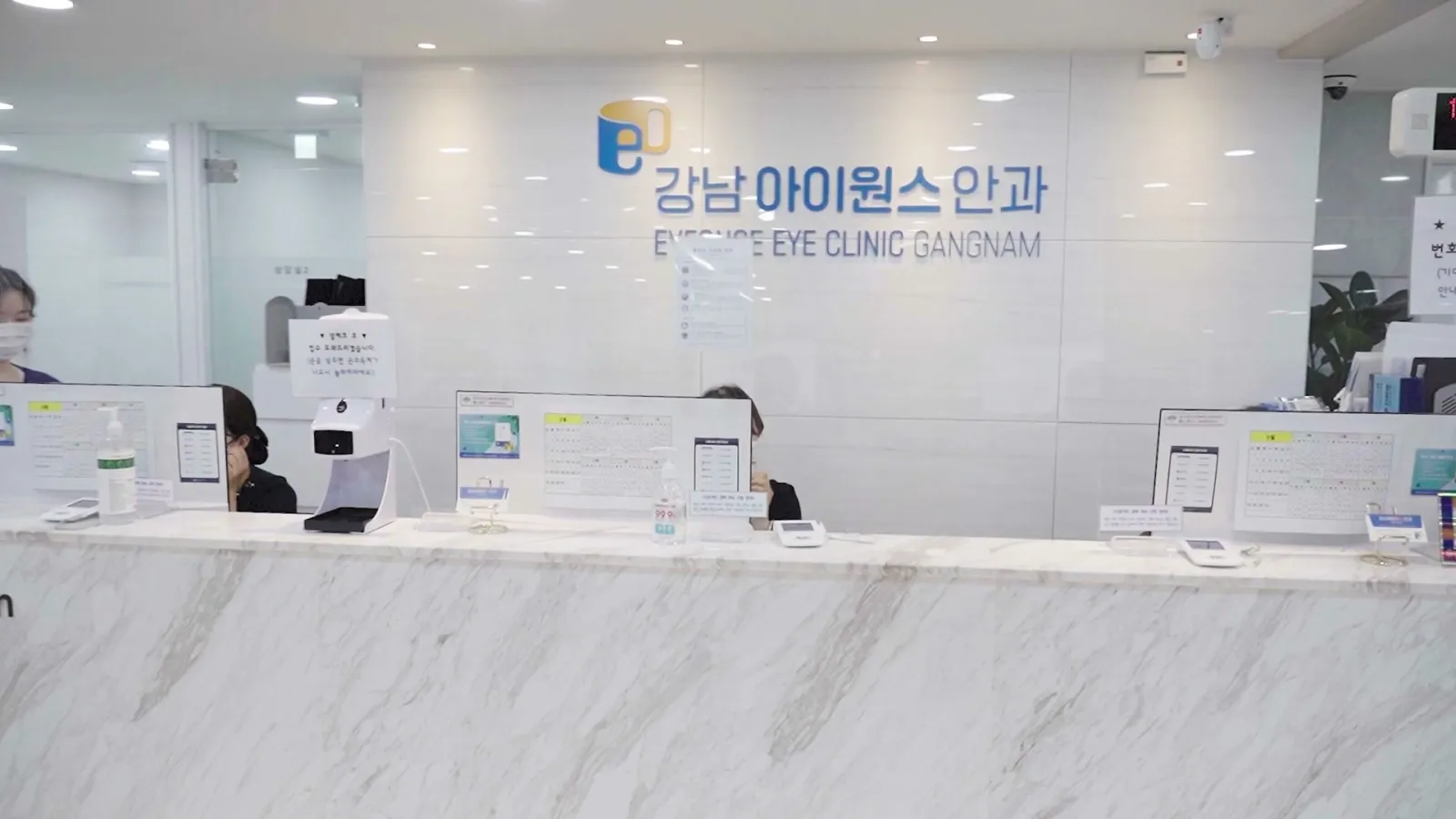
The clinic's calendar shapes this more than people expect. EYEONCE is closed on Wednesdays and Sundays, open Saturdays 09:00–16:00, and appointments are required, so landing on a Tuesday night means the exam waits until Thursday. The clinic is on floors 5–6 of Duo Sinnonhyeon, 368 Sapyeong-daero, a 3-minute walk from Exit 3 of Sinnonhyeon Station (Line 9 and Sinbundang Line). If your parent wears soft contact lenses, they need to stop at least 5–7 days before the exam so the measurements are accurate.
Laser vision correction runs on a different clock and a shorter stay; the SMILE LASIK recovery timeline and the page on who LASEK suits cover that if another family member is weighing it. For the wider picture of planning eye surgery here, start with the guide to eye surgery in South Korea.
For a family abroad, that means either two visits to Seoul or a much longer stay. The spacing is set by the surgeon after the exam, based on how the first eye heals; it is not something to fix in a booking before anyone has looked at the eyes. Between the two operations, the eyes can feel mismatched, with one sharp and bright and the other still cloudy, and some people find their old glasses no longer suit either eye. Knowing that in advance makes the gap weeks easier.
Cataract surgery helps most people: the National Eye Institute reports that about 9 out of 10 people see better afterward. It still carries real risks, and where the eye already has other disease the outcome can be more limited.
The National Eye Institute lists swelling, bleeding or infection, vision loss or double vision, unusual changes in eye pressure, retinal detachment, and secondary cataract, a clouding behind the new lens that can appear weeks to years later and can be treated with laser. MedlinePlus notes that serious infection and bleeding are very rare, and that in eyes with glaucoma or macular degeneration the surgery may be more difficult or the result less good. Whether surgery suits a particular eye, and which lens, is decided at the in-person exam.
Call an eye doctor right away for vision loss, pain that does not ease with medicine, a very red eye, or new floaters.
The symptom I would want a family to act on fast is vision that drops after it had been improving, especially with pain. Do not wait for the next planned visit or for a reply from abroad.
If a parent has glaucoma, macular degeneration or diabetes, send a photo of their latest eye report or a list of their eye conditions on WhatsApp.
The new lens decides which distances are sharp once healing finishes. A monofocal lens gives crisp vision at one focal distance; toric versions add astigmatism correction; multifocal and extended-depth-of-focus (EDOF) lenses aim for near and far with less reliance on glasses.
MedlinePlus notes that, with some lens types and powers, glasses may not be needed after surgery. The trade-off people weigh most is night glare: lenses that spread focus across distances can bring more halos around lights, which matters to someone who drives after dark. On the clinic's cataract page, the choice comes down to four factors mapped during the consultation: vision focus, astigmatism correction, night-glare tolerance and spectacle independence.
That conversation happens with in-house interpreters on site in English, Chinese, Mongolian and Thai, and EYEONCE is registered with the Seoul government as a clinic for international patients. I am a Member of the Korean Society of Cataract and Refractive Surgery and of the American Society of Cataract and Refractive Surgery, and a former Clinical Instructor in the Department of Ophthalmology at Samsung Seoul Hospital.
To start, send your parent's latest eye exam on WhatsApp, noting whether one or both eyes are affected. The WhatsApp line handles English, Chinese, Mongolian and Thai.
Results and suitability vary by individual. Your procedure recommendation is confirmed only through an in-person diagnostic exam.

Representative Director · Former Clinical Instructor, Dept. of Ophthalmology, Samsung Seoul Hospital · Member, Korean Society of Cataract and Refractive Surgery · Member, American Society of Cataract and Refractive Surgery
International patients share what actually happened — from their first fears to waking up the next morning without glasses.
Our patients share their stories on Google — verified, public and unfiltered. Open the map to read every review straight from the source.
Tell us your prescription and travel dates. Our English-speaking team will design your personalized plan — free of charge, no pressure.
An English-speaking eye clinic in the heart of Gangnam, Seoul — moments from Sinnonhyeon Station and easily reached from Incheon International Airport.
5–6F, Duo Sinnonhyeon, 368 Sapyeong-daero, Seocho-gu, Seoul, South Korea
+82-10-6308-0984 — English, Chinese, Mongolian & Thai
Mon, Tue, Thu, Fri 09:00–18:00 · Sat 09:00–16:00 · Lunch break 13:00–14:00 · Closed Wed & Sun
By appointment only · Registration may close early depending on the day’s schedule.
Sinnonhyeon Station (Line 9 / Sinbundang Line) — 3 min walk. Gangnam Station (Line 2) nearby.