
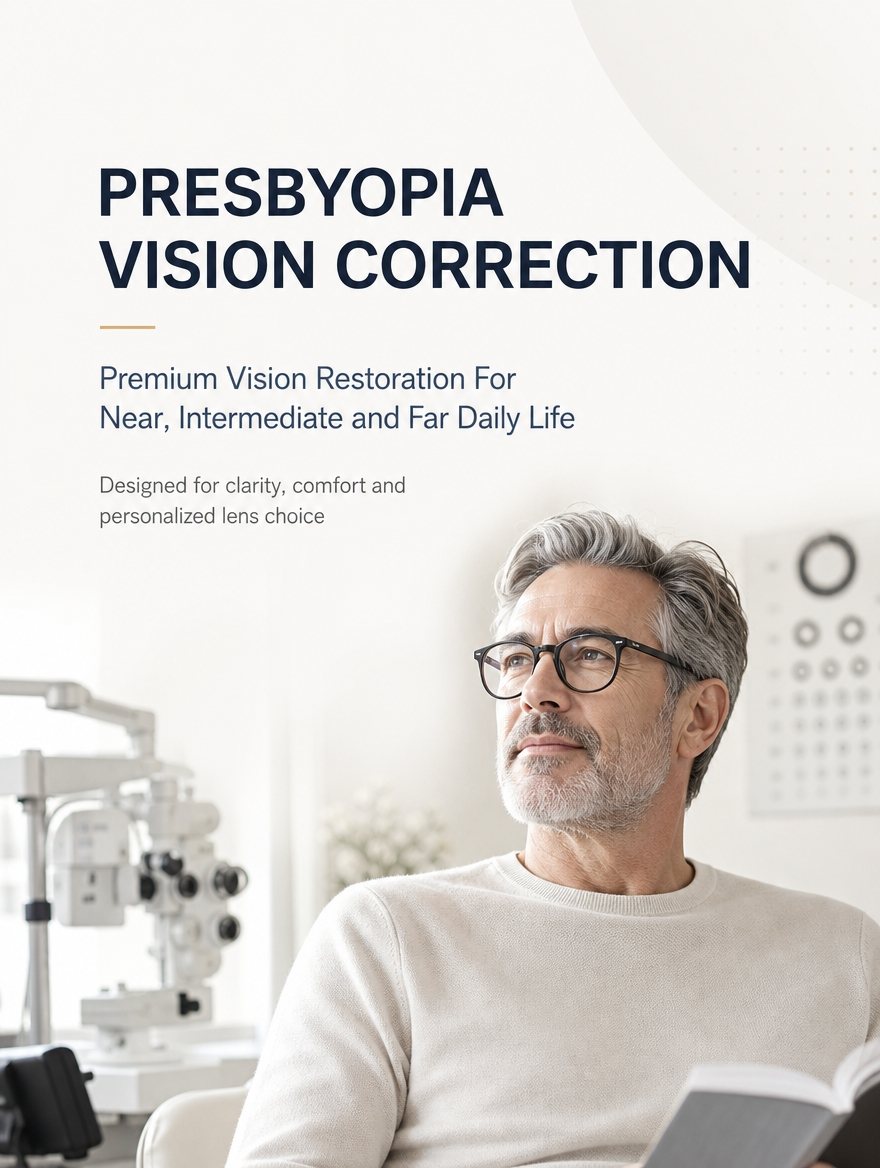
Lens correction for near, intermediate and far vision — so you can read, work and live without constantly reaching for reading glasses.
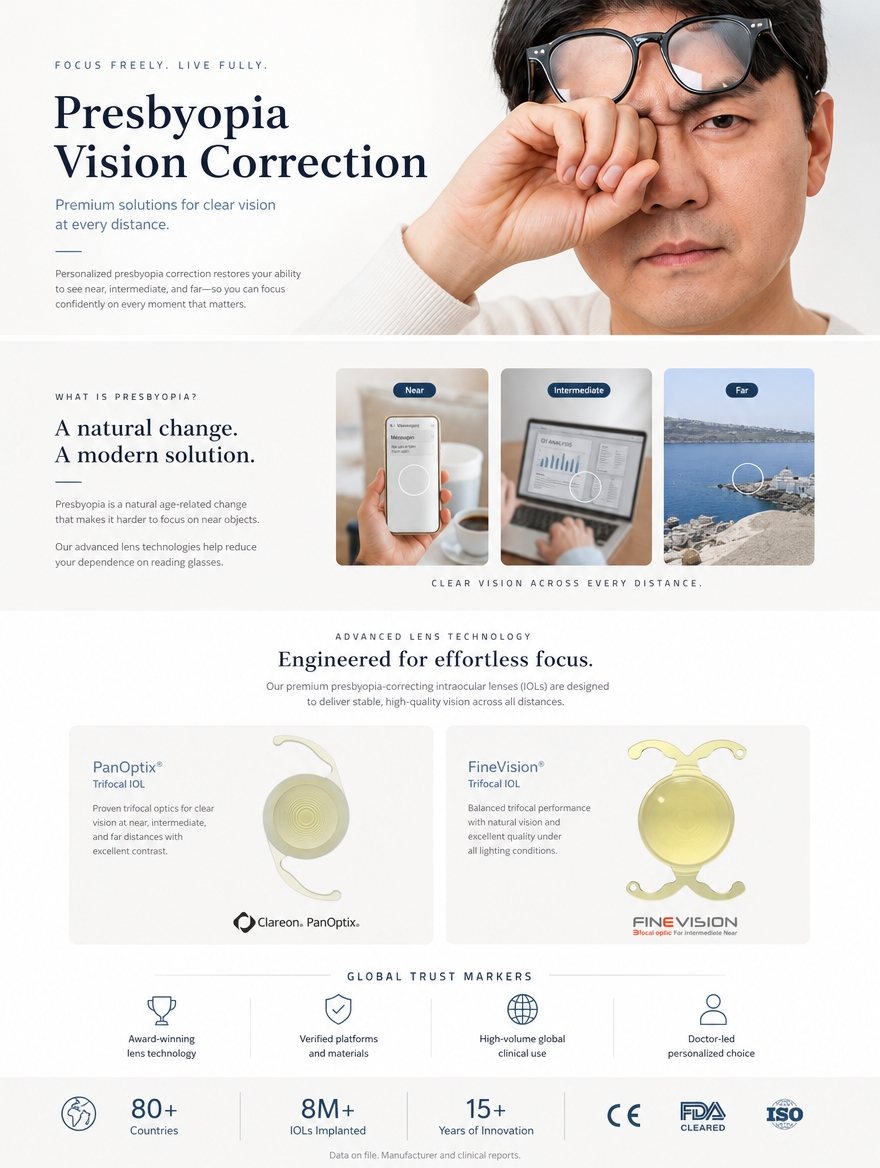
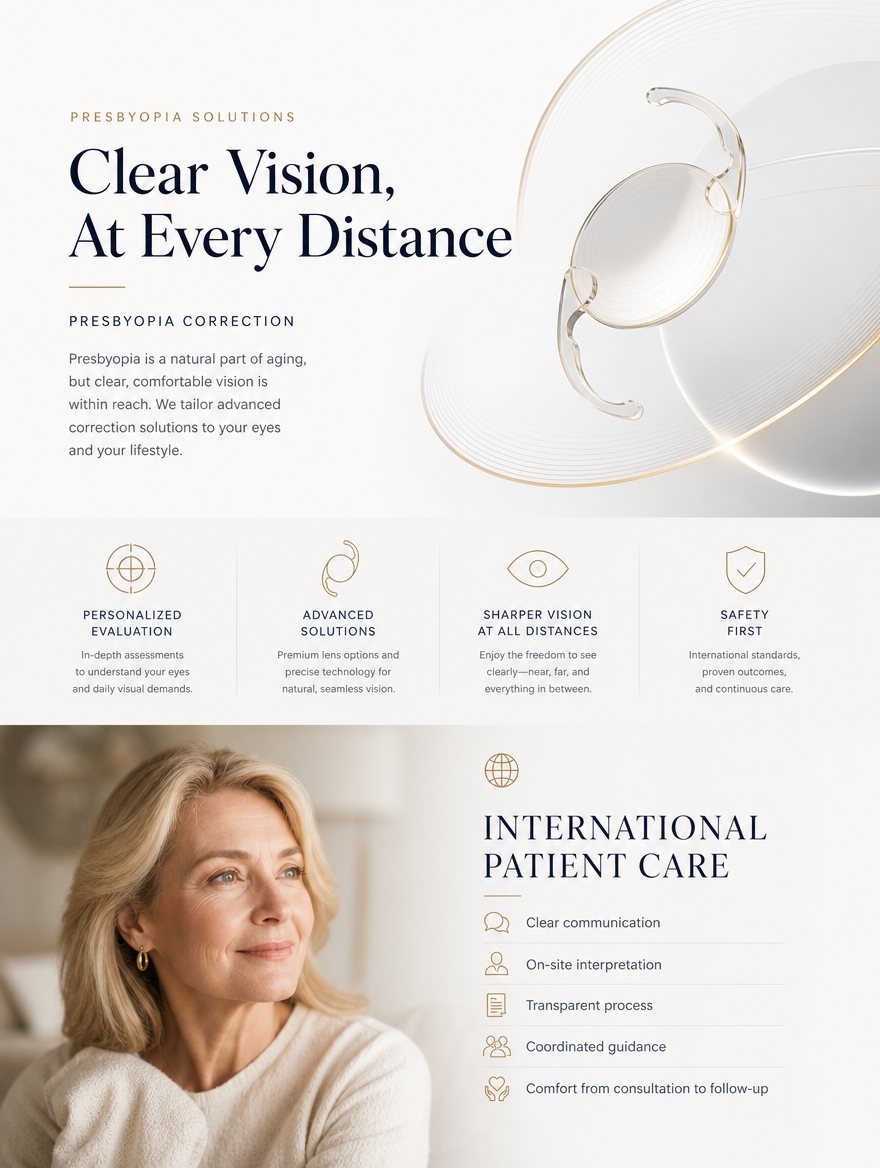
Presbyopia is the natural, age-related loss of near focus. With multifocal and extended-range lenses, EYEONCE corrects vision across all distances — from your phone screen to the road ahead.
Read a book, your phone and fine print comfortably — without holding it at arm's length.
The everyday middle distance: your laptop, the dashboard, a face across the table.
Crisp distance vision for driving, travel and simply enjoying the view around you.
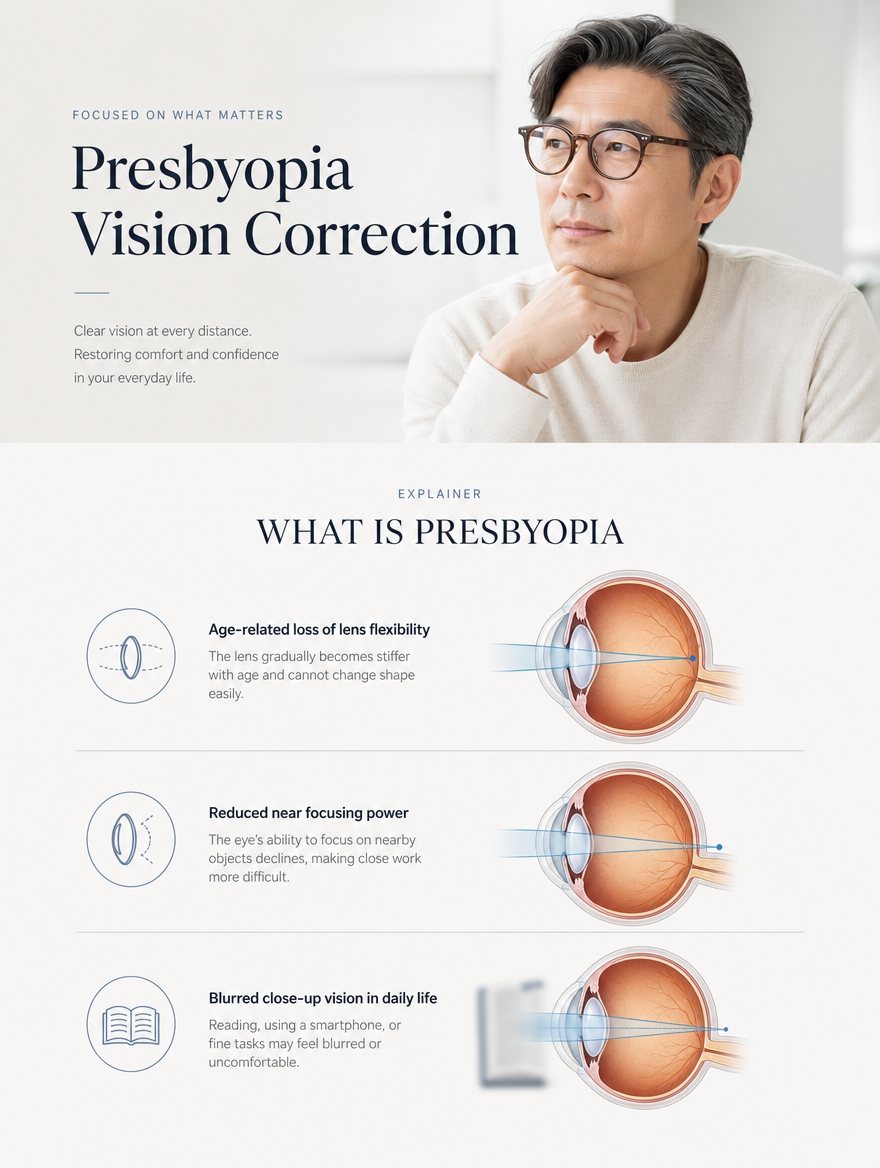
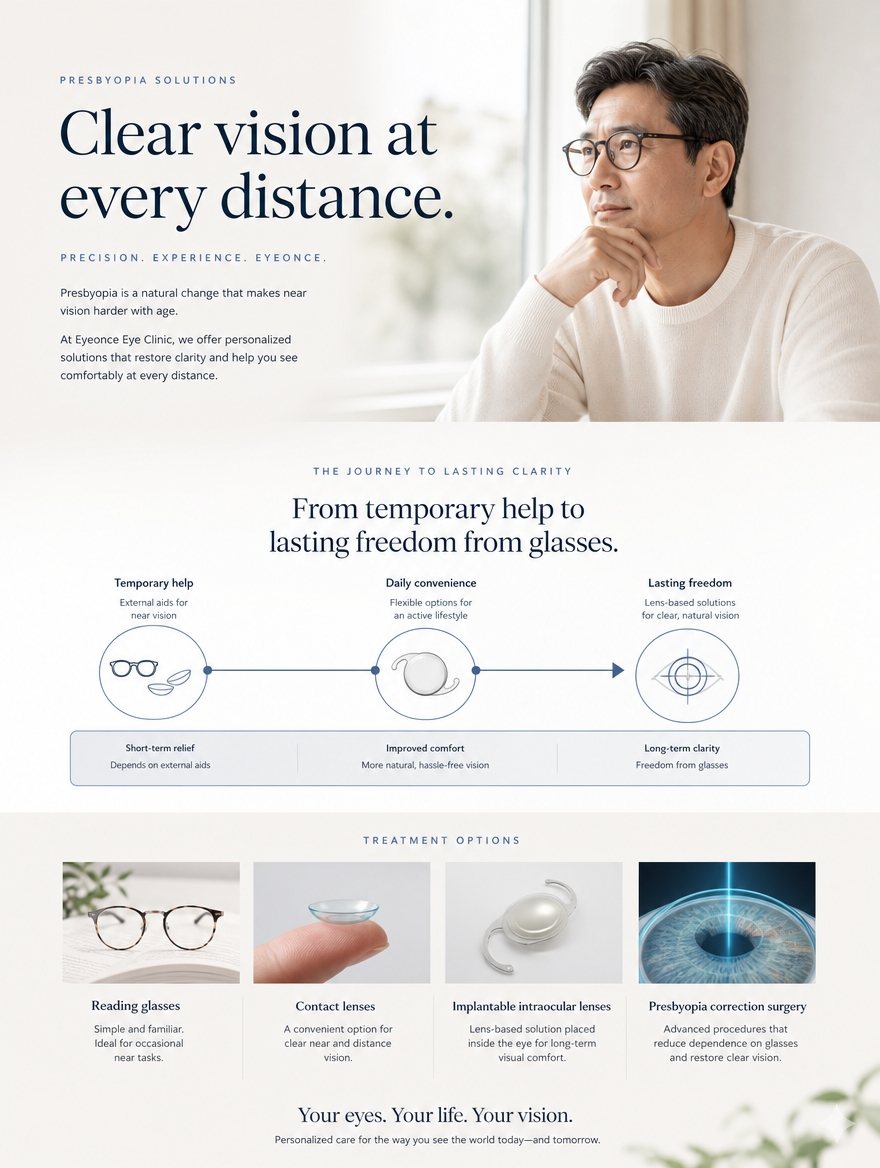
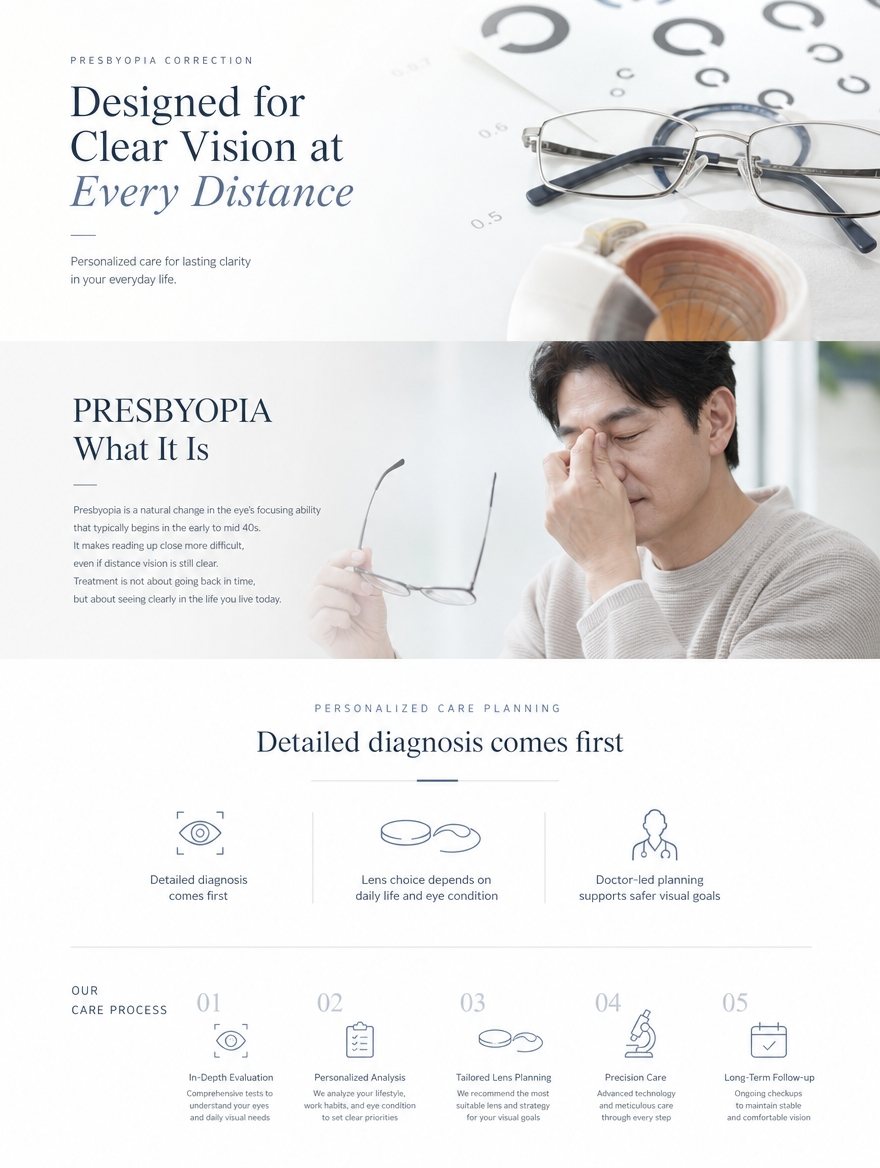
Presbyopia is the natural, age-related stiffening of the eye's lens — usually starting in the early-to-mid 40s — that gradually reduces near-focusing power, making reading, phone screens and other close-up tasks harder even for people who never needed glasses before.
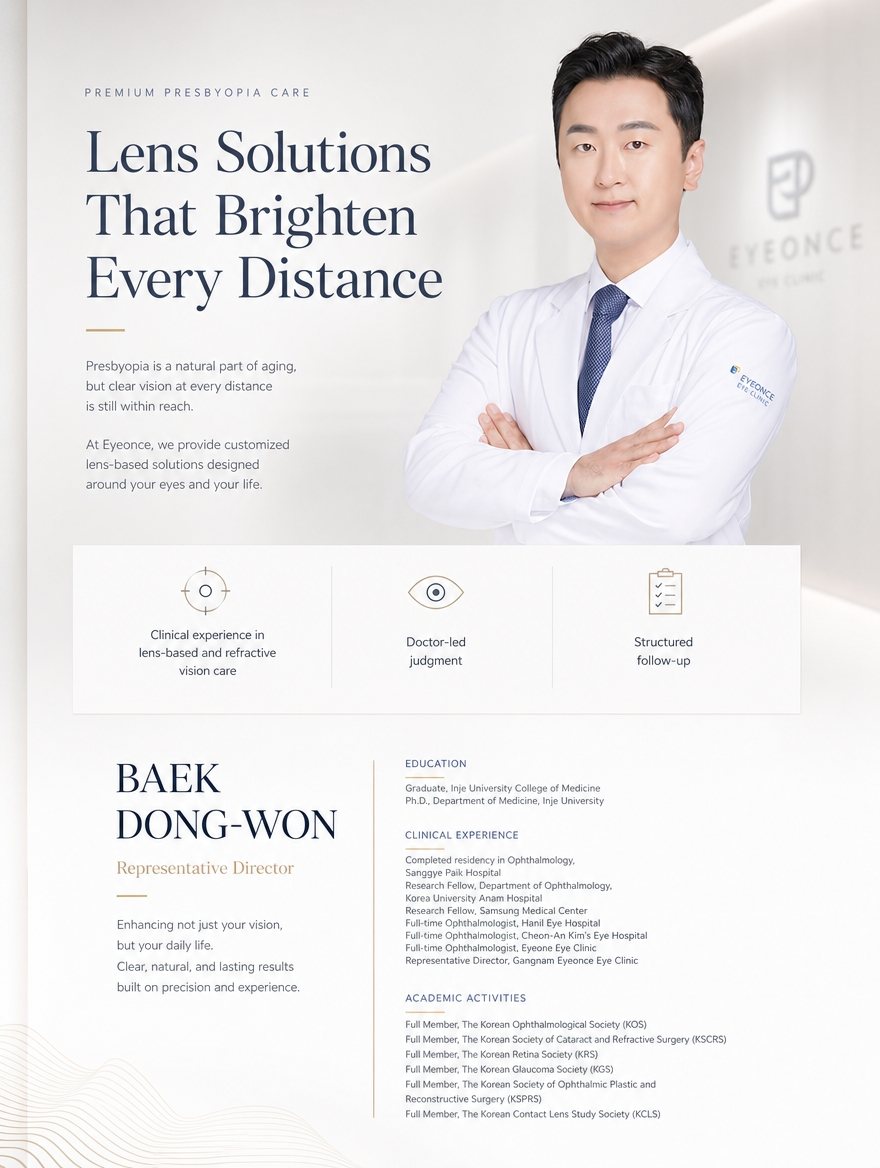
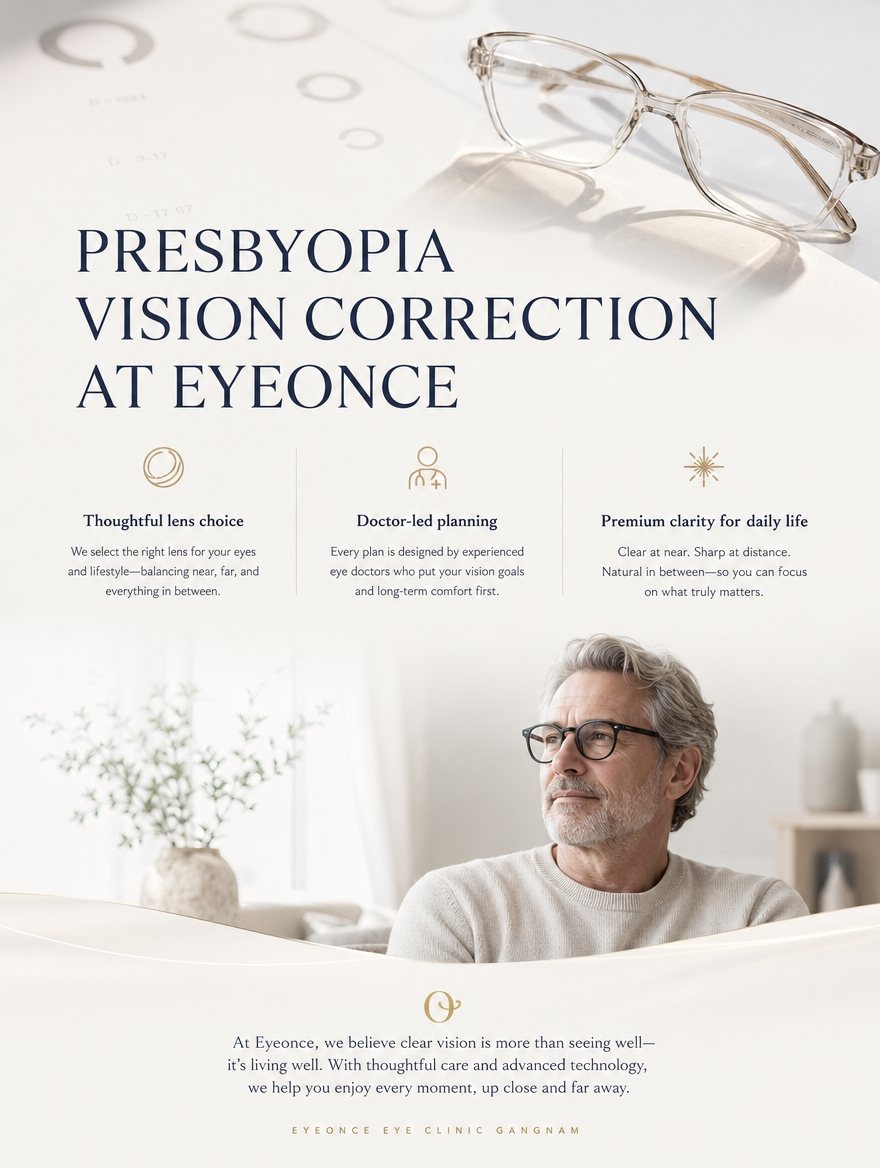
Every EYEONCE presbyopia plan is led by Dr. Baek Dong-won, whose clinical background spans cataract and refractive surgery residency and fellowship training as Representative Director.
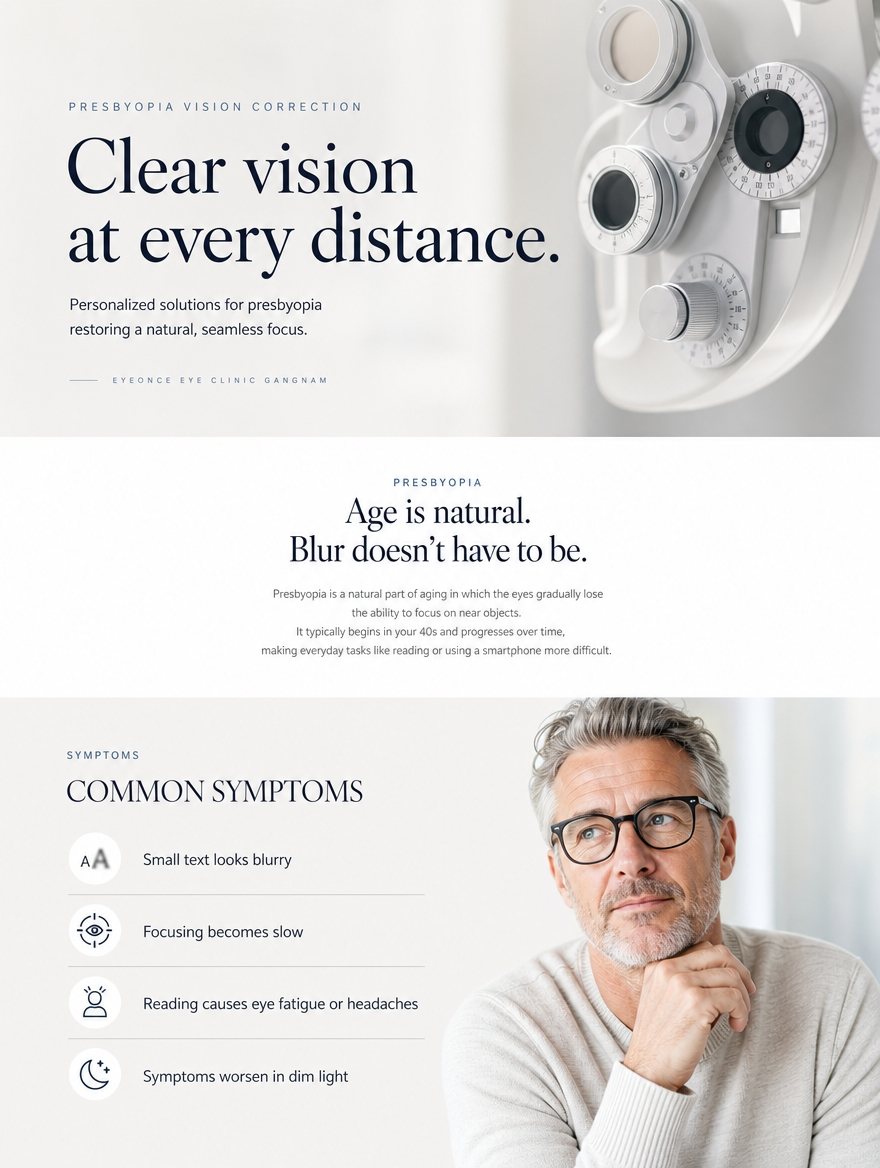
Common symptoms go beyond blurry text: focusing becomes slow, reading causes eye fatigue or headaches, and symptoms typically worsen in dim light.
Many patients move from reading glasses to lens-based surgery once glasses become a daily hassle. Every plan starts with the same three lens families: monofocal for one clear distance, multifocal for near-and-far freedom, or toric where astigmatism also needs correcting.
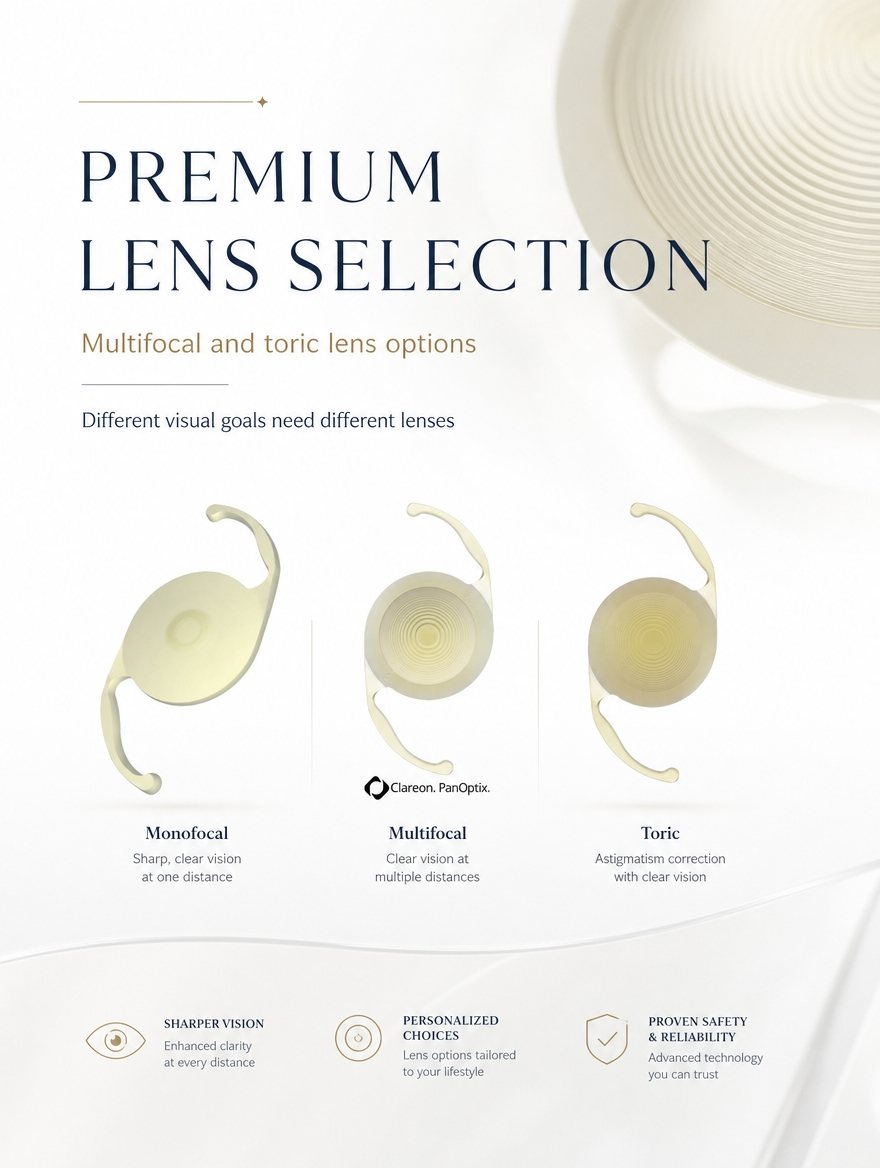
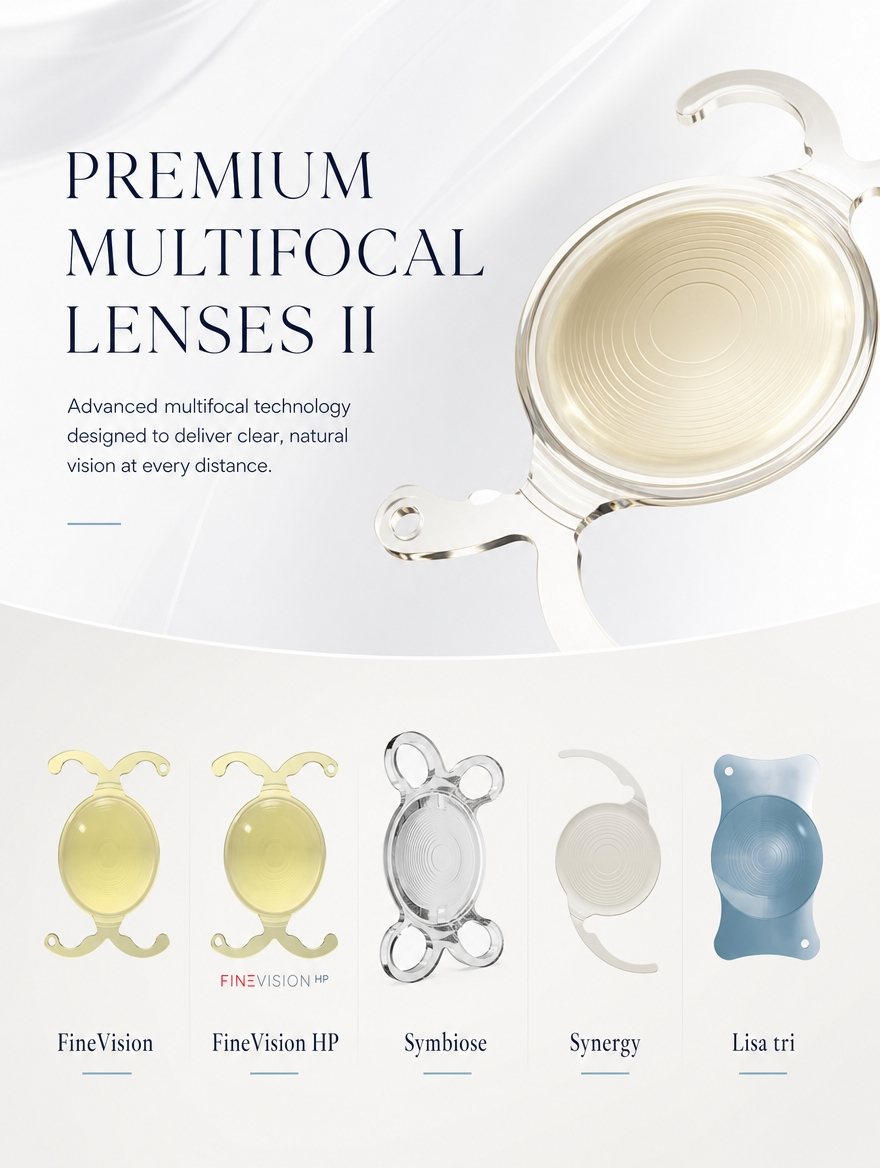
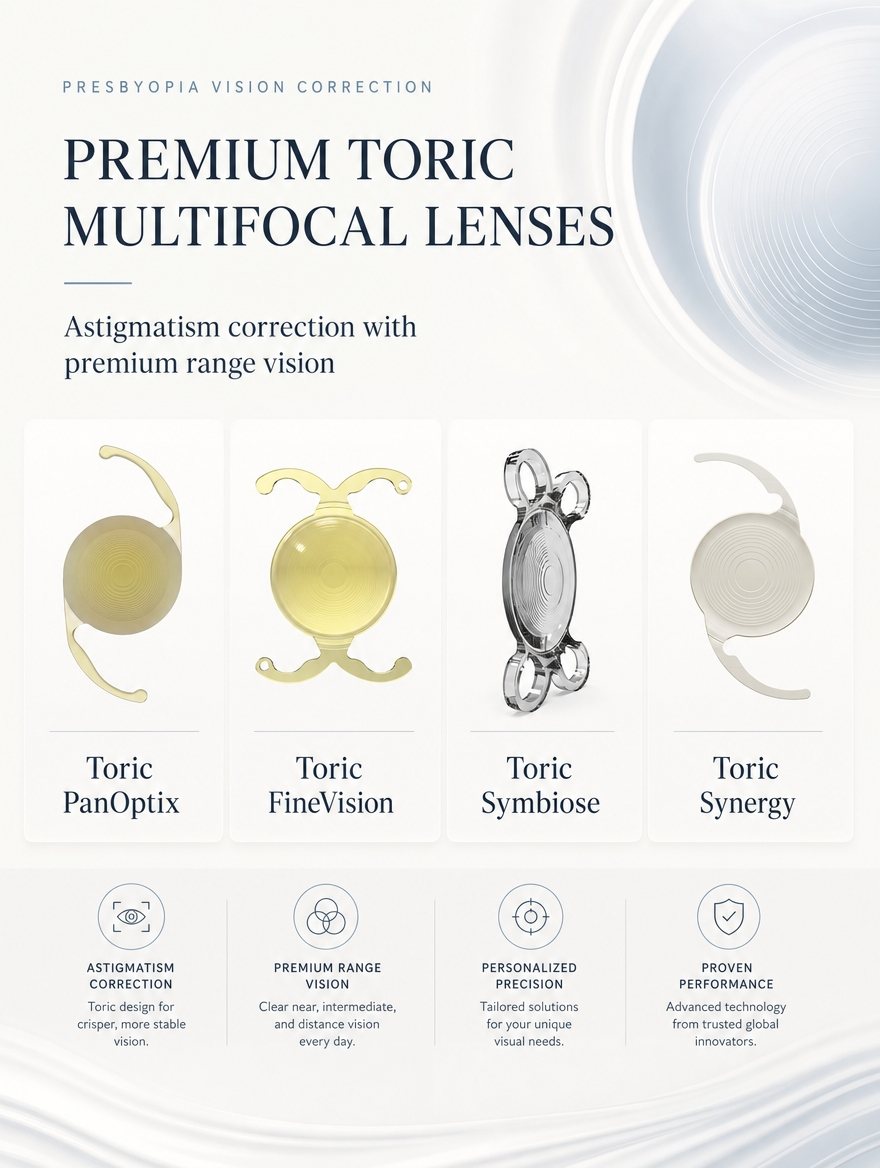
EYEONCE offers a full range of trifocal and extended-range intraocular lenses — Alcon's Vivity and Clareon PanOptix, PhysIOL's FineVision and FineVision HP, and Johnson & Johnson's Symbiose, Synergy and Lisa tri.
Toric versions of PanOptix, FineVision, Symbiose and Synergy add astigmatism correction alongside multifocal vision for patients who need both.
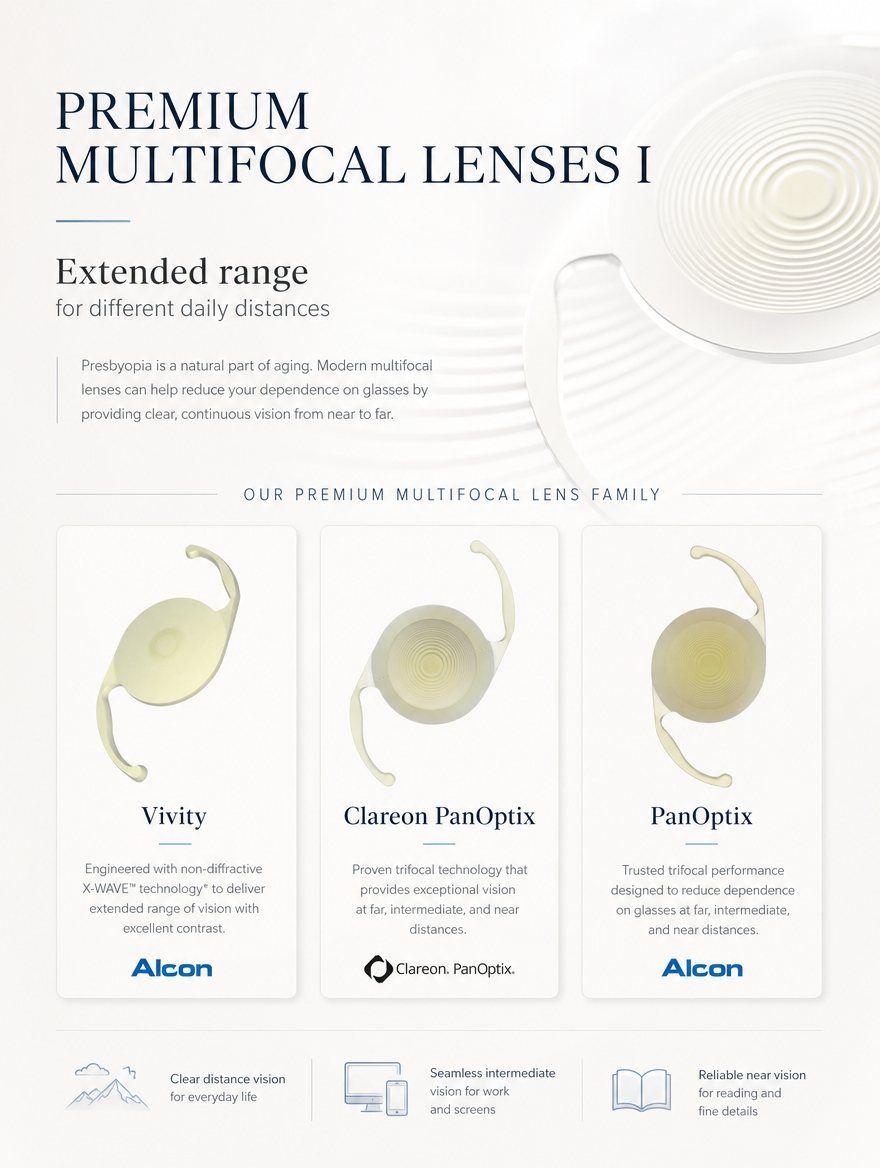
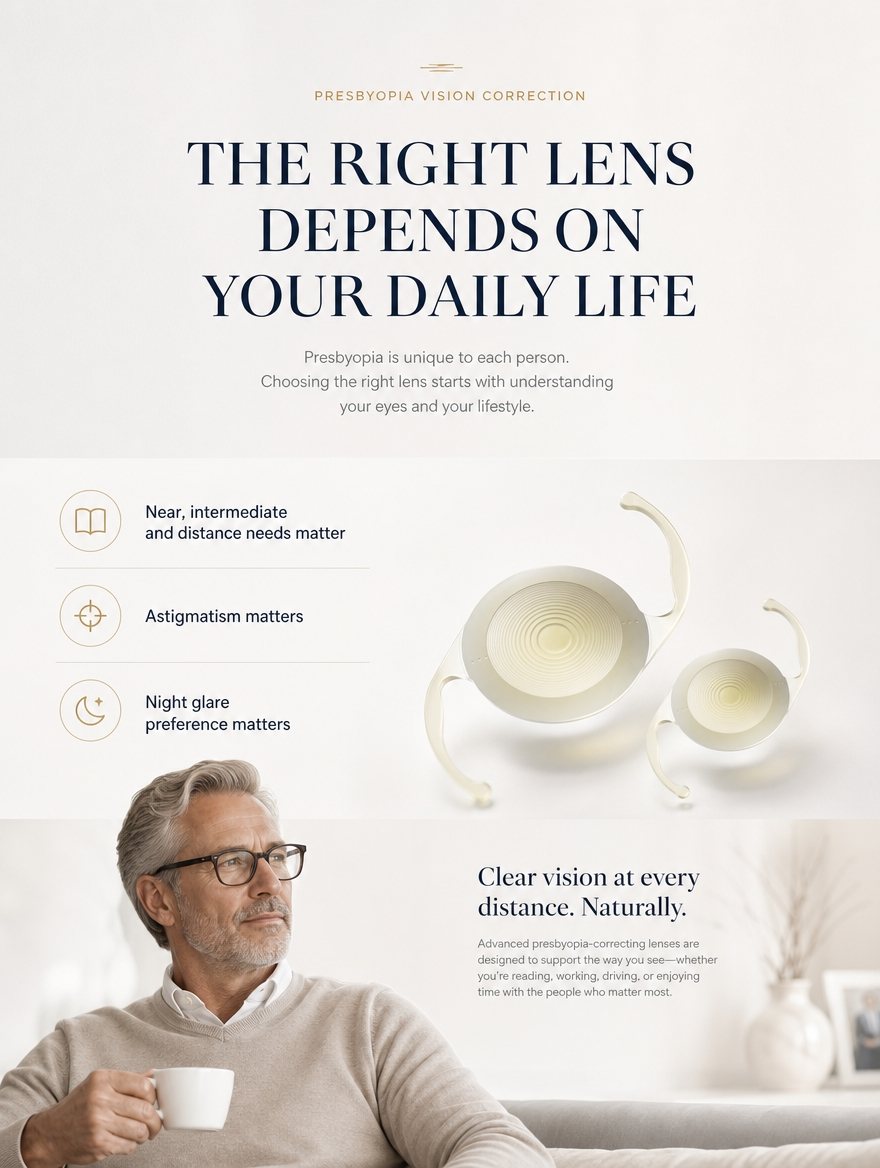
Choosing the right lens comes down to daily life: how much near, intermediate and distance vision you actually need, whether astigmatism is present, and your tolerance for night glare.
PanOptix and FineVision trifocal IOLs are backed by real scale — implanted in over 8 million eyes across 80+ countries over 15+ years, with CE, FDA and ISO clearances.
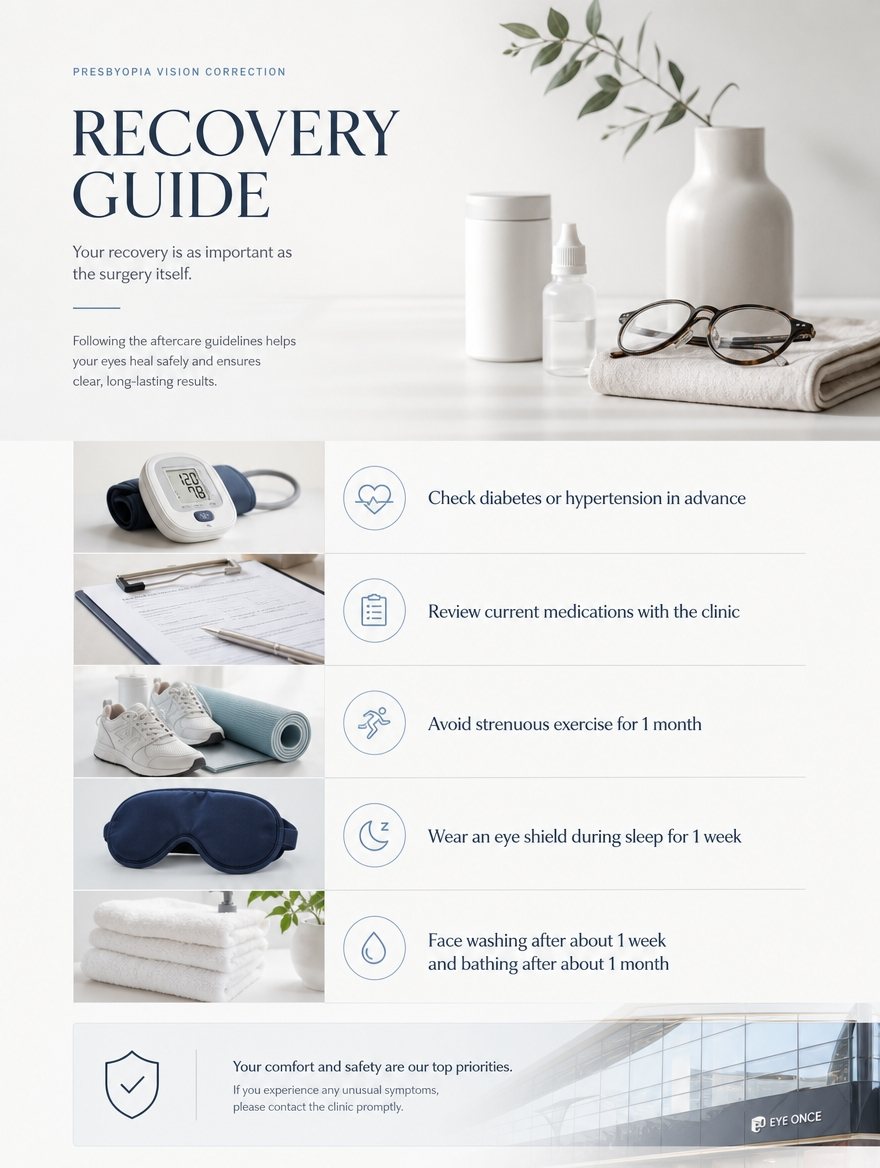
Recovery follows a clear plan: pre-existing conditions like diabetes or hypertension are reviewed in advance, strenuous exercise is avoided for a month, and an eye shield is worn during sleep for the first week.
Every plan follows the same steps: eye exam, lifestyle review, lens selection, surgery and follow-up.
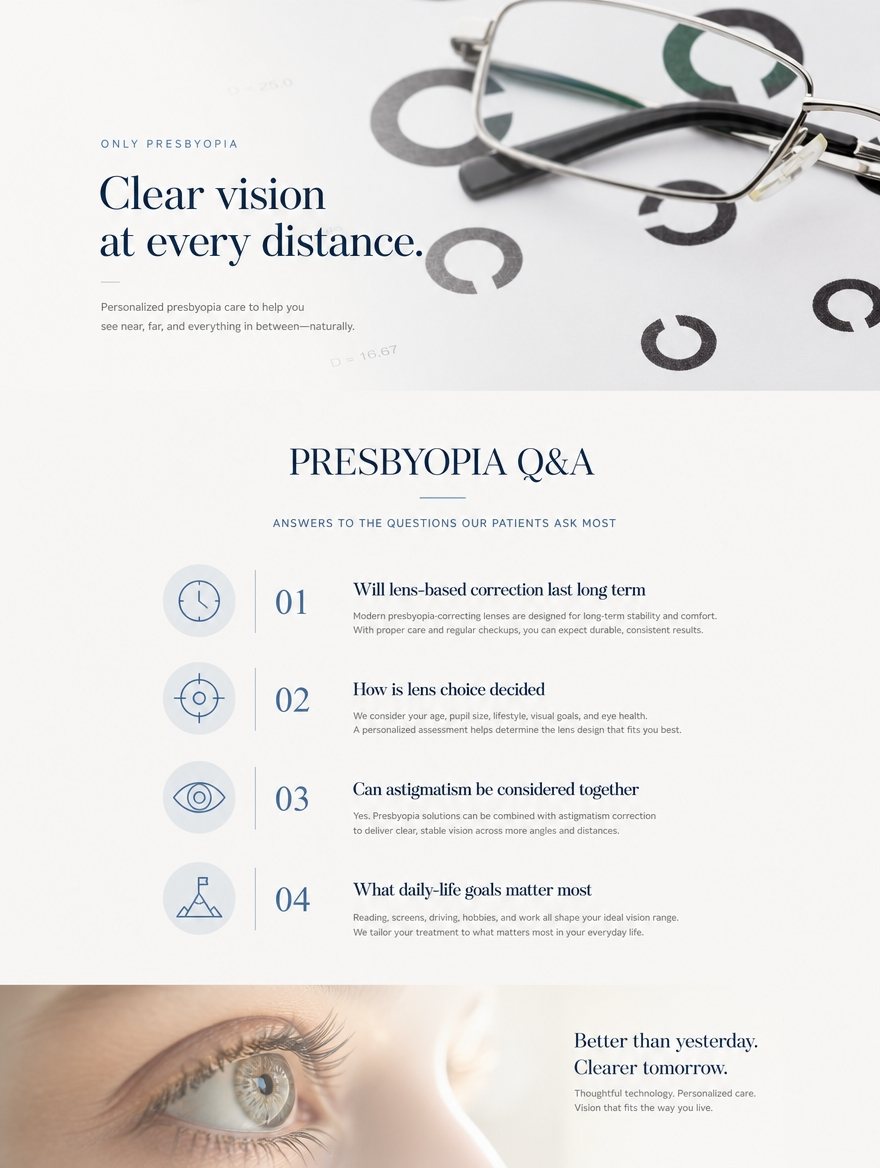
This answers the questions patients ask most: whether lens-based correction lasts long-term, how lens choice is decided, and whether astigmatism can be corrected at the same time. International patients get the same on-site interpretation and WhatsApp follow-up as every other EYEONCE procedure.
At 52, I reached for reading glasses constantly. A premium full-range lens gave me back near, middle and far in one procedure. Now I read my phone, work at my laptop and drive — all without glasses. I only wish I had done it sooner.
Read patient reviewsInternational patients share what actually happened — from their first fears to waking up the next morning without glasses.
Our patients share their stories on Google — verified, public and unfiltered. Open the map to read every review straight from the source.
Tell us your prescription and travel dates. Our English-speaking team will design your personalized plan — free of charge, no pressure.
An English-speaking eye clinic in the heart of Gangnam, Seoul — moments from Sinnonhyeon Station and easily reached from Incheon International Airport.
5–6F, Duo Sinnonhyeon, 368 Sapyeong-daero, Seocho-gu, Seoul, South Korea
+82-10-6308-0984 — English, Chinese, Mongolian & Thai
Mon, Tue, Thu, Fri 09:00–18:00 · Sat 09:00–16:00 · Lunch break 13:00–14:00 · Closed Wed & Sun
By appointment only · Registration may close early depending on the day’s schedule.
Sinnonhyeon Station (Line 9 / Sinbundang Line) — 3 min walk. Gangnam Station (Line 2) nearby.