
A name like Signature SMILE PRO Korea usually sits on top of SMILE PRO, a flapless keyhole laser correction for nearsightedness and astigmatism. Compare the exam and the surgeon, not the label.
The procedure behind a name like Signature SMILE PRO Korea is SMILE PRO: a laser correction for nearsightedness and astigmatism in which a thin disc of tissue is shaped inside the cornea and removed through a keyhole incision of about 2–4 mm, with no corneal flap. Words like “signature” are usually a clinic's own label on top of it, and we have one too: at EYEONCE, SMILE PRO is delivered as Clear SMILE Supra. If you have three clinic pages open with three different names, you may be wondering whether one is a different operation, or a tier you're being steered toward.
Set the names aside and compare what happens to your eye. The surgeon who evaluates you should be the surgeon who operates and follows your recovery; here, that's me, and I only go ahead if the pre-op exam confirms your eyes are a safe fit.
If the real question is whether SMILE PRO is an option for your eyes at all, send your latest glasses or contact lens prescription on WhatsApp and ask one thing: are my nearsightedness and astigmatism in a range where SMILE is worth discussing?
A name, mostly. Clinics in Korea often give SMILE-type surgery their own titles, and the label alone doesn't tell you what the exam measures or who operates. The process attached to the name tells you far more.
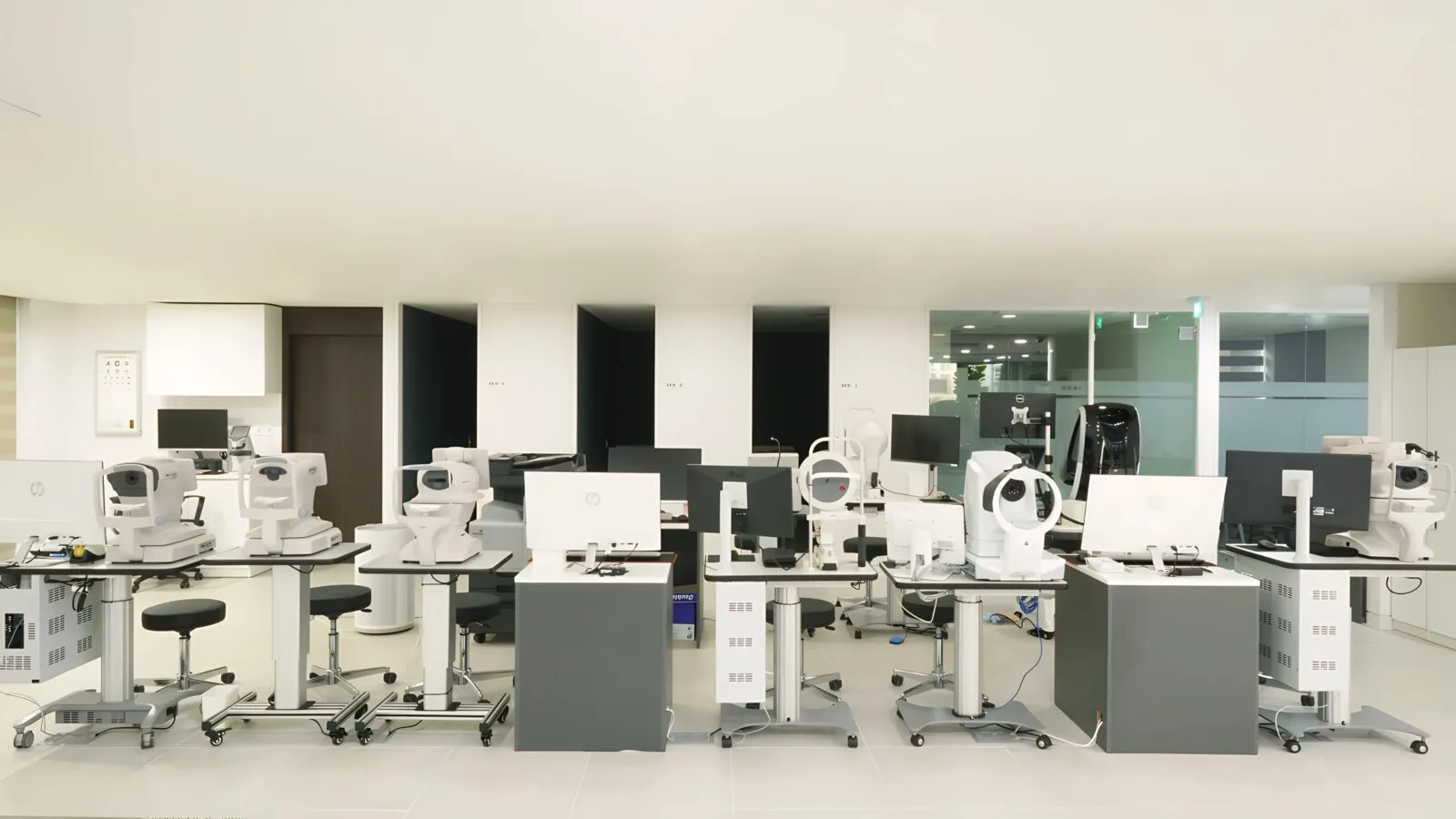
So when a page says Signature SMILE PRO Korea, read it as SMILE PRO plus that clinic's process. Ours runs every SMILE PRO plan through four stages: a detailed pre-op exam, one-to-one treatment planning, a doctor-led laser procedure, and structured follow-up care. Whatever the procedure is called, these are the questions worth putting to any clinic:
We also offer SMILE LASIK. Both are flapless keyhole procedures; SMILE PRO is the newer generation, with a shorter treatment flow. If you're weighing the two, what sets SMILE LASIK apart from other laser options covers the older sibling in more detail.
Picture the cornea as a clear dome about half a millimeter thick. A femtosecond laser shapes a thin, lens-shaped disc called a lenticule inside the middle layer of that dome, beneath the surface layers, without lifting a flap. The lenticule comes out through the keyhole, and the cornea settles into a new curve that focuses distance light where it should land.
LASIK works differently: a flap is cut across the front of the cornea and folded back, an excimer laser reshapes the tissue underneath, and the flap is laid down again. LASEK reshapes the surface directly after the outer skin layer is loosened and moved aside.
A 2014 review of SMILE by Reinstein and colleagues in Eye and Vision explains why the small opening matters. The front layers of the cornea, which carry much of its strength, are mostly left uncut, and fewer of the corneal nerves involved in tear production are severed. Those two points are the main reasons people choose it.
In the chair, your eye is numbed with drops and the procedure takes roughly 10 minutes. Most people describe pressure rather than pain, then a mild scratchy feeling for the first day.
A common belief is that no flap means no dry eye. A smaller incision lowers the chance of dryness after surgery, but it doesn't remove it. Any surgery on the cornea interrupts some nerves for a while, and if your eyes already feel dry by mid-afternoon at a screen, that dryness can feel worse in the first weeks.
Other early effects are common and usually temporary: some haze, vision that fluctuates from day to day, and glare or halos around lights at night. Less often, the correction lands a little under or over target, and a later enhancement is discussed. Infection is rare. The US Food and Drug Administration's patient guidance on what to expect after laser surgery describes this same pattern of early discomfort and fluctuating vision.
Dry eye is the history I want to hear before I look at your prescription. I co-authored the Textbook of Dry Eye (2019), and the reason it matters here is practical: an unstable tear film can blur the measurements and slow the recovery. Sometimes the right move is to treat the dryness first and operate later. In other eyes, a lens implant that leaves the cornea uncut becomes the better conversation.
SMILE PRO corrects nearsightedness and astigmatism. It suits people with an active lifestyle, people whose two eyes have different prescriptions, and people on a travel schedule where a short recovery matters. It doesn't correct the reading blur that arrives in the mid-40s.
The FDA's list of reasons laser surgery may not suit you includes a prescription that is still changing, pregnancy or nursing, and diseases or medicines that affect healing. Most of that list applies to any corneal laser, SMILE included.
Thin corneas are the other big reason to look elsewhere. When the cornea is thin for the correction needed, I'd look at LASEK, the option we prefer for thinner corneas; its trade-off is a slower start, with discomfort and light sensitivity in the first days and stabilization over one to three months.
For high nearsightedness, thin corneas or dry eyes, ICL places a lens inside the eye instead of removing tissue. Like any surgery inside the eye, it carries small risks such as raised eye pressure or, uncommonly, cataract, which is why follow-up checks of pressure and lens position matter. To see where your own numbers fall, the guide on how myopia and astigmatism numbers decide your procedure walks through the ranges. Whether your eyes suit SMILE PRO is decided at the in-person exam.
Usually not. Most people see clearly enough for daily life by the next morning, but that morning is also your check-up, and vision keeps sharpening, with some fluctuation, over the first one to three months. For SMILE PRO, SMILE LASIK and LASIK/LASEK, a stay of about 3–5 days is typical.
The exam and surgery can often be done on the same day, with a next-day check-up before you fly home. The clinic is closed on Wednesdays and Sundays, which affects which days work for that next-day check.
For the first few nights you sleep in protective shields. Pools, saunas and steam rooms are off for about a month, eye makeup for about two weeks, and sunglasses outdoors help, as does avoiding dust and smoke. The dry cabin air on a long flight is a good reason to keep your artificial tears within reach.
For a closer look at those first weeks, see when SMILE LASIK patients get back to daily life. For the wider trip, planning eye surgery in South Korea from abroad covers the logistics.
Send your travel dates on WhatsApp with the day you need to fly out, and ask whether a same-day exam and surgery plus a next-day check fit between them. The team builds the schedule around your dates.
You're never handed off to someone you've never met. Your exam results decide whether SMILE PRO or another procedure is the safer fit, and I'll explain the reasoning either way.
EYEONCE is a Seoul-government-registered clinic for international patients, with in-house interpreters on site in English, Chinese, Mongolian and Thai. We're on the 5th and 6th floors of Duo Sinnonhyeon, 368 Sapyeong-daero, Seocho-gu.
If an enhancement is ever needed after you're home, it's covered by our lifetime aftercare: you contact us on WhatsApp first, and after a detailed re-examination we arrange re-treatment where appropriate. Recovery varies from person to person. If you notice pain or a feeling that something is stuck in your eye at home, see a local ophthalmologist first, then get in touch.
If you wear contact lenses, mention on WhatsApp which type and how long you've worn them, since the lens-free days before your exam set the earliest date your trip can start.
Results and suitability vary by individual. Your procedure recommendation is confirmed only through an in-person diagnostic exam.

Representative Director · Former Clinical Instructor, Dept. of Ophthalmology, Samsung Seoul Hospital · Member, Korean Society of Cataract and Refractive Surgery · Member, American Society of Cataract and Refractive Surgery
International patients share what actually happened — from their first fears to waking up the next morning without glasses.
Our patients share their stories on Google — verified, public and unfiltered. Open the map to read every review straight from the source.
Tell us your prescription and travel dates. Our English-speaking team will design your personalized plan — free of charge, no pressure.
An English-speaking eye clinic in the heart of Gangnam, Seoul — moments from Sinnonhyeon Station and easily reached from Incheon International Airport.
5–6F, Duo Sinnonhyeon, 368 Sapyeong-daero, Seocho-gu, Seoul, South Korea
+82-10-6308-0984 — English, Chinese, Mongolian & Thai
Mon, Tue, Thu, Fri 09:00–18:00 · Sat 09:00–16:00 · Lunch break 13:00–14:00 · Closed Wed & Sun
By appointment only · Registration may close early depending on the day’s schedule.
Sinnonhyeon Station (Line 9 / Sinbundang Line) — 3 min walk. Gangnam Station (Line 2) nearby.